







The Challenge of 'Meeting Memory'
In a distributed workforce, meetings are the lifeblood of collaboration. They are where strategies are formed, problems are solved, and decisions are made. Yet, they create a significant administrative burden. Key action items can be missed, assigned
tasks can be forgotten, and the responsibility for documenting everything often falls on one person who may misinterpret or overlook crucial details. This information leakage is more than just an annoyance; it’s a drain on productivity. Teams spend valuable time trying to recall who agreed to what and by when, leading to delays and a breakdown in accountability. The very tools meant to connect us can inadvertently create information silos, where valuable knowledge is trapped in a recording that no one has time to re-watch.
What Are Offline AI Transcribers?
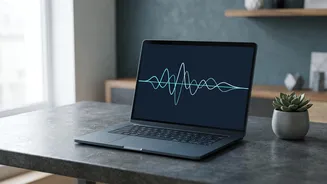
Unlike popular cloud-based transcription services that send your audio data to remote servers for processing, offline AI transcribers run entirely on your local computer. Using powerful, open-source AI models like OpenAI's Whisper, these applications can listen to and transcribe audio in real-time or from a recording without your data ever leaving your device. Think of it as having a highly efficient, privacy-conscious stenographer living inside your laptop. This local-first approach is a direct response to growing concerns over data security, privacy, and compliance with regulations like GDPR and HIPAA. For any organization handling sensitive client information, proprietary product details, or confidential strategic discussions, keeping that data in-house is a non-negotiable requirement.
From Conversation to Checklist
The magic doesn't stop at transcription. The real productivity gain comes from what the AI does next: Action Item Extraction. Using Natural Language Processing (NLP), the software analyzes the full transcript to identify and pull out actionable tasks. It's trained to recognize key phrases that signal a commitment, such as "I will send the report," "we need to follow up with the client," or "can you finish the slides by Friday?". The AI can often identify who was assigned the task and any mentioned deadlines, then organize this information into a structured format like a checklist. Instead of a dense, 10-page transcript, the team receives a concise list of tasks, owners, and due dates, ready to be moved into a project management tool like Asana, Jira, or Trello.
Why 'Offline' Is the Key Advantage
While cloud-based tools offer similar features, the 'offline' component is a critical differentiator for many businesses. The most obvious benefit is security. By processing and storing all data locally, the risk of a data breach from a third-party vendor is completely eliminated. This is paramount for legal, medical, and financial industries, but it's increasingly becoming a best practice for any company serious about protecting its intellectual property. Another advantage is reliability. An offline tool works whether you have a stable internet connection or not, making it perfect for work on the go. Finally, it offers cost predictability. Instead of a recurring subscription fee that scales with usage, many offline tools involve a one-time software purchase or are even free and open-source, avoiding the perpetual costs of cloud services.
Boosting Team Accountability and Focus
Integrating this technology has a direct impact on team dynamics. First, it automates the creation of a clear, objective record of what needs to be done, which dramatically improves accountability. There’s no more ambiguity about who is responsible for a task. Second, it allows team members to be more present and engaged during meetings. When no one is burdened with the stress of taking perfect notes, everyone can focus on the discussion, contributing ideas and solving problems more effectively. Finally, it creates a searchable, actionable knowledge base. For remote teams spread across different time zones, having a clean summary of decisions and tasks from a meeting they couldn't attend ensures everyone stays aligned without having to watch a full-length recording.