








The Physics of the Slip
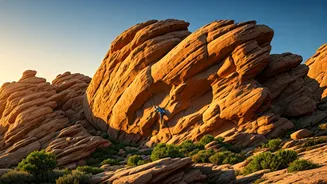
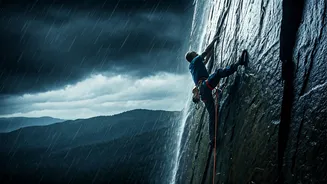
The most obvious challenge is a wet rock face, but the reality is far more complex than simple slipperiness. Rain fundamentally alters the friction coefficient of the rock. On porous surfaces like sandstone, prevalent in areas like Badami, water fills
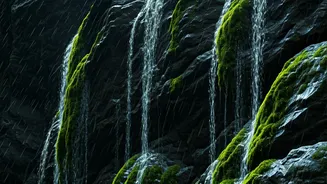
the microscopic pits that climbers' fingers and shoes rely on for grip. This creates a near-frictionless plane. On granite, found in places like Hampi, the water forms a thin, invisible film that can cause a hand or foot to skate off a hold with zero warning. Furthermore, the phenomenon of 'seepage' is a constant battle. Even after a downpour stops, water that has soaked into the rock continues to weep from cracks and fissures for days, keeping crucial holds permanently slick and rendering entire sections of a route unclimbable.
When the Rock Turns Green
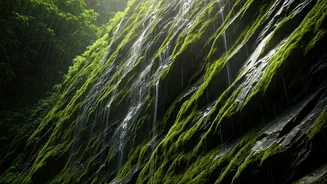
The Indian monsoon doesn't just add water; it brings the rock to life in the worst possible way for a climber. Dormant spores of moss, lichen, and algae bloom into a vibrant, treacherous carpet. This ‘green slime’ or ‘monsoon moss’ can completely obscure handholds and footholds. What looks like a solid edge might be a thin veneer of rock hiding beneath a slippery, unstable layer of green. Climbers must often carry stiff brushes to scrub holds as they ascend, adding another layer of physical exertion and slowing their progress. This biological hazard isn't just about grip; a foot slipping on an unseen patch of moss can lead to a dangerous, uncontrolled fall.
Your Gear Becomes the Enemy
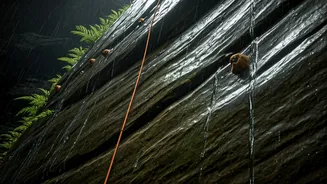
In dry conditions, climbing gear is a trusted lifeline. In the rain, it can become a liability. Climbing ropes, which are designed to be dynamic and absorb the force of a fall, become saturated with water. A wet rope is significantly heavier, making it harder to pull up and handle. More critically, its dynamic properties can change, becoming stiffer and less effective at cushioning a fall. Chalk, the white powder climbers use to keep their hands dry, turns into a useless, slimy paste upon contact with moisture. Metal equipment like carabiners and camming devices can get filled with grit and mud washed down the rock face, increasing the risk of them malfunctioning or seizing up at a critical moment.
Hazards Beyond the Climb
The dangers aren't confined to the vertical rock face. The monsoon transforms the entire landscape. Approach trails to climbing areas, often steep and rugged, can turn into treacherous mudslides. Flash floods can sweep through gullies and riverbeds that were dry just hours before. The risk of rockfall also increases dramatically. Water seeps into cracks, loosening rocks and soil above, which can then be dislodged by the wind or the simple act of pulling on a rope. Add to this the ever-present threat of lightning during thunderstorms, and the environment itself becomes an active antagonist, forcing climbers to be hyper-aware of weather patterns and have foolproof retreat plans.
The Ultimate Mental Game
Ultimately, climbing in the Indian monsoon is a profound psychological challenge. The physical discomfort of being cold and perpetually damp is draining. Every move requires more concentration, as the consequences of a mistake are magnified. Trust in your gear, your partner, and your own abilities is constantly tested. It forces a climber to slow down, to be more deliberate, and to accept that some days, the conditions will win. There is no room for ego when facing a slick, moss-covered slab. It’s a test of patience and humility, where success isn’t always about reaching the top, but about making smart, safe decisions in a beautiful yet unforgiving environment.