




The Ultimate Frontier Resource
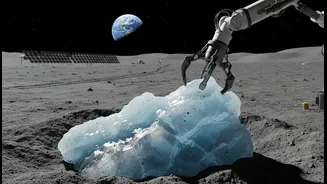
For any long-term human presence on the Moon, water is the single most critical resource. It's not just for drinking; water can be broken down into hydrogen and oxygen. This provides breathable air for astronauts and, crucially, the components for rocket
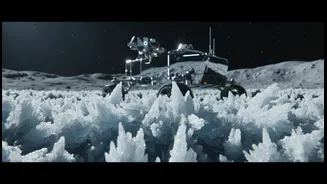
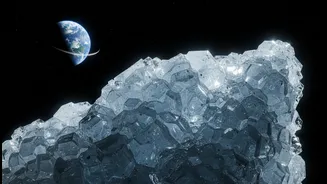
propellant. Launching water from Earth is incredibly expensive and logistically challenging, making the ability to source it directly from the Moon—a practice known as in-situ resource utilization (ISRU)—a complete game-changer. It’s the key to making a lunar base self-sustaining and a true stepping stone for missions to Mars and beyond. The entire economic and strategic model of a permanent lunar outpost hinges on finding accessible, abundant water ice.
Peering into Permanent Darkness
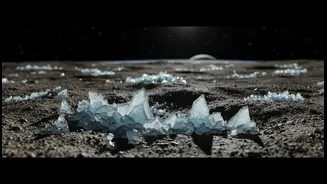
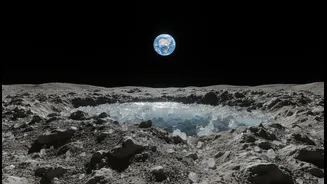
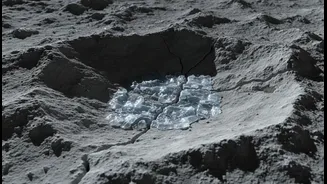
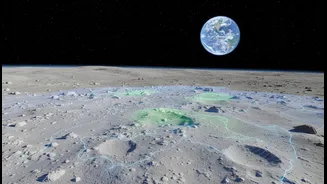
The most promising locations for finding lunar water are in Permanently Shadowed Regions (PSRs) near the Moon's poles. These are the floors of deep craters where sunlight has not reached for potentially billions of years. Temperatures in these areas can plummet to around -248 degrees Celsius, creating 'cold traps' where water ice can remain frozen and stable. The challenge, however, is that you cannot see into these dark craters with conventional cameras. This is where specialized instruments become essential, and where India's Chandrayaan-2 orbiter has made a significant contribution.
Chandrayaan-2's Radar Breakthrough
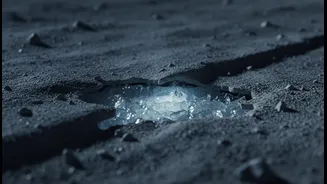
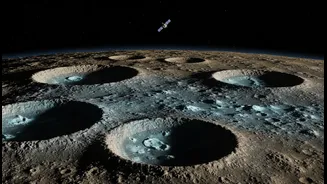
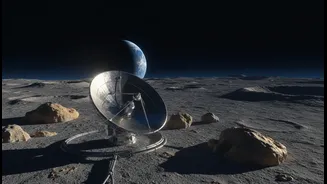
The Chandrayaan-2 spacecraft, which has been orbiting the Moon since 2019, carries a powerful instrument called the Dual-frequency Synthetic Aperture Radar (DFSAR). Unlike a camera, radar doesn't need light; it actively sends out microwave signals and analyzes how they bounce back. In a recent study, scientists from India's Physical Research Laboratory used DFSAR data to probe these dark craters. They found compelling evidence of subsurface ice. The radar signals scattered in a distinctive way that suggested the presence of buried ice deposits rather than just rough, rocky terrain. This data pointed to possible ice beneath the floors of four different 'doubly shadowed' craters—extremely cold areas shielded even from reflected sunlight.
The Science of a 'Telltale Signature'
The DFSAR is the first fully polarimetric radar system used to study the Moon, allowing scientists to analyze the polarization of the reflected radar waves. Researchers developed a refined method using two key metrics: Circular Polarization Ratio (CPR) and Degree of Polarization (DOP). This technique helps distinguish the unique signature of water ice from that of dry lunar soil and rock. One 1.1-kilometer-wide crater within the larger Faustini crater at the South Pole showed particularly strong evidence. This radar data was reinforced by the crater's unusual 'lobate-rim' shape, which suggests an impact may have penetrated a subsurface ice layer, causing it to flow outwards before freezing in place.
From Data Maps to Moon Bases
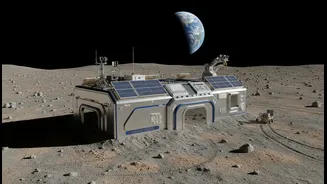
The findings from Chandrayaan-2 and other missions are crucial for the next phase of lunar exploration. International discussions around moon bases, largely happening under the banner of the Artemis Accords, need this kind of high-resolution data to move from concept to reality. These radar maps are essentially treasure maps for water ice. They allow space agencies to identify the most promising regions for future robotic and human landing missions. Before committing billions of dollars and risking human lives, agencies need to know where to land and drill to confirm the quantity and purity of the ice. Chandrayaan-2's data provides exactly the kind of clues needed to narrow down the search and select prime locations for establishing humanity's first off-world outpost.