


What is the SHAPE Experiment?
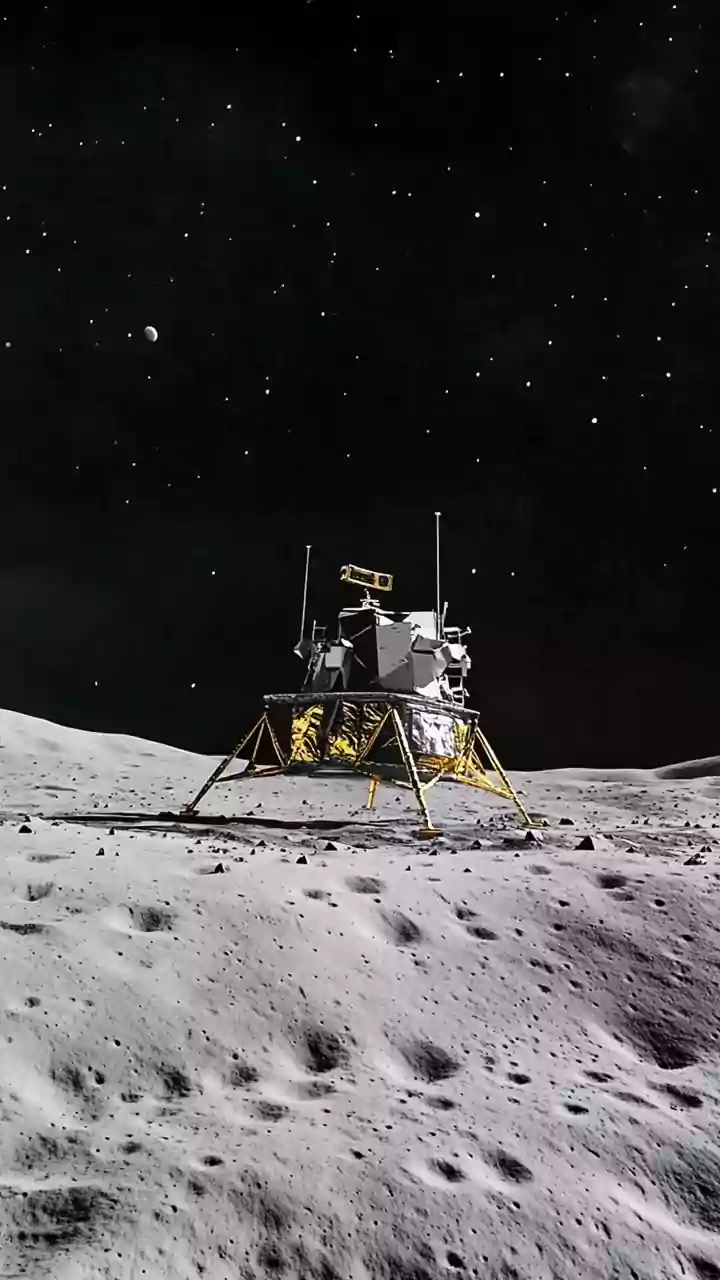
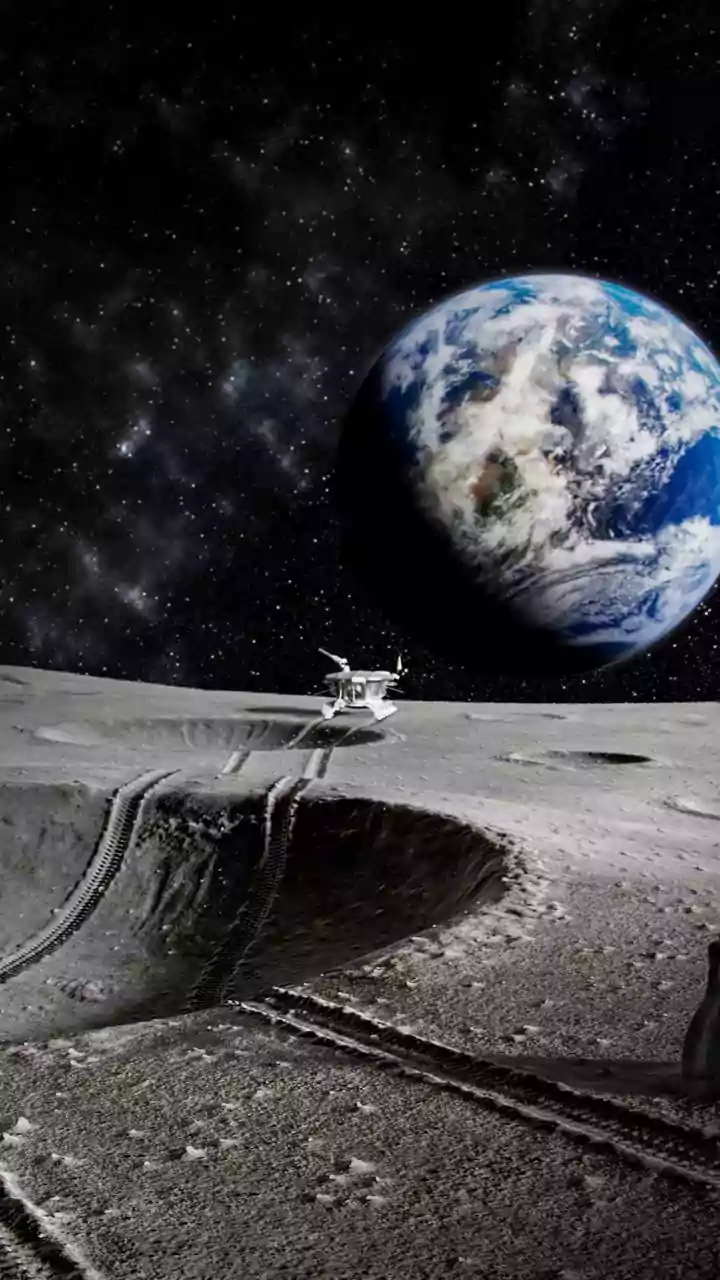
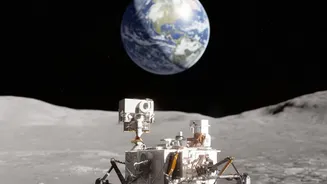
SHAPE, which stands for Spectro-polarimetry of HAbitable Planet Earth, was the lone scientific instrument on Chandrayaan-3's Propulsion Module. While the lander and rover focused on the lunar surface, SHAPE’s job was to study Earth from a distance. Its
main goal was to observe our planet as if it were a distant exoplanet—a planet orbiting a star outside our solar system. By travelling to lunar orbit, it gained a unique vantage point to capture the characteristic signatures of a life-bearing world, creating a vital reference for astronomers. This clever use of the Propulsion Module provided a valuable scientific bonus to an already successful mission.
Studying Earth's Unique Light Signature
The experiment works by studying the light reflected from Earth in the near-infrared spectrum. Specifically, it measures the polarization of this light. Polarized light is light that vibrates in a single plane, much like how polarized sunglasses reduce glare by filtering out scattered light. When sunlight reflects off Earth's atmosphere, oceans, and land, it becomes polarized in a distinctive way. Different features, like clouds, water bodies, and forests, create unique polarization signatures. SHAPE was designed to capture this disc-integrated signature—the combined light from the entire planet as seen from far away. This data helps scientists build a detailed profile of what a habitable planet's light looks like on a large scale.
Creating a Template for Habitable Worlds
The core purpose of SHAPE is to use Earth as a benchmark. Since Earth is the only planet we know for certain hosts life, understanding its spectro-polarimetric signature is crucial for finding similar worlds. When future powerful telescopes look at distant exoplanets, they will only see a single point of light. The challenge is to decode that light to understand the planet's nature. Is it a rocky world with an atmosphere? Does it have clouds or liquid water? SHAPE's data provides a template for what to look for. By comparing the light from a distant exoplanet to the detailed signature of Earth captured by SHAPE, astronomers can make more informed guesses about whether that planet could be habitable.
How It Helps in the Search for Life
The search for extraterrestrial life relies on identifying 'biosignatures'—indicators of biological processes. The spectrum of light from a planet can reveal the presence of gases like oxygen, water vapor, and methane, which are linked to life on Earth. Polarimetry, SHAPE's specialty, adds another layer of information by helping to characterize clouds, which are vital for a stable climate and the presence of liquid water. Without this polarimetric data, it can be difficult to distinguish a cloudy, temperate planet from a hot, Venus-like world with a thick, reflective atmosphere. SHAPE's detailed observations of Earth from various phase angles will help scientists refine their models and better interpret the faint signals from exoplanets, improving the chances of identifying a truly Earth-like world.
India's Contribution to Global Astronomy
The SHAPE experiment represents a significant and innovative contribution by ISRO to the global search for habitable exoplanets. It is a 'first of its kind' experiment to conduct disc-integrated spectro-polarimetric observations of Earth from lunar orbit. The data collected will serve as a foundational resource for the international scientific community, helping to calibrate and validate observations from next-generation telescopes. By successfully executing this secondary objective, the Chandrayaan-3 mission has not only achieved its primary goal of lunar exploration but has also provided a crucial tool for one of the most exciting frontiers in modern astronomy: the quest to find another habitable planet.