


Your Phone is a Pocket Planetarium
The magic behind modern skywatching apps is the powerful bundle of sensors already in your smartphone. These apps use your phone's GPS to know your exact location on Earth, while the built-in compass and gyroscope determine the precise direction you're
pointing it. When you hold your phone up to the sky, the app combines this data to create an accurate, real-time map of the celestial objects in front of you. This turns your device into a portable planetarium, removing the guesswork and making astronomy incredibly accessible.
Finding More Than Just Stars
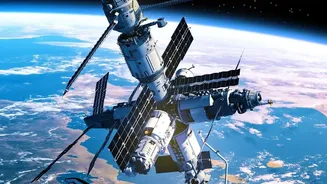
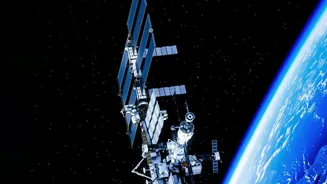
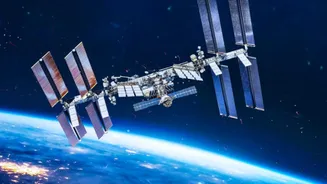
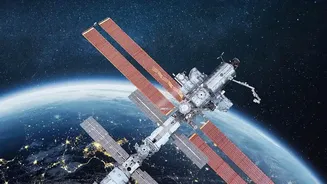
Beginner-friendly apps excel by using augmented reality (AR) to overlay information directly onto your view of the sky. As you pan your phone across the darkness, constellations are traced with helpful lines, planets are clearly labeled, and star names pop into view. This interactive approach is what makes them so powerful for learners. Many apps also include calendars and push notifications for exciting celestial events, such as meteor showers, eclipses, or visible passes of the International Space Station (ISS). You can receive an alert telling you to go outside in a few minutes to see the ISS glide overhead.
Top Apps to Start Your Journey
While there are dozens of apps available, a few stand out for their ease of use and powerful features, making them perfect for those just starting their skywatching hobby. Most offer free versions that are more than capable of getting you hooked on the cosmos. Here are some of the best choices for beginners.
For All-Around Simplicity: SkyView Lite
Often recommended for absolute beginners, SkyView Lite is celebrated for its intuitive design. You simply point your phone at the sky, and the app immediately identifies stars, constellations, planets, and satellites. Its AR feature is seamless, overlaying names and paths directly onto your camera's view. A key benefit is that it can function without WiFi or GPS once it has your location, making it perfect for camping trips or stargazing in remote areas with poor service.
For Deeper Information: Stellarium Mobile
Stellarium is a household name in the astronomy community, known for its powerful desktop software. The mobile version brings that same depth to your phone. While still user-friendly, it offers a massive database of stars, nebulae, and galaxies. Users can see a realistic simulation of the night sky from any location and time. It's an excellent choice for those who start as beginners but quickly want to learn more detailed information about the objects they are viewing.
For Tracking the ISS: Spot The Station
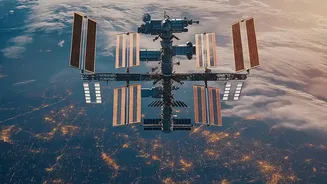
While most general stargazing apps can track the ISS, NASA's official Spot The Station app is dedicated to it. It provides highly accurate predictions for when the space station will be visible from your specific location, including how long it will be in the sky and where to look. The app can send you alerts for upcoming viewing opportunities, ensuring you never miss a chance to see the orbiting laboratory fly by. Many other apps, like Heavens-Above and ISS Detector, also specialize in tracking satellites.