
The Sun’s Volatile Temper
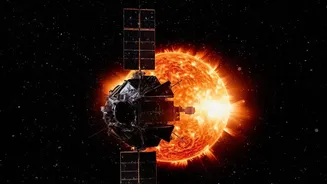
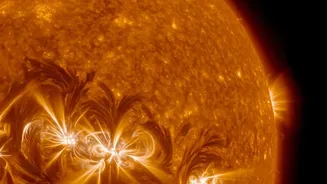
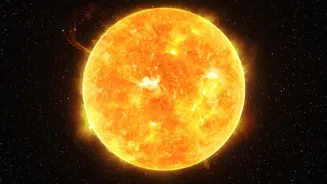
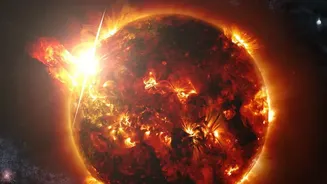
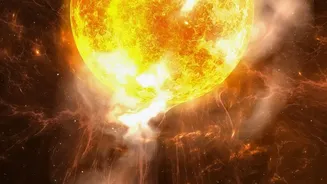
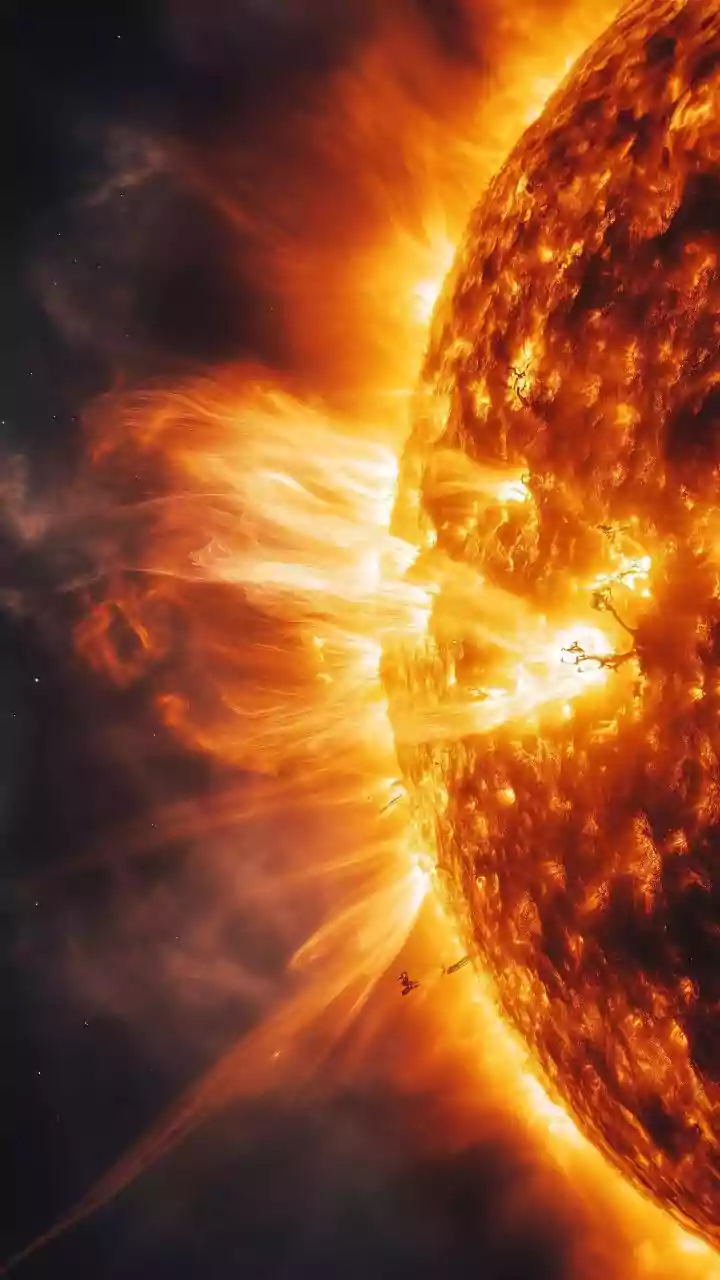
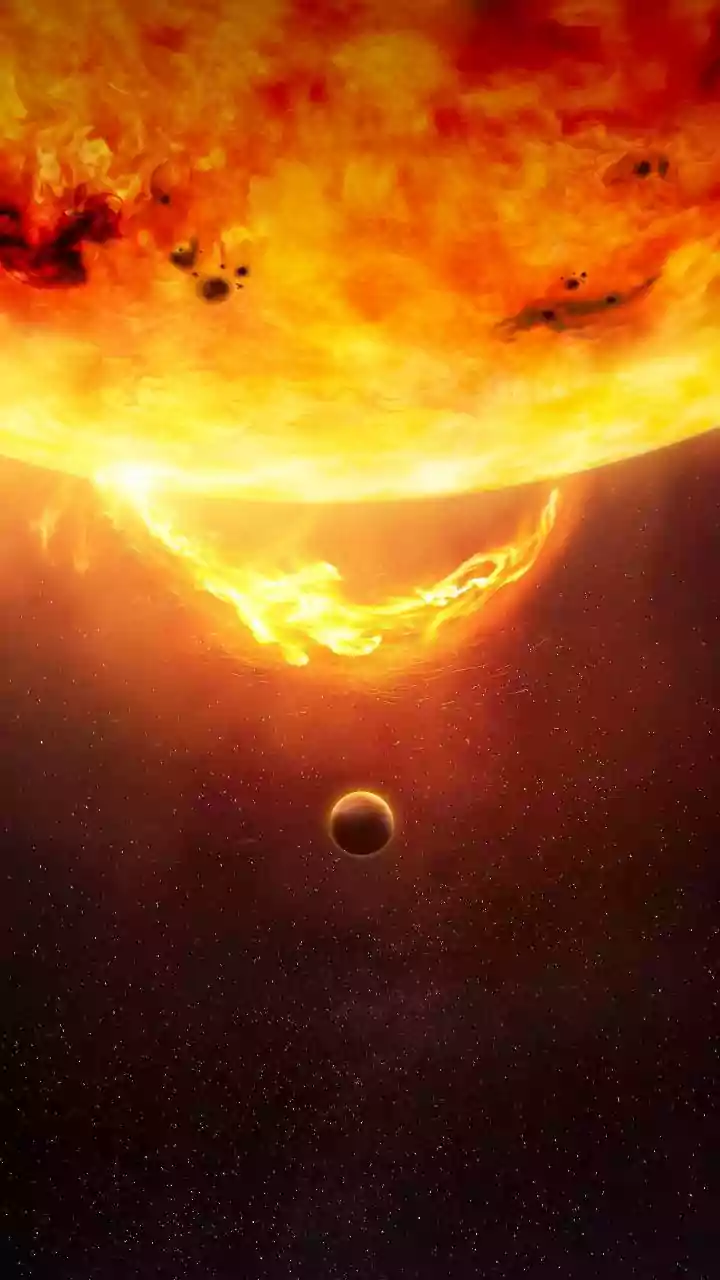
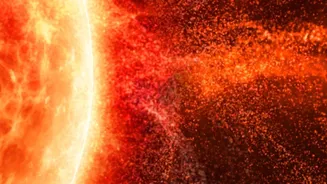
The Sun is not always the calm, steady presence it appears to be. It is a dynamic star with a complex magnetic field. Sometimes, this magnetic energy is suddenly released in massive explosions. One type is a solar flare, an intense burst of radiation.
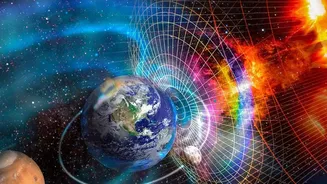
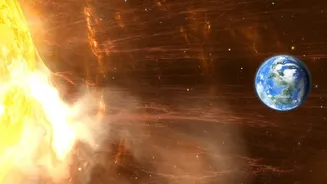
Another, often more impactful event, is a Coronal Mass Ejection (CME). A CME is a giant cloud of magnetised plasma and solar particles hurled into space. If a CME is aimed at Earth, it can trigger a geomagnetic storm, a major disturbance of our planet’s magnetic field that can have serious consequences on the ground and in orbit.
Creating an Artificial Eclipse in Space
So, how do we see these invisible threats coming? The answer lies in a clever instrument called a coronagraph. Essentially, a coronagraph creates an artificial eclipse. It uses a solid disc, called an occulter, to block the blindingly bright face of the Sun. This allows scientists to see the Sun’s much fainter outer atmosphere, the corona. By constantly imaging the corona, satellites can spot a CME as it erupts from the Sun and track its path. This gives us our earliest warning that a potentially disruptive space weather event is heading our way.
From Early Warning to Action
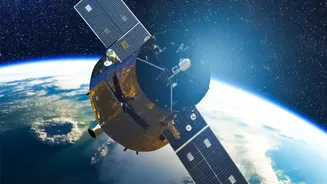
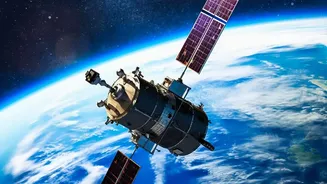
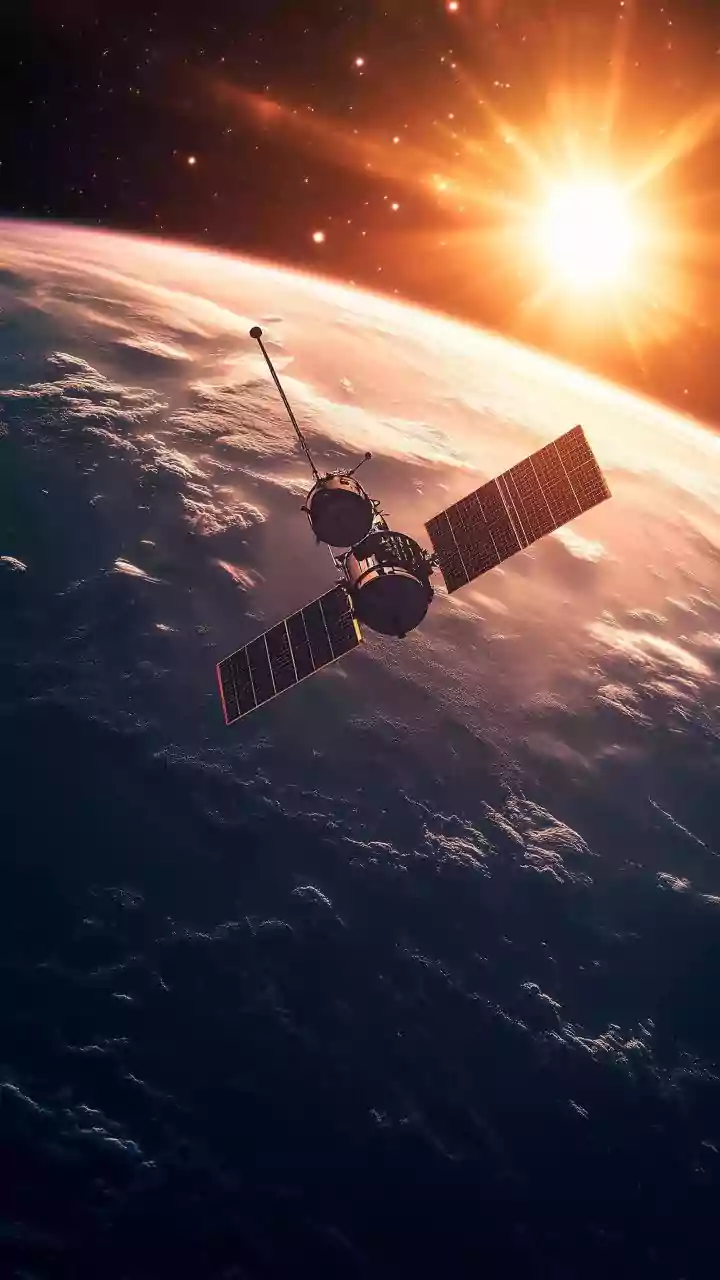
A coronagraph on a satellite like India's Aditya-L1 or one of NOAA's GOES satellites can detect a CME days before it reaches Earth. This warning time, typically from one to four days, is crucial. It doesn't allow us to stop the storm, but it does allow us to prepare. With advanced notice, power grid operators can take protective measures to prevent overloads and widespread blackouts. Satellite operators can put their spacecraft into a safe mode to protect sensitive electronics. Airlines can reroute flights away from polar regions where radiation exposure is higher during a storm. This turns a potential catastrophe into a manageable event.
Protecting a Digital India
For a nation as digitally integrated as India, these warnings are indispensable. Our economy relies heavily on satellite-based services for everything from banking and UPI transactions to television broadcasts and weather forecasting. A major solar storm could disrupt GPS navigation, affecting transport and logistics, and damage our power grids. ISRO's Aditya-L1 mission, stationed at the L1 Lagrange point, plays a key role in this planetary defence system. Its Visible Emission Line Coronagraph (VELC) provides continuous, unobstructed views of the Sun, offering crucial data to Indian scientists to forecast space weather and protect the nation's critical infrastructure.
A Constant Global Vigilance
No single nation can monitor the Sun alone. Space weather is a global challenge that requires international cooperation. Data from various spacecraft, including ISRO's Aditya-L1, NASA's Solar Dynamics Observatory, and the joint ESA/NASA SOHO satellite, are shared among scientists worldwide. This network of solar observatories ensures we have a constant watch on our star's activity from multiple vantage points. By combining data, forecasters can build a more accurate picture of a CME's speed, trajectory, and potential intensity, improving the reliability of their warnings.