





A Dance for the Rain
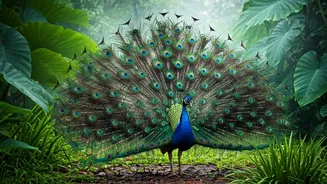
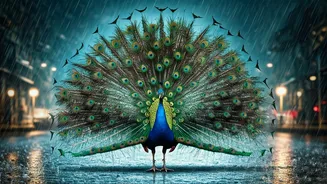
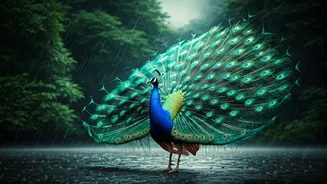
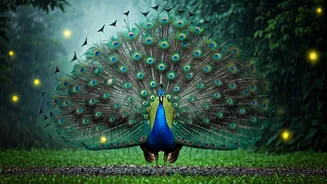
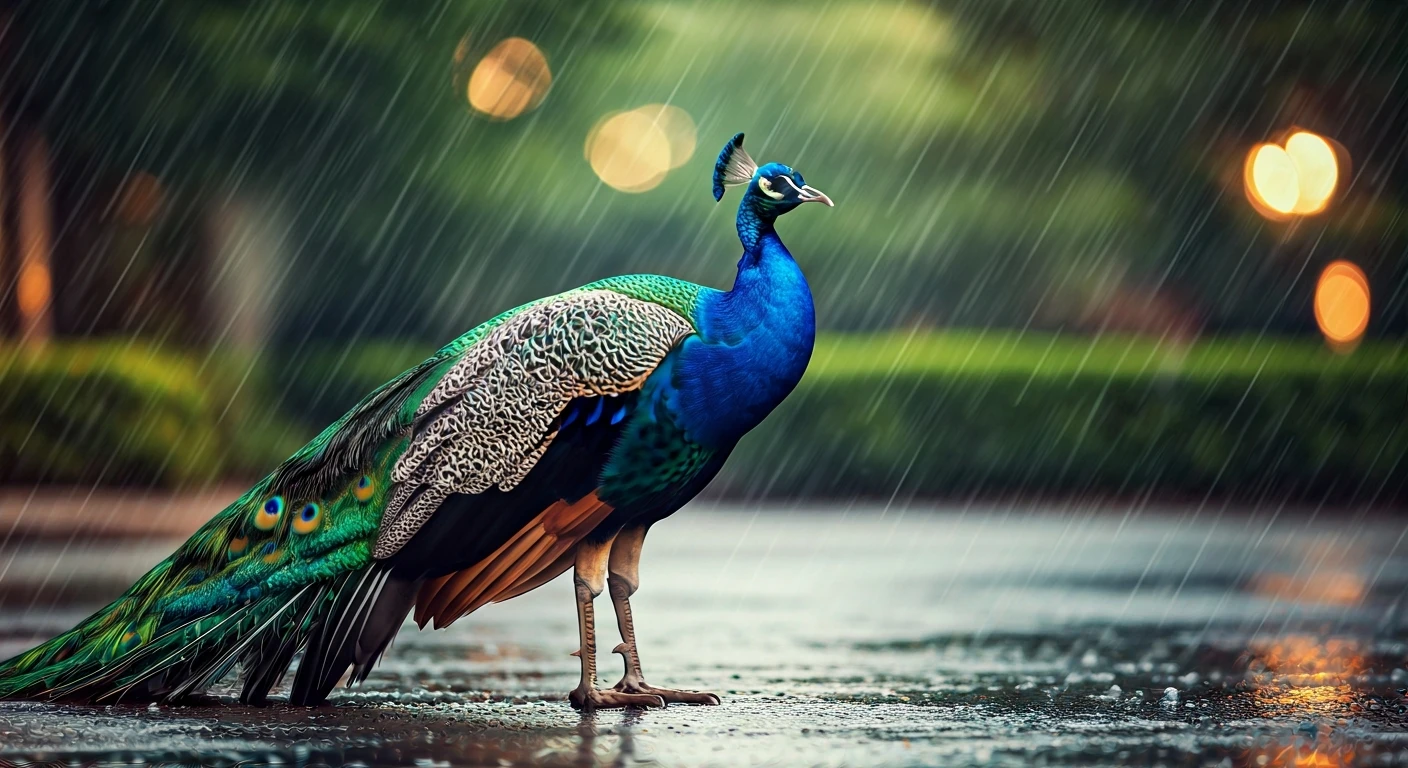
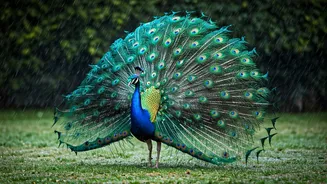
The image is iconic in the Indian imagination: a peacock, resplendent with its thousand-eyed train, dancing as the first drops of monsoon rain begin to fall. It’s a scene steeped in folklore, poetry, and art. But this celebrated dance isn’t just a joyful
reaction to the cooling showers. It is, in fact, a primal and magnificent courtship display. The monsoon season, which typically spans from June to September in much of India, coincides directly with the peafowl's breeding season. The rain acts as a trigger, signalling a time of abundance when food will be plentiful for raising chicks. The male, the peacock, performs this elaborate dance—raising his tail feathers into a shimmering fan, quivering them to produce a rustling sound, and strutting with purpose—to attract a mate. So, while we see a dance for the rain, the peahen sees a dazzling display of fitness and genetic quality.
The Science of Splendour
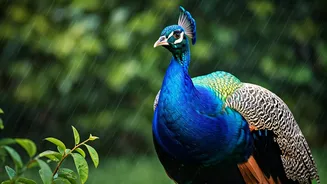
That breathtaking train, often mistaken for a tail, is actually a set of elongated upper-tail covert feathers. A mature male’s train can be made up of over 150 feathers, which are shed and regrown annually. The full glory of the train is not achieved until a peacock is about four years old. The iridescent blues, greens, and golds that mesmerize us are not primarily due to pigments. Instead, they are the result of structural colouration. Microscopic, crystal-like structures on the feather barbules reflect different wavelengths of light depending on the angle, creating the shimmering, ever-changing effect that makes the peacock so photogenic. This vibrant display stands in stark contrast to the more subdued, earthy tones of the female peahen, whose main priority is camouflage while nesting.
A Symbol Woven into Culture
Long before it was declared India’s national bird in 1963, the peacock was deeply embedded in the subcontinent’s cultural and spiritual fabric. In Hindu mythology, it is the cherished vehicle of Kartikeya, the god of war, and its feathers adorn the crown of Lord Krishna. Legend holds that peacocks danced in joy to the music of Krishna's flute. The bird’s association with royalty is also prominent, most famously in the form of the legendary Peacock Throne of the Mughal emperors, a symbol of immense power and opulence. This deep-rooted significance means that for centuries, the peacock has represented grace, beauty, divinity, and pride in Indian art, architecture, and literature, making its monsoon appearance not just a natural event, but a cultural one.
The Photographer’s Monsoon Muse
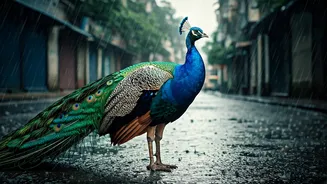
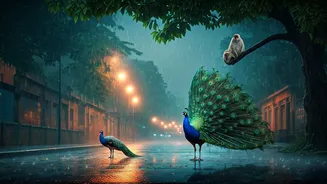
For photographers, capturing a peacock in its monsoon finery is both a rewarding challenge and a singular joy. The soft, diffused light of an overcast day can make the bird's colours pop without the harsh shadows of direct sun. The contrast of its vivid plumage against a rain-slicked landscape or a moody, grey sky creates a composition that is naturally dramatic. The key is patience. Capturing the full fan, the trembling feathers, or the circular dance requires anticipation and a bit of luck. Photographers often seek out national parks like Ranthambore and Keoladeo in Rajasthan or protected areas in the Western Ghats during the monsoon. Even urban and semi-rural areas across India have seen a rise in peacock populations, with recent sightings on the rainy streets of Mumbai delighting residents and going viral online. The sight is a powerful reminder of how resilient nature can be, offering moments of wild beauty in the most unexpected places.