







The post-pandemic tech boom appears to be facing a harsh reality check. Two of the industry's most critical pillars, semiconductors and data centres, are feeling the chill as a worldwide market slump hits their shares. What's behind the downturn?
A Turbulent Period for Tech Stocks
Recent
weeks have been brutal for the technology sector, with trillions of dollars in market value erased. Chipmakers like Nvidia, AMD, and Intel, along with data centre operators, have seen their stock prices plunge. The Philadelphia Semiconductor Index, a key benchmark for the industry, recently suffered one of its worst single-day drops in years. This sharp decline follows a period of massive growth, largely fuelled by the artificial intelligence boom. However, investors are now growing anxious about a confluence of factors, from economic headwinds to questions about the sustainability of the AI spending spree.
The Squeeze on Data Centres
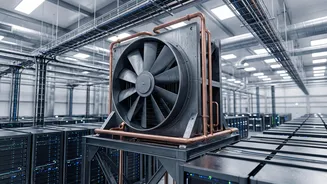
Data centres, the physical heart of the cloud and AI revolution, have become a source of investor anxiety. For years, hyperscale companies like Amazon, Microsoft, and Alphabet have been on a building spree, driving massive demand for the chips and equipment that power these facilities. Now, there are signs that this growth could be slowing. Some of the world's biggest tech companies have reported a slowdown in cloud revenue growth and have indicated they will use data centre equipment for longer to save money. This directly impacts chipmakers like Intel and AMD, who supply the processors for these servers. A primary concern is a growing political and community backlash against new data centre construction due to their massive energy and water consumption, leading to construction pauses and bans in some regions. This regulatory uncertainty is causing investors to fear that the AI buildout could slow significantly.
The Complex Chip Cycle
The semiconductor industry is famously cyclical, but the current downturn is multi-faceted. On one hand, the soaring demand for high-end AI chips has led to record revenues for companies like AMD and Nvidia. Yet, this has created a difficult split. Chipmakers have prioritized these high-margin data centre chips, leading to higher prices and tighter supply for the memory chips used in consumer devices like PCs and smartphones. This 'chipflation' is contributing to a slowdown in sales for these consumer electronics, as weaker demand for PCs and smartphones has been cited by companies like Intel and Qualcomm. At the same time, there's a growing worry that some chip shortages are ironically causing a pile-up of other chips, as servers cannot be fully built, a situation Micron has highlighted.
Wider Economic Headwinds
Beyond industry-specific issues, the broader economic climate is casting a long shadow. Persistently high inflation and the prospect of rising interest rates make the massive capital expenditure required for new data centres and chip factories more expensive. Investors are questioning the return on investment for the hundreds of billions being poured into AI infrastructure, especially as borrowing costs rise. Companies like Meta and Microsoft have relied on significant debt and fundraising to fuel their expansion, and the market is now scrutinizing this strategy more closely. A slowdown in advertising spending, a key revenue stream for tech giants, could also lead to cutbacks in their data centre investments, creating a ripple effect across the supply chain.