
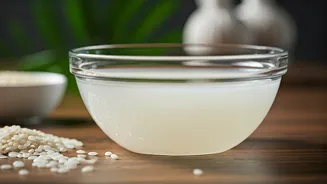


What Is Rice Water Glow?
The ‘rice water glow’ refers to the bright, smooth, and luminous complexion that is said to result from using rice water in a skincare routine. Popularised by K-beauty and J-beauty influencers, it’s seen as a more natural and accessible alternative to complex,
multi-step routines. The goal isn't a reflective, mirror-like finish, but rather a soft, lit-from-within radiance. This trend taps into a growing desire for minimalist beauty that leverages simple, natural ingredients with a rich history. In India, where rice is a staple, the idea of using a byproduct of our daily cooking for beauty has a special resonance, aligning with age-old traditions of using kitchen ingredients for self-care.
An Ancient Beauty Secret
Using rice water for beauty is anything but new. Its roots trace back centuries in Asia. In Japan, court ladies during the Heian Period (794 to 1185) were reputed to have beautiful, long hair that they rinsed with 'Yu-Su-Ru,' the water left over from washing rice. More famously, the Yao women of Huangluo village in China, who are listed in the Guinness Book of World Records as having the 'world's longest hair,' credit their strong, dark, and slow-to-grey hair to a fermented rice water rinse. This historical context lends the trend an air of time-tested wisdom, suggesting that its benefits have been observed for generations, long before it became a viral sensation on social media.
The Science Behind the Shine
So, what’s in rice water that makes it so special? The cloudy liquid is rich in nutrients that are beneficial for skin and hair. It contains amino acids, which are the building blocks of protein, crucial for cell regeneration. It's also packed with vitamins like B and E, minerals, and antioxidants like ferulic acid, which helps protect against environmental damage. The star ingredient is often cited as inositol, a carbohydrate that is believed to repair damaged hair and protect it from future harm. While rigorous clinical studies are limited, the chemical composition of rice water provides a plausible explanation for its reported benefits, such as improved skin hydration, a brighter complexion, and stronger, shinier hair.
DIY: Your Home Elixir
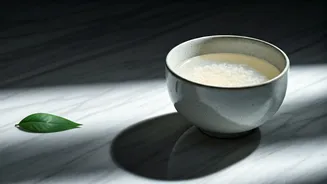
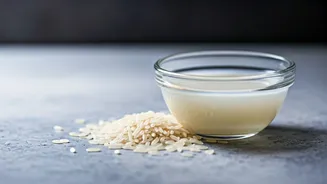
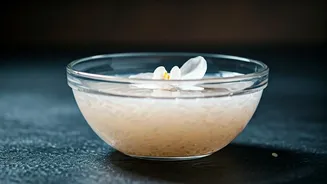
Making your own rice water is incredibly simple. There are a few methods, but the most popular is fermentation, which is said to enhance the nutrient profile.
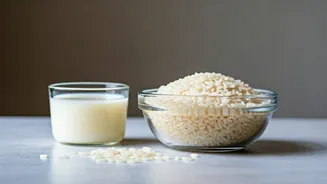
1. **Rinse:** Take half a cup of uncooked rice (any kind will do, but organic is best) and rinse it once to remove any surface dirt.
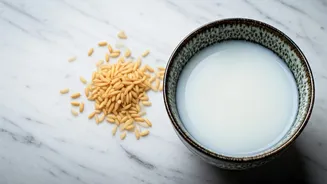
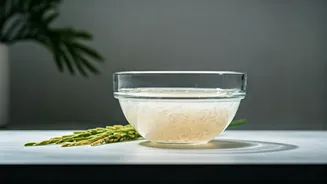
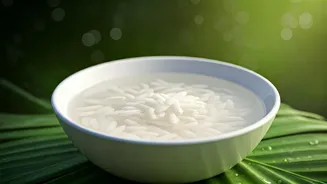
2. **Soak:** Add the rinsed rice to a bowl with two to three cups of water. Let it soak for at least 30 minutes, or until the water turns cloudy. Swirl it around a few times to help the nutrients release.
3. **Strain:** Strain the water into a clean jar. You can cook and eat the rice as usual.
4. **Ferment (Optional):** For a more potent elixir, leave the jar at room temperature for 12 to 24 hours. The slightly sour smell indicates fermentation is complete. Do not let it sit for more than 48 hours. Refrigerate the water to stop the fermentation process.
How to Use It for Skin and Hair
Once you have your rice water, you can incorporate it into your routine in several ways.
**For Skin:** Pour some rice water onto a cotton pad and use it as a facial toner after cleansing. You can also put it in a spray bottle and use it as a refreshing face mist. For a more intensive treatment, soak a sheet mask in the rice water and apply it to your face for 15 minutes.
**For Hair:** After shampooing and conditioning, pour the rice water over your hair as a final rinse. Gently massage it into your scalp and hair, leave it on for 10-20 minutes, and then rinse thoroughly with plain water. This can help add shine, detangle, and strengthen your strands.
What to Keep in Mind
While rice water is a natural product, it’s not a magic potion and may not work for everyone. Because it contains starch, it can potentially lead to buildup on the hair or clog pores in acne-prone individuals if not rinsed properly. Fermented rice water is potent and can be drying for some skin and hair types due to its protein content; consider diluting it if you have very dry hair. As with any new product, a patch test is crucial. Apply a small amount to your inner arm and wait 24 hours to see if any irritation occurs before applying it to your face or scalp.