







The Allure of 'Hyper-Palatable' Foods
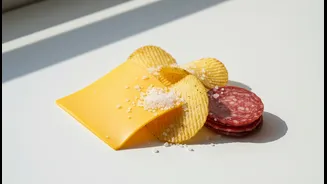
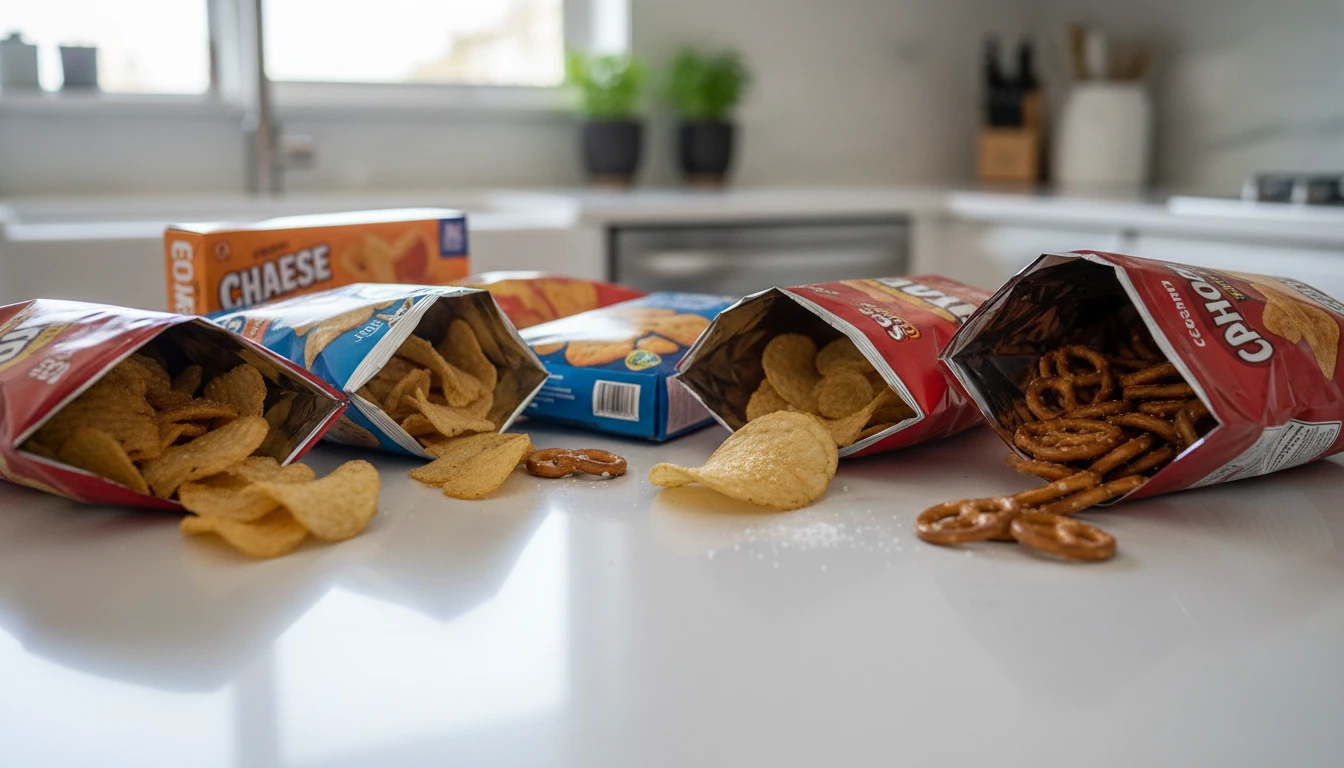
Foods like baked chips fall into a category scientists call 'hyper-palatable'. They are engineered with combinations of fat, sugar, sodium, and carbohydrates that don't exist in nature. This trifecta of flavour is designed to be intensely rewarding. Our
brains, hardwired from an evolutionary standpoint to seek out energy-dense foods for survival, perceive these snacks as incredibly valuable. Food manufacturers create complex flavours and textures specifically designed to be irresistible, activating reward centres in our brain that make us want to keep eating.
Your Taste Buds on Overdrive
Think of your taste buds like your ears. If you listen to loud music for an hour, a normal conversation can seem like a whisper afterwards. It’s a similar story with your palate. Processed foods with high concentrations of salt, sugar, and artificial flavourings flood your sensory receptors. This intense stimulation overwhelms your taste buds, raising the 'baseline' for what you perceive as flavourful. Over time, the subtle, complex notes in fresh fruits and vegetables simply don't register with the same intensity, making them seem dull by comparison.
It's Not Just Taste, It's Your Brain
The effect goes deeper than your tongue. When you eat these hyper-palatable foods, your brain releases a feel-good neurotransmitter called dopamine. This creates a sensation of pleasure and reinforces the behaviour, making you crave that same reward again. Natural foods trigger a pleasant response, but it's much milder. After being conditioned by the dopamine surge from processed snacks, the gentler reward from eating, say, a carrot or a slice of cucumber feels less satisfying, creating a cycle where you seek out more intense flavours to get the same pleasurable hit.
Are Baked Chips a Better Choice?
Many people reach for baked chips assuming they are the healthier option. While they are typically lower in fat and calories than their fried counterparts, they often compensate for the flavour loss by being significantly higher in sodium. The goal of the added sodium is to make up for the lack of flavour from frying. From the perspective of your palate's sensitivity, the intense saltiness can have the same dulling effect as other processed snacks, meaning they aren't necessarily 'better' when it comes to retraining your taste preferences.
How to Reclaim Your Palate
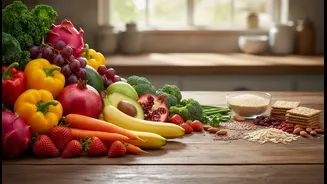
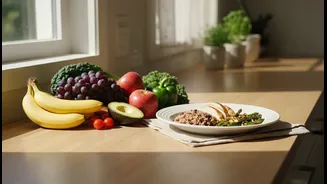
The good news is that your palate is not permanently damaged. You can retrain it. Taste bud cells regenerate approximately every 10 to 14 days, offering a window of opportunity to recalibrate. The key is to gradually reduce your intake of ultra-processed foods. Don't feel you have to go cold turkey; simply cutting back can make a difference. Focus on cooking more meals from scratch, which immediately cuts down on hidden sugars and salt. Experiment with herbs, spices, and citrus to add flavour without overwhelming your taste buds. Be patient, as it can take a few weeks for your sensitivity to return, but soon you’ll notice the natural sweetness in a strawberry or the savoury depth of a mushroom like never before.