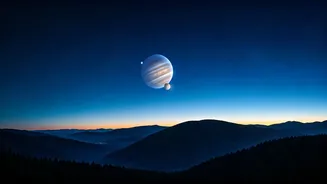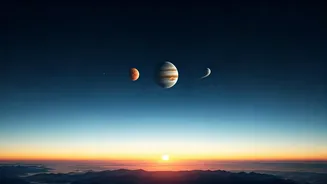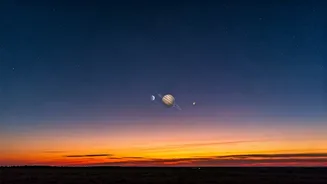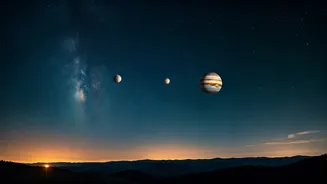


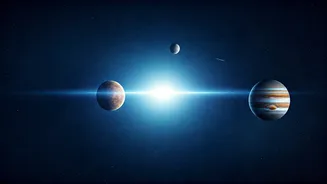
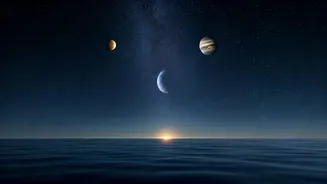


What Exactly Is a Planet 'Parade'?
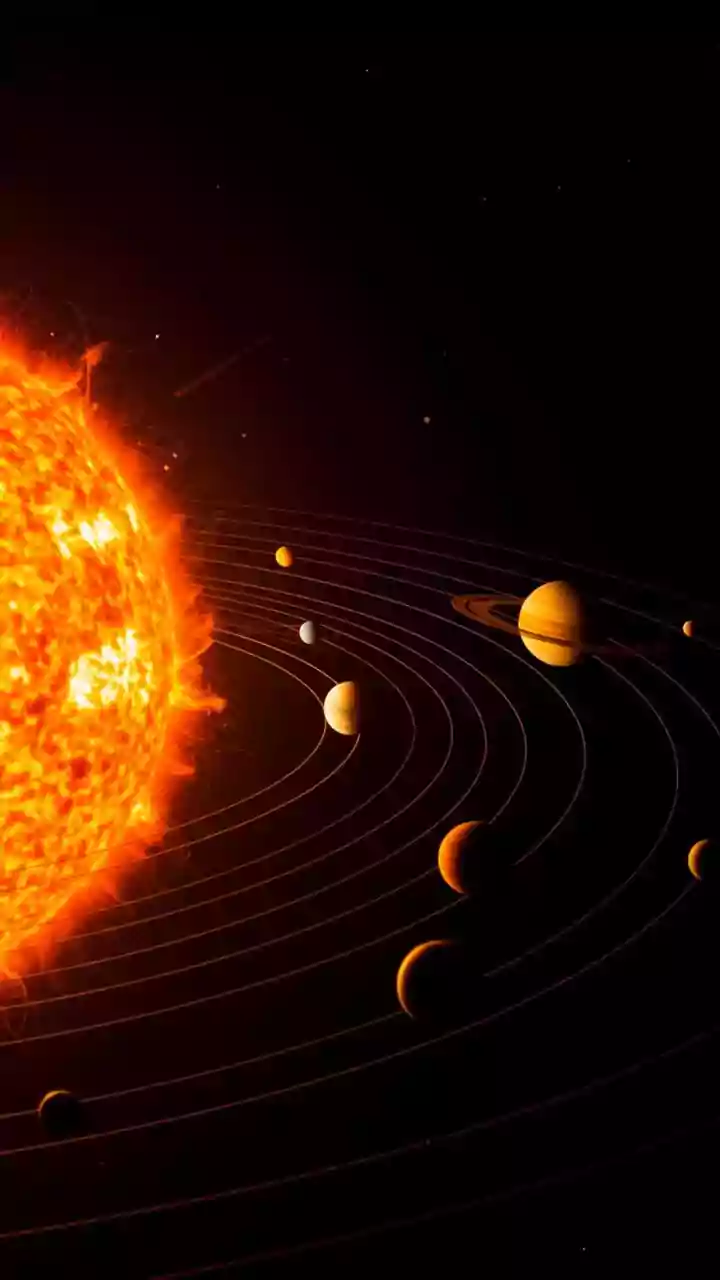
While it sounds like the planets are marching in a neat line, a planetary 'parade' or alignment is really a matter of perspective. From our viewpoint here on Earth, several planets appear close together in a small section of the sky. They aren't physically
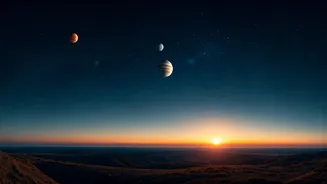
close to each other in space—in fact, they remain millions of kilometres apart on their own orbits around the Sun. But because of our planet's and their own movements, they occasionally line up in our line of sight. Tonight’s event is special because it brings together three bright and fascinating worlds: the elusive Mercury, the dazzling Venus, and the giant Jupiter. It's a beautiful, fleeting arrangement that reminds us of the grand, clockwork motion of our solar system.
Meet the Stars of the Show
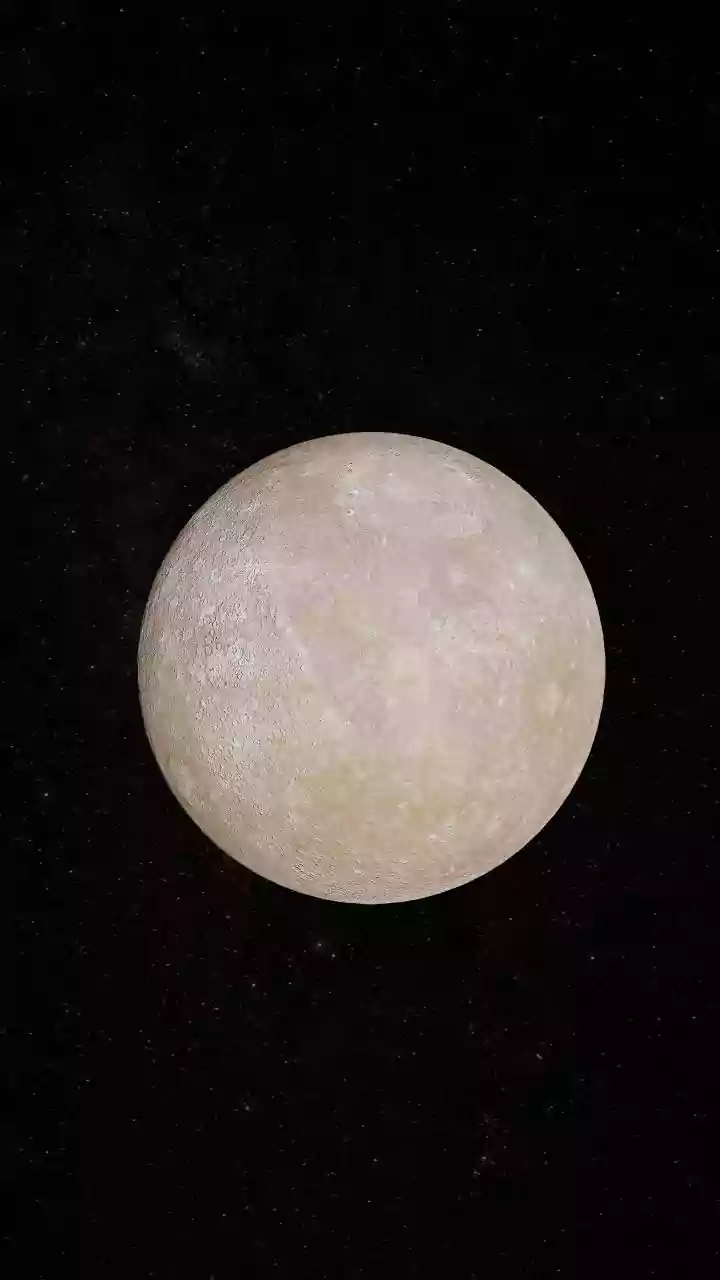
To appreciate the show, it helps to know the cast. Venus will be the easiest to spot. Often called the 'Evening Star' or 'Morning Star,' it’s the brightest object in the night sky after the Moon, shining with a brilliant, steady, silver light. Jupiter, the largest planet in our solar system, will also be impressively bright, though not quite as dazzling as Venus. It shines with a powerful, regal glow. The real prize for many sky-watchers will be Mercury. As the closest planet to the Sun, it’s often lost in the solar glare and is only visible for a short window during twilight. Spotting its faint, star-like twinkle near the horizon is a rewarding challenge for any amateur astronomer.
When and Where to Look From India
Timing and direction are everything for an event like this. The best viewing window will be shortly after sunset. As the Sun dips below the horizon and the sky begins to darken, find a spot with an unobstructed view to the west. This is where the planetary trio will make their appearance. Venus, being the brightest, will likely pop into view first, followed by Jupiter. Mercury will be the last and most difficult to see, appearing very low on the horizon as the last rays of sunlight fade. The entire spectacle will unfold over about 60-90 minutes. After that, the planets will follow the Sun and set below the horizon. To be precise, use a sky-gazing app like Stellarium, SkyView, or Star Walk on your phone. These apps use your location to show you exactly where to point your gaze.
Do You Really Need a Telescope?
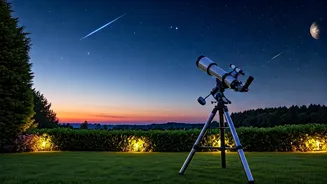
The headline says to set up telescopes, but you can enjoy the show without one. Venus and Jupiter are brilliant enough to be seen with the naked eye. You won’t miss them if the skies are clear. However, different equipment will give you a different experience.
Naked Eye: Perfect for appreciating the overall alignment and seeing the planets as bright 'stars' clustered together. It gives you the grandest sense of scale.
Binoculars: This is the sweet spot for many. A standard pair of binoculars (like 7x50 or 10x50) will make Mercury much easier to spot against the twilight glow. They will also resolve Jupiter into a tiny, distinct disc and might even reveal its four largest moons (the Galilean moons) as tiny pinpricks of light right next to it.
Telescope: This is where the magic happens. A telescope will not only make Mercury an easy target but will reveal details you can't see otherwise. You might glimpse the cloud bands of Jupiter and will have a crystal-clear view of its moons. Even Venus might reveal its phase, similar to our Moon. If you have one, tonight is the night to bring it out.
Tips for the Best Viewing Experience
To make the most of this celestial event, a little preparation goes a long way. First, get away from city lights. Light pollution is the biggest enemy of stargazing, as it washes out fainter objects like Mercury. A park, a terrace in a less-lit area, or a short drive out of the city will dramatically improve your view. Second, give your eyes time to adjust to the dark. It takes about 15-20 minutes for your pupils to fully dilate, so avoid looking at your bright phone screen. If you use a sky app, switch it to red-light mode to preserve your night vision. Finally, get comfortable. This isn't a fleeting meteor; you'll be watching for a while. Bring a chair or a blanket, perhaps a flask of hot chai, and share the experience with family or friends.