

The Foundation: Rice and Lentils
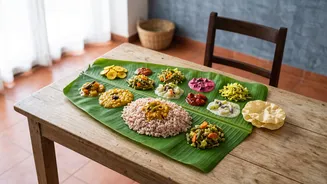
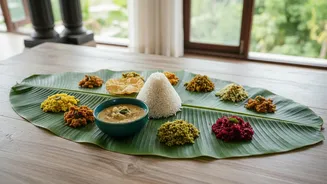
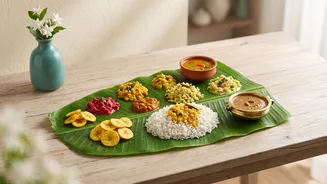
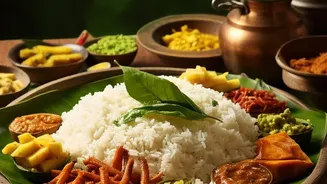
Every Sadya begins with a mound of hot rice, traditionally the plump, red Matta rice from Kerala. It’s the canvas for all the flavors to come. The first item to be served alongside the rice is Parippu, a simple but essential curry made from moong dal
(split mung beans). It's gently spiced, cooked until creamy, and often served with a spoonful of fragrant ghee. This combination of rice, parippu, and ghee is the comforting start to the feast, setting a mild, savory base before the more complex flavors are introduced.
The Core Curries
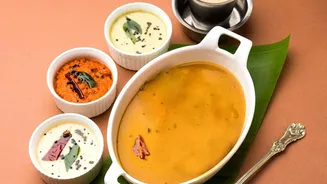
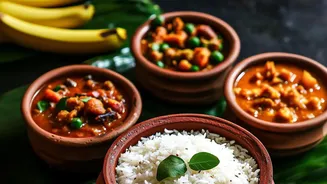
Next come the main liquid curries, each offering a distinct taste profile. Sambar, a lentil-based vegetable stew, is a non-negotiable component. The Kerala version is typically thick and packed with vegetables like pumpkin and drumsticks. You'll also want a yogurt-based curry. Kalan is a thick, tangy curry made with yam or raw banana and yogurt, with a distinct peppery flavor, while Pulissery is a thinner, often sweeter and sour curry made with buttermilk and fruits like pineapple or ripe mangoes. Finally, Rasam, a thin, peppery, and tamarind-based soup, is served to cleanse the palate and aid digestion.
The Dry Vegetable Sides
A Sadya's complexity comes from its variety of side dishes. Avial is arguably the star, a thick mixture of various seasonal vegetables cooked in a coconut and yogurt gravy. It represents unity and abundance. Thoran is another staple, a dry stir-fry of finely chopped vegetables like cabbage or green beans with grated coconut and mustard seeds. For a slightly richer side, consider Erissery, a sweet and savory mash of pumpkin and red beans with a toasted coconut paste. Olan offers a milder counterpoint; it's a delicate stew of ash gourd and cowpeas in a light coconut milk base.
Pickles and Condiments for Zing
Small but mighty, the pickles and relishes are what make each mouthful customisable. Inji Puli (also called Puli Inji) is essential—a dark, sweet, sour, and spicy chutney made from ginger, tamarind, and jaggery. It is said that this one dish balances all the flavors of the Sadya. Accompanying it are sharp and spicy pickles like Naranga Curry (lemon pickle) and Manga Curry (mango pickle). You will also find Pachadi and Kichadi, which are yogurt-based sides. Pachadi is often sweet and sour, made with fruits like pineapple, while Kichadi is its spicier cousin, typically made with cucumber or bitter gourd and flavored with mustard.
The Essential Crunch
No Sadya is complete without its crunchy elements. Pappadam, a light, crispy wafer made from lentil flour, is a must-have, fried just before serving. Equally important are the banana chips. You'll need Kaaya Varuthathu (crispy, salted raw banana chips) and Sharkara Varatti (or Upperi), which are thicker banana chunks coated in a delicious layer of melted jaggery and spices. These provide a delightful textural contrast to the soft rice and curries.
How to Plan Your Menu
A full Sadya can feature over 26 dishes, but you don't need to make them all. The key is balance. Aim for a manageable number, perhaps 8 to 12 dishes for a home-style feast. Ensure you have the core components: rice, Parippu, and Sambar. From there, choose one or two dry sides like Avial or Thoran. Add one yogurt-based curry like Kalan or Pulissery, and don't forget the zesty Inji Puli and a pickle. Finally, include Pappadam and at least one type of banana chip for crunch. This creates a well-rounded meal that captures the essence of the Sadya without overwhelming the cook.
The Sweet Finale: Payasam
Dessert is an integral part of the experience, with at least one variety of Payasam, a sweet pudding. There are many kinds to choose from. Ada Pradhaman is a classic, made with rice flakes (ada), jaggery, and rich coconut milk. Palada Payasam is another favourite, featuring delicate rice flakes cooked in creamy milk and sugar. For something different, you could try Parippu Payasam, which is made with lentils, or a fruit-based version like Chakka Pradhaman (jackfruit payasam).