







The Land of Steep Slopes
Mizoram's geography is its defining feature and its greatest challenge. Almost 98% of the state is characterized by rugged, steep topography, with hills and deep gorges creating a stunning but vulnerable landscape. Each year, the monsoon brings torrential
rainfall, which, on these steep slopes, can lead to severe soil erosion and landslides. This natural process is intensified by practices like jhum, or shifting cultivation, a traditional slash-and-burn farming method. While historically sustainable with long fallow periods, increased population pressure has shortened these cycles, leading to land degradation, loss of soil fertility, and reduced crop yields. For a state where agriculture is a primary livelihood, protecting the topsoil is a matter of survival.
Bamboo: Nature's Rebar
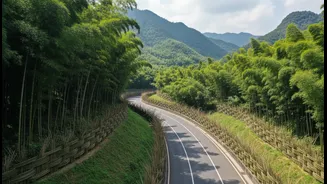
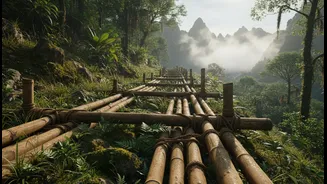
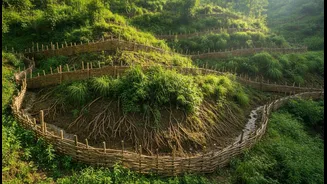
At the heart of Mizoram’s erosion control strategy is an abundant, fast-growing, and incredibly versatile local resource: bamboo. The state has one of the highest concentrations of bamboo cover in India, making it a readily available, low-cost building material. Its dense, fibrous root systems are exceptional at binding soil particles together, acting like a natural net that holds the earth in place on steep hillsides. This simple but effective bio-engineering technique is used in various ways. The Mizoram State Roads Project, for example, successfully used bamboo for terracing, creating crib walls, and even a technique called 'bamboo knitting' to stabilize slopes along new roads at a fraction of the cost of conventional concrete methods. These measures were so effective they withstood the heaviest rainfall in a decade in 2007 with minimal damage.
Blending Tradition with Innovation
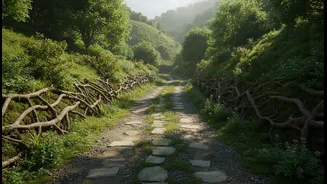
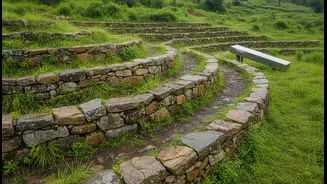
Mizoram’s approach isn’t just about planting bamboo; it’s about integrating traditional knowledge with scientific principles. A key example is the Mizoram Sloping Agriculture Land Technology (MiSALT). This system improves upon the indigenous 'changkham' technique, where farmers place logs, crop debris, and stones along contours to slow water runoff. MiSALT enhances this by reinforcing these non-living barriers with hedgerows of nitrogen-fixing trees and other useful local plants. This combination creates a powerful two-pronged defence: the bunds provide an immediate physical barrier to erosion, while the living plants establish a long-term, self-sustaining root structure that holds the soil. Over time, soil accumulates behind these barriers, forming natural terraces.
Community at the Core
Technology and technique alone are not enough. The success of these initiatives relies heavily on community participation and policy support. A significant portion of land in Mizoram is jointly owned and administered by the community, making local involvement essential for any land management plan. Government initiatives like the New Land Use Policy (NLUP) have played a role in encouraging farmers to move away from jhum cultivation towards more settled, sustainable farming practices, including horticulture and terraced farming. By providing financial support and promoting alternatives, these programs aim to reduce pressure on forests and allow degraded land to recover. This collaborative effort between government agencies, NGOs, and local village councils is crucial for implementing and maintaining these erosion control measures on a wide scale.
A Model for Resilient Development
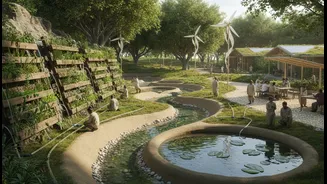
The methods employed in Mizoram are about more than just stopping soil loss. They are part of a broader vision of 'bio-engineering'—using living materials to solve engineering problems. This approach is not only significantly cheaper and quicker to implement than building concrete retaining walls, but it also preserves the productivity of the slopes for farming and forestry. By using local species of grasses and trees, these projects also help maintain biodiversity and restore the ecological balance. This makes the landscape more resilient to the impacts of climate change, reduces the carbon footprint associated with construction, and provides direct economic benefits to local communities through employment and the use of local materials.