





Looking for a simple way to ease stiffness and improve flexibility without getting on the floor? Chair yoga is an accessible practice for all bodies. Let's explore one of its most beneficial poses: the seated forward bend.
Why Choose Chair Yoga?
Chair yoga adapts traditional
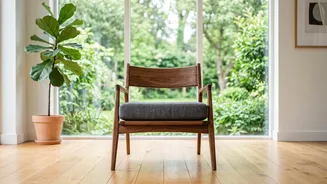
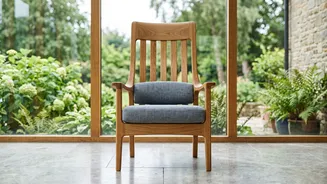
yoga poses so they can be done while seated or using a chair for support. This makes it a wonderful option for anyone with limited mobility, balance concerns, or chronic conditions, as well as office workers seeking relief from a sedentary day. The practice offers many of the same benefits as mat-based yoga, including improved strength, better balance, and reduced stress, all from a stable and secure position. All you need is a sturdy chair without wheels or armrests, like a dining chair. Your feet should rest flat on the floor with your thighs parallel to the ground.
The Power of the Forward Bend
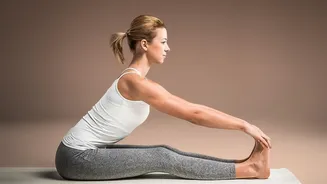
The seated forward bend, an adaptation of the classic 'Uttanasana', is a powerhouse for releasing tension throughout the body. This gentle fold primarily stretches the hamstrings and the entire length of the spine, helping to alleviate tightness in the lower back, hips, shoulders, and neck. Regularly practicing this pose can calm the nervous system, which may help reduce feelings of stress and anxiety. It also promotes circulation and can be a fantastic way to gently awaken the body or decompress after long periods of sitting.
Your Step-by-Step Guide
Ready to give it a try? Follow these simple steps for a safe and effective chair forward bend. Start by sitting on the edge of your chair with your feet flat on the floor, about hip-width apart. Place your hands on your knees or thighs. Inhale deeply and sit up as tall as you can, lengthening your spine. As you exhale, begin to hinge forward from your hips, not your waist. Think about leading with your chest and keeping your back relatively straight. Allow your hands to slide down your legs toward your shins or ankles. Only go as far as you feel a comfortable stretch, never a sharp pain. Let your head and neck relax, releasing any tension.
The Importance of Your Breath
In yoga, the breath guides the movement. As you practice the chair forward bend, coordinate your actions with your breath to deepen the experience. Use your inhalation to create length in your spine, sitting up a little taller. Use your exhalation to release more fully into the fold, allowing gravity to gently draw you forward. Never hold your breath. A steady, even breath will help calm your mind and signal to your muscles that it is safe to relax and release. Aim to hold the pose for 20-30 seconds, or about 4-5 deep breaths, before slowly rolling back up to a seated position.
Listen to Your Body: Modifications
The golden rule of yoga is to listen to your body and never force a pose. If your hamstrings or back feel particularly tight, keep a slight bend in your knees. If you can't reach the floor, don't worry. Resting your hands on your thighs, shins, or a stack of books placed in front of you are all great options. The goal is to feel a gentle stretch, not to strain. For a more restorative version, you can place a pillow or folded blanket across your thighs to support your torso as you fold forward. The most important thing is to find a version of the pose that feels good and supportive for you.
Common Mistakes and Safety Tips
To get the most out of your practice and stay safe, avoid a few common pitfalls. First, avoid rounding your back excessively as you fold forward; instead, focus on hinging from your hips to protect your lower back. Also, avoid yanking or bouncing into the stretch. Ease into the pose gradually on an exhale. Finally, when you are ready to come out of the pose, do so slowly. Roll up one vertebra at a time to avoid feeling lightheaded. While chair yoga is generally low impact, you should be mindful if you have a history of back injuries, disc issues, or high blood pressure.