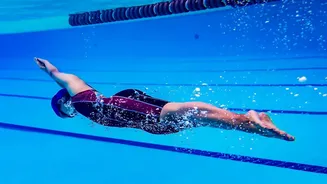







Running vs. Swimming: A Quick Comparison
Before diving into steady runs, it's helpful to know where each discipline shines. Running is a high-impact, weight-bearing exercise, making it excellent for building bone density. It primarily targets the lower body—glutes, quads, hamstrings, and calves—and
is exceptionally convenient, requiring little more than a pair of shoes. Minute for minute at a moderate effort, running typically burns more calories. Swimming, by contrast, is a low-impact activity that's gentle on the joints, making it ideal for recovery or for those with joint issues. It provides a true full-body workout, engaging the shoulders, back, core, and legs simultaneously. While a casual swim may burn fewer calories than a jog, vigorous swimming can match or even exceed the energy expenditure of running.
What Exactly Is a Steady Run?
A 'steady run' sits in a valuable but often-neglected middle ground. It's not a slow, easy jog, nor is it a breathless, high-intensity sprint. It's a sustained effort at a 'comfortably hard' pace. The most reliable way to gauge this is the 'talk test': you should be able to speak in broken sentences, but not hold a full conversation. If you can recite poetry, you're going too slowly; if you can only grunt single words, you're pushing too hard. Most coaches define this effort as being somewhere between your marathon pace and slightly slower, challenging your aerobic system without causing excessive fatigue.
The Engine-Building Benefits
So why bother with this specific pace? Steady running is one of the most effective ways to build your aerobic engine. These sessions train your heart and lungs to deliver oxygen to your muscles more efficiently. They specifically develop slow-twitch muscle fibres, the workhorses of endurance, by increasing their mitochondria—the powerhouses of your cells. This workout also improves your body's ability to use fat as a fuel source, a crucial adaptation for anyone looking to run longer distances without hitting 'the wall'. Over time, consistent steady runs will make your easy pace feel easier and allow you to hold faster speeds for longer.
Your Guide to a Perfect Steady Session
Structuring a steady run is simple. A classic format involves sandwiching the steady effort between a warm-up and cool-down. For a 45-minute session, you could try: 1. Warm-up (10 minutes): Start with a very easy jog to increase blood flow and prepare your muscles. 2. Steady Effort (25 minutes): Gradually increase your pace until you reach that 'comfortably hard' effort where you can speak in choppy sentences. Focus on maintaining this consistent pace. Don't be tempted to speed up as you feel good. 3. Cool-down (10 minutes): Slow back down to an easy jog or walk. This helps your body begin the recovery process by gradually lowering your heart rate and flushing out metabolic waste.
Where Swimming Fits In
This is where the 'versus' in the headline becomes an 'and'. Swimming is the perfect cross-training partner for a runner. Because it's low-impact, it allows you to add aerobic volume to your week without the extra pounding on your joints. A gentle swim the day after a hard run is an excellent form of 'active recovery', helping to loosen tired muscles and promote blood flow. Furthermore, swimming strengthens the upper body and core muscles that are often neglected by runners, leading to better posture and a more balanced, injury-resistant physique. Incorporating one or two swim sessions a week can support your running goals, not detract from them.