








Understanding the Roster-Based System
Imagine a sports team. The manager doesn't use the same starting lineup for every single game. They have a roster of players with different skills, energy levels, and specialties to choose from based on the day's needs. A roster-based workout plan applies
this same logic to your fitness. Instead of a rigid schedule where Monday is always 'leg day' and Tuesday is always a one-hour run, you create a menu of diverse workout options. This 'roster' includes workouts of varying lengths, intensities, and types. On any given day, you can look at your roster and choose an activity that fits your available time, energy level, and mood, rather than being locked into a single, demanding option. This approach shifts the focus from perfect adherence to consistent participation.
Why This Method Combats Workout Guilt
The primary benefit of a roster system is its power to dismantle 'all-or-nothing' thinking. This cognitive distortion is a major reason why people abandon their fitness goals. A rigid plan sets up a scenario where if you can't complete the prescribed one-hour gym session, you feel like a failure and do nothing at all. This 'nothing' choice reinforces guilt and makes it harder to start again. A roster-based plan, however, provides a built-in 'something.' It gives you permission to be flexible. When you're low on energy, instead of skipping your workout entirely, you can choose a 15-minute walk or a gentle stretching session from your roster. By successfully completing a 'smaller' workout, you maintain momentum, build confidence, and replace the cycle of guilt with a feeling of accomplishment.
How to Build Your Personal Workout Roster
Creating your roster is about giving yourself realistic and appealing options. Start by brainstorming activities you genuinely enjoy or are willing to do. Then, organize them into categories to make daily choices easier. A great way to structure this is by time, intensity, and type.
Time-Based Options: Create a list of workouts for when you have 60 minutes, 30 minutes, and even just 15 minutes. A 15-minute option could be a brisk walk, a quick bodyweight circuit, or a stretching routine.
Intensity-Based Options: Categorize workouts as high, medium, or low intensity. A high-intensity day might be a run or a HIIT session. A low-intensity option could be a slow yoga flow or a casual bike ride.
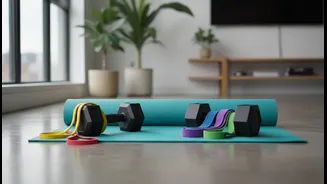
Type-Based Options: Group workouts by activity type, such as strength training (e.g., upper body, lower body), cardiovascular exercise (e.g., running, cycling), and flexibility/mobility (e.g., yoga, foam rolling). Your roster could include a 30-minute lower-body strength workout, a 45-minute moderate-intensity run, and a 20-minute restorative yoga session.
Putting Your Roster into Action
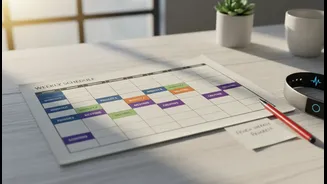
The goal is no longer to check off five specific, non-negotiable workouts each week. Instead, you might aim to select three to five activities from your roster. This reframes your weekly goal from 'what' you did to the simple fact 'that' you did something. On Monday morning, if you feel energized, you might tackle a challenging strength session. But if Tuesday is stressful and you finish work late, you can pivot to a 20-minute calming yoga routine without feeling like you've failed. This approach encourages you to listen to your body. Having a 'minimum effective dose'—a fallback workout that is easy to complete—is crucial. This ensures that even on your toughest days, you can do something small to keep the habit alive.
Avoiding Common Pitfalls
While a roster plan is flexible, it isn't completely without structure. The first potential pitfall is 'decision fatigue.' To avoid this, keep your roster concise. A list of 10-15 go-to options is far more manageable than a list of 50. Another mistake is creating a roster filled only with high-intensity or long-duration workouts. The system's magic lies in its genuinely accessible options, so be sure to include several activities that take 20 minutes or less and require minimal energy or setup. Finally, remember the goal is consistency, not variety for its own sake. If you find yourself enjoying and choosing the same 3-4 workouts repeatedly, that's a victory. The roster is there to provide alternatives when you need them, not to force you into constant change.