



Japan’s ambitions in the cosmos just received a major boost. Its newest spacecraft has successfully 'phoned home', confirming all systems are go after a nail-biting launch. This milestone marks the first step in a long and daring journey.
A New Voyager Takes Flight
The Japan Aerospace
Exploration Agency (JAXA) has confirmed that its 'Kirameki-2' spacecraft is in excellent health after launching earlier this week. The probe, whose name translates to 'Glitter-2', is the successor to a series of highly successful Japanese missions that have pushed the boundaries of asteroid exploration. For any deep-space mission, the hours and days following launch are among the most critical. It is a period fraught with risk, where the complex machinery, folded tightly for its violent ascent through Earth's atmosphere, must unfold and come to life in the vacuum of space. Kirameki-2’s successful activation is a testament to the meticulous engineering of JAXA and a crucial victory for Japan’s space program.
The Mission: A Journey to The Past
Kirameki-2 is embarking on a multi-year voyage to the Jupiter Trojan asteroids, a large group of space rocks that share Jupiter’s orbit around the Sun. These asteroids are considered 'fossils' of the early solar system, pristine remnants from over 4.5 billion years ago when the planets were first forming. Scientists believe that studying their composition could unlock fundamental secrets about how our solar system came to be. Unlike missions to the Moon or Mars, a journey to the Trojans is a game of immense distances and complex orbital mechanics. Kirameki-2 will spend years traversing the solar system, using gravitational assists from other planets to build up the speed needed to reach its distant target.
What 'Passing Checks' Really Means
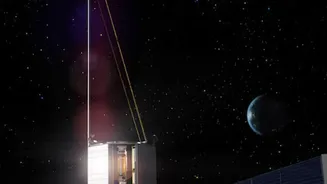
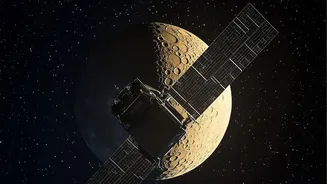
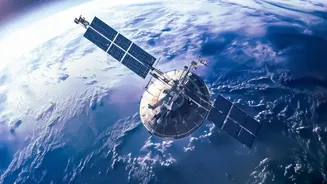
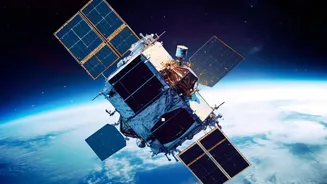
The confirmation from JAXA means the spacecraft has successfully completed its initial and most vital sequence of operations. First, it unfurled its large solar arrays, which are essential for generating the power needed to run its instruments and communication systems for the duration of its long mission. Mission controllers on the ground then established a stable, twoway communication link, allowing them to receive telemetry data and send commands. Finally, the probe performed a successful testfiring of its advanced ion engines. These highly efficient, lowthrust engines will be the workhorse of the mission, gently but persistently pushing Kirameki-2 across hundreds of millions of kilometres of space towards its destination. Passing these checks is like a newborn taking its first breaths; the journey is just beginning, but survival is now likely.
The Long Road Ahead
With the initial phase complete, Kirameki-2 now enters the 'cruise' phase of its mission. For the next several years, its journey will be relatively quiet, punctuated by periodic coursecorrection manoeuvres and system health checks. The real action will begin when it finally approaches its target asteroid. Upon arrival, it will spend months in orbit, meticulously mapping the asteroid's surface, analysing its chemical makeup, and identifying a suitable location for a potential future landing or sample collection. The data it gathers will be invaluable, providing a closeup look at a type of celestial body that has, until now, only been observed from afar. Every piece of information will be eagerly awaited by scientists back on Earth.
Japan Cementing Its Place in Space
This mission solidifies Japan's reputation as a world leader in robotic deepspace exploration, particularly in the challenging field of asteroid science. Following the stunning successes of the Hayabusa and Hayabusa2 missions, which brought back physical samples from two different asteroids, JAXA has proven its ability to execute complex, highrisk, highreward projects. As nations like the US, China, and India ramp up their own space activities, missions like Kirameki-2 demonstrate that the new space race is not just about the Moon and Mars. It is also about unlocking the scientific treasures hidden in the smaller, more ancient bodies of our solar system, and Japan is consistently proving to be at the forefront of that chase.