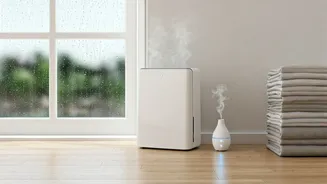









Control Humidity: The Root of the Problem
The primary cause of musty smells is the growth of mould and mildew, which thrive in damp conditions. These fungi release microbial volatile organic compounds (MVOCs) that create that distinct earthy odour. The key to prevention is controlling moisture.
Aim to keep your home's indoor humidity levels between 30% and 50%. Use a dehumidifier in naturally damp areas like basements, laundry rooms, and crawl spaces. Always run the exhaust fan in your bathroom during and after a shower and in the kitchen while cooking to pull excess moisture out of the air. Finally, regularly inspect for and promptly fix any leaks from pipes, roofs, or windows, as even minor drips can lead to significant mould problems.
Improve Air Circulation Throughout Your Home
Stagnant air traps moisture and allows musty odors to concentrate. Improving ventilation is a critical step in preventing these smells from taking hold. Make a habit of opening windows for at least a few minutes each day to let fresh air in and push stale air out. Creating a cross-breeze by opening windows on opposite sides of the house is particularly effective. Use ceiling fans to keep air moving, even in winter; switch them to rotate clockwise to pull air upward and distribute heat without creating a draft. In rooms without good natural airflow, like closets or pantries, consider leaving doors ajar or using small, standalone fans to encourage circulation.
Use Natural Odor Absorbers Proactively
Instead of waiting for an unpleasant smell to develop, use natural deodorizers to absorb excess moisture and odors before you notice them. Activated charcoal is highly porous and exceptionally effective at trapping odour-causing molecules from the air, working much better than just masking them. Place breathable bags of activated charcoal in closets, drawers, shoe racks, and near rubbish bins. Bowls of baking soda or white vinegar placed in stuffy areas can also absorb and neutralize odors. For a fresh scent, some indoor plants like snake plants and peace lilies can help purify the air naturally.
Clean Strategically and Consistently
Regular cleaning removes the dust, organic materials, and unseen spores that can contribute to musty smells. Pay special attention to areas prone to dampness. Routinely wash bath mats, shower curtains, and towels. In front-loading washing machines, which are prone to mildew buildup, always leave the door open between cycles to allow the drum to dry out completely. Regularly check and clean your HVAC filters, as a dirty system can circulate musty air throughout the entire house. Sprinkling baking soda on carpets and upholstery before vacuuming can also help absorb any budding odours.
Store Your Belongings Thoughtfully
How and where you store items can make a big difference. Avoid packing items too tightly in closets or cupboards, as this restricts airflow. Ensure clothes, linens, and other fabrics are completely dry before putting them away. Storing items in damp basements or attics can lead to them absorbing a musty smell over time. If you must use these spaces for storage, use airtight plastic containers rather than cardboard boxes, which can absorb moisture and become a food source for mould. For items like seasonal clothing or bedding, using activated charcoal sachets within the storage containers can help keep them fresh.