
Your Vehicle: The Pre-Trip Proving Ground
Before you even think of hitting the high passes, your car or motorcycle needs a thorough inspection. This isn't your average city drive; the terrain is unforgiving, and workshops are scarce. Start with a full service from a trusted mechanic at least
a week before your trip. Pay special attention to the engine, which will be working harder in the thin air. Use high-quality synthetic engine oil if possible. Your tyres are your primary contact with the treacherous roads. Ensure they have at least 70-80% tread remaining and are no more than five years old. Consider All-Terrain (AT) tyres for better grip on gravel and broken tarmac. The braking system is non-negotiable; inspect brake pads, rotors, and fluid levels to ensure they can handle long, steep descents.
Essential Mechanical Checks
Several other components are critical for this journey. Check the entire suspension system for wear and tear, as you'll encounter everything from smooth tarmac to rocky riverbeds. A healthy cooling system is vital to prevent overheating on steep climbs; ensure your coolant is topped up. The battery should be checked for health, as cold high-altitude mornings can be a struggle for weak batteries. Finally, inspect all lights, the horn, and wipers. Don't forget the air filter; the dusty conditions can choke an engine, so start with a clean one. For diesel vehicles, have the fuel injectors and glow plugs checked.
The Roadside Rescue Kit: Spares and Tools
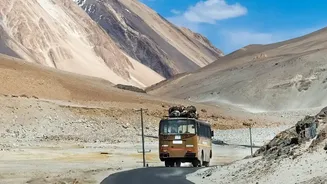
On the Manali-Leh highway, you are your own first responder. The stretch between Tandi and Karu spans about 365 km with no formal workshops. Your toolkit should be comprehensive. For any vehicle, this includes a full spanner and screwdriver set, pliers, and adhesives like M-Seal. A puncture repair kit is absolutely mandatory, whether for tubed or tubeless tyres. Don't rely on a manual pump; a portable electric tyre inflator will be a lifesaver at altitudes where physical exertion is difficult. For motorcycles, carry spare clutch and accelerator cables, a spare tube, a chain lock, and lubricant. For cars, having two spare tyres is a wise precaution if space permits. Also carry about 5-10 litres of spare fuel, as the only petrol pump after Manali is at Tandi until you get closer to Leh.
Understanding High-Altitude Acclimatisation
Acute Mountain Sickness (AMS) is a serious risk that can affect anyone, regardless of age or fitness level. It occurs when your body doesn't get enough time to adjust to lower oxygen levels at high altitudes. Symptoms range from mild headaches, nausea, and dizziness to severe, life-threatening conditions like High-Altitude Pulmonary Edema (HAPE) and Cerebral Edema (HACE). The key to prevention is gradual ascent. Driving up from Manali provides a natural, if rapid, acclimatisation advantage over flying directly into Leh. However, this journey involves crossing multiple passes over 15,000 feet, making a smart itinerary crucial.
The Golden Rules of Acclimatisation
The cardinal rule is to ascend slowly and allow your body to adapt. Plan for an overnight halt at a moderate altitude. The recommended first night stop is Jispa or Keylong (around 3,200 metres). Avoid sleeping at Sarchu (over 4,200 metres) on your first night out of Manali, as this steep altitude gain is a common trigger for AMS. The mantra is “climb high, sleep low”; it’s fine to cross high passes during the day as long as you descend to a lower altitude for the night. Stay well-hydrated by drinking 3-4 litres of water daily, eat high-carbohydrate meals, and strictly avoid alcohol and smoking. Do not over-exert yourself; even short walks can feel strenuous. Consult your doctor before the trip about preventative medication like acetazolamide (Diamox).
A Safe Itinerary and Listening to Your Body
A well-paced three-day journey is highly recommended for the Manali to Leh drive. A typical plan involves: Day 1: Manali to Jispa/Keylong. Day 2: Jispa/Keylong to Sarchu or Pang. Day 3: Sarchu/Pang to Leh. This schedule builds in a crucial acclimatisation stop before you tackle the highest passes like Tanglang La (17,480 ft). Pay close attention to your body. If you experience persistent headache, nausea, or extreme fatigue, it's a sign to rest. If symptoms worsen, the only cure for severe AMS is to descend to a lower altitude immediately. Never ignore the symptoms or push through the discomfort.