




The Global Neighbourhood Watch for Space
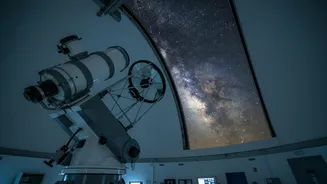
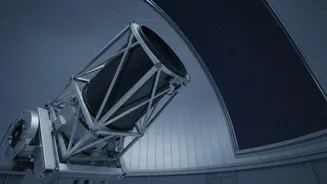
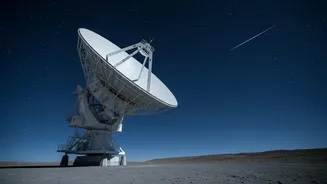
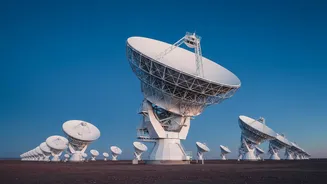
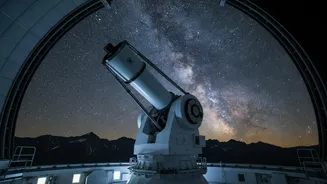
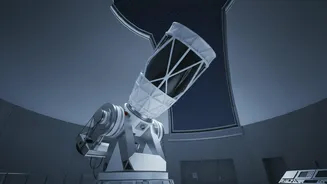
At the heart of Earth's defense strategy are several key organizations that form a worldwide network. The International Asteroid Warning Network (IAWN), endorsed by the United Nations, is a collaboration of observatories, space agencies, and astronomers.
Its members discover, monitor, and physically characterize potentially hazardous near-Earth objects (NEOs). Working alongside IAWN is the Space Mission Planning Advisory Group (SMPAG), which brings together space-faring nations to plan an international response to a credible threat. These groups are coordinated by bodies like NASA's Planetary Defense Coordination Office (PDCO) and the European Space Agency's (ESA) Planetary Defence Office, which act as nerve centers for detection and response planning. The Minor Planet Center serves as the global clearinghouse, processing all NEO observations from around the world.
Why Speed and Sharing are Everything
When a new asteroid is spotted, time is the most precious resource. A single observation from one telescope provides only a fleeting snapshot. To accurately plot an asteroid's orbit and determine if it poses a threat, scientists need multiple observations from different locations over time. This is where real-time data sharing becomes critical. By immediately sharing observations of an object's position, brightness, and movement, astronomers across the globe can collectively track it. This collaborative approach allows them to rapidly refine the asteroid's trajectory, reducing uncertainty and confirming whether its path will intersect with Earth's orbit. An asteroid initially thought to be a threat can often be proven harmless with more data, preventing unnecessary panic. Conversely, for a genuine threat, this speed provides maximum warning time.
A Global Problem Demands a Global View
Asteroids do not respect national borders; an impact could occur anywhere on the planet. This makes planetary defense an inherently international issue. A network of observatories spread across both the Northern and Southern Hemispheres is essential for continuous, 24/7 sky coverage. When it is daytime in one part of the world, telescopes on the night side of the planet can take over. Furthermore, some asteroids are only visible from certain latitudes. International cooperation ensures there are no blind spots in our ability to detect these objects. This global net also provides redundancy. If weather conditions like clouds or storms obstruct the view from one observatory, another one thousands of kilometers away can capture the necessary data, ensuring a potential threat isn't missed.
From Data to Deflection
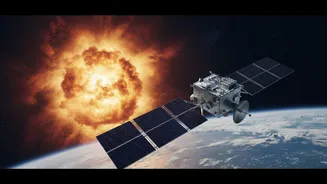
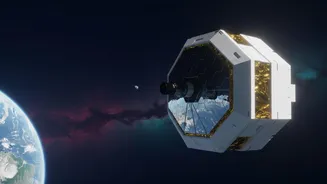
The ultimate goal of tracking asteroids isn't just to watch them, but to be prepared to act if necessary. The data gathered on an asteroid's size, composition, and trajectory is vital for planning a potential mitigation mission. This was demonstrated by NASA's Double Asteroid Redirection Test (DART) mission in 2022, which successfully altered the orbit of the asteroid moonlet Dimorphos. This mission proved that deflecting a hazardous asteroid is technologically possible. ESA's follow-up Hera mission, launched in 2024, will study the aftermath of the DART impact to help scientists fully understand the effects and refine future deflection techniques. Such missions are incredibly complex and expensive, and the data shared by international networks is the foundation upon which they are built, allowing for collaborative planning and execution.
Building a Unified Front
The framework for this global cooperation is not accidental; it is the result of years of diplomatic and scientific effort, often facilitated by the United Nations Office for Outer Space Affairs (UNOOSA). IAWN provides the structure for observatories to share their findings and issue warnings if an asteroid meets certain threat criteria, such as having a greater than 1% chance of impact. SMPAG then provides a forum for space agencies to discuss a coordinated response, ensuring that the world is, quite literally, on the same page. This unified system allows for clear communication to governments and emergency response agencies, turning astronomical data into actionable information to protect citizens. This quiet, constant cooperation is a powerful example of science transcending politics for the benefit of all humanity.