




The Persistent 'Cloud Problem'
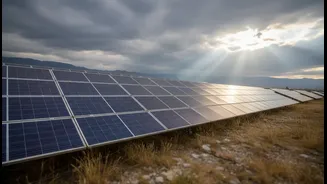
Solar energy has become a cornerstone of India’s renewable energy ambitions, with vast solar farms and rooftop panels becoming increasingly common. Yet, the technology’s primary limitation remains its dependency on weather. On a clear, sunny day, modern
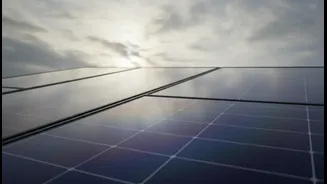
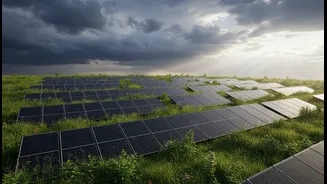
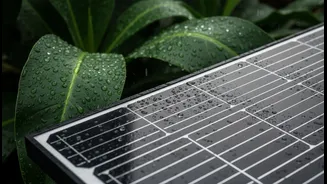
solar panels are highly effective. But during heavy cloud cover, rainy seasons, or even just hazy mornings and evenings, their output can drop significantly, sometimes to just 10-25% of their rated capacity. This variability is a major hurdle for creating a consistent and reliable power grid. For a country like India, where the monsoon can bring months of overcast skies, this is not a trivial issue. It forces a reliance on backup power sources and makes solar a less dependable primary energy provider. Addressing this performance gap is crucial for unlocking solar’s full potential.
A Breakthrough in Materials: Enter Perovskite
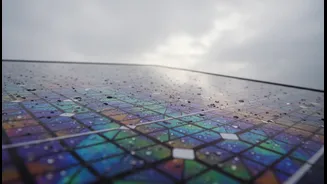
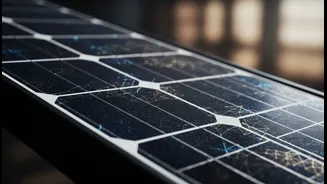
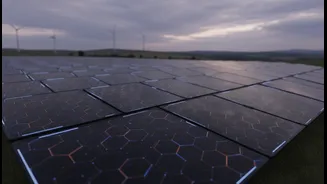
The most exciting new research is centered around a class of materials called perovskites. Unlike traditional solar cells made from rigid silicon, perovskites have a unique crystal structure that is exceptionally good at absorbing light. More importantly, they are highly efficient in low-light conditions, precisely where silicon-based panels struggle. Researchers are developing 'tandem' solar cells, which layer a thin film of perovskite on top of a traditional silicon cell. This combination is a game-changer. The perovskite layer captures high-energy light (like visible and UV light), while the silicon layer below absorbs lower-energy infrared light. By working together, they harvest a much broader spectrum of sunlight, dramatically boosting overall efficiency, especially when light is diffused by clouds.
How It Boosts All-Weather Performance
Conventional panels rely heavily on direct, intense sunlight. Diffuse light, which is scattered by clouds, water vapour, and particles in the atmosphere, is much harder for them to convert into electricity. The new generation of perovskite-based cells excels at capturing this very light. Think of it as having a net with a much finer mesh. While a standard panel might only catch the 'big fish' of direct sunlight, the tandem cells can also catch the 'smaller fish' of scattered, ambient light. Recent studies show that this technology could significantly improve electricity production during overcast weather. Some researchers are even exploring materials that can store energy from sunlight during the day and release it as light at night, which the cell then converts to electricity for several hours after sunset.
What This Means for India's Energy Goals
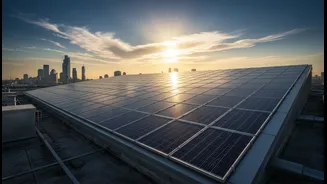
This research could be transformative for India. The country has ambitious targets for solar energy capacity, but grid stability during the long monsoon season is a significant concern. More efficient all-weather solar panels would mean more consistent power generation year-round. This reduces the need for expensive energy storage solutions or fossil-fuel backup plants. It would make solar power a more reliable and economically attractive option for everything from large-scale utility projects to individual home rooftops in regions that experience frequent cloudy weather. By improving the energy yield from the same physical footprint, this technology makes better use of land and resources, accelerating the transition to clean energy.
From the Lab to the Rooftop: The Road Ahead
While the breakthroughs are promising, it's important to remember this is still emerging technology. Perovskite solar cells have historically faced challenges with long-term stability and sensitivity to moisture, though recent advances are overcoming these issues. The first perovskite-silicon tandem panels are just beginning to enter the market, primarily for utility-scale projects, with wider residential availability still a few years away. The focus now is on scaling up manufacturing to make these advanced panels cost-effective and durable enough for widespread deployment. However, with companies already setting new world records for efficiency and planning for mass production, the path from the laboratory to our rooftops is becoming clearer and shorter.