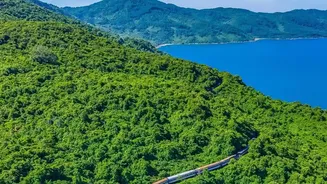





In our rush to reach the destination, we often forget the joy of the journey itself. While highways offer speed, India's coastal train routes provide a cinematic alternative, trading traffic-choked roads for breathtaking, uninterrupted seaside views.
The Freedom of the Window Seat
There is a unique tranquility that comes with train travel, a stark contrast to the demands of a road trip. Behind the wheel, your focus is on the tarmac, navigating traffic, and watching for the next turn-off. The landscape becomes a peripheral blur. A train journey, however, hands you back your time and your attention. You are not a driver; you are an observer. From the vantage point of a window seat, the world unfolds at a relaxed pace. This philosophy of 'slow travel' is about prioritising the experience over simple efficiency, allowing for a deeper connection with the landscapes you pass through. It transforms travel from a task into a meditative experience, where the journey itself is a vital part of the vacation.
The Legendary Konkan Railway
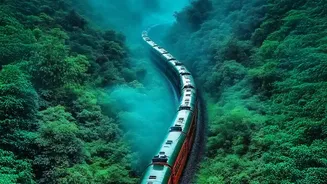
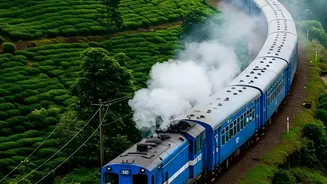
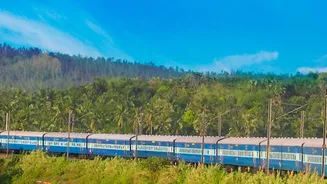
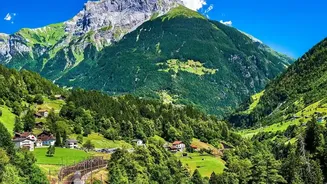
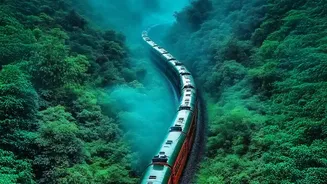
Nowhere is this scenic superiority more evident than on the Konkan Railway. Spanning over 700 kilometres from Maharashtra through Goa to Karnataka, this route is celebrated as one of India’s greatest engineering marvels and most beautiful journeys. Instead of endless asphalt, the train snakes through the lush Western Ghats, offering panoramic views of the Arabian Sea. The route is a spectacle of nature, traversing over 2,000 bridges and through 91 tunnels. Passengers are treated to views of verdant valleys, cascading waterfalls (especially during monsoon), and quaint villages fringed with coconut palms. While the coastal highway NH-66 offers its own views, the train provides an unparalleled, unobstructed perspective, cutting through landscapes inaccessible by car.
A Passage Over the Sea
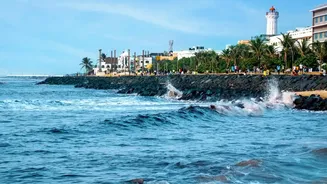
Further south, the journey from Mandapam to Rameswaram in Tamil Nadu offers an experience that no highway can replicate: a train ride across the ocean. The historic Pamban Bridge, India's first sea bridge, carries the railway line connecting the mainland to Pamban Island. For a few unforgettable minutes, the train seems to glide on water, with the endless blue of the Bay of Bengal stretching out on both sides. Looking down, you see fishing boats bobbing on the waves below as the sea wind rushes past. It’s a short but profoundly memorable journey that feels more like a magical adventure than simple transit, cementing the train as the ultimate way to experience India's coastal splendour.
More Than Just a Pretty View
The superiority of the train isn't just visual. It’s a full sensory experience that a car journey filters out. It’s the rhythmic chug of the wheels, the diverse array of station snacks, from vada pav in Ratnagiri to fresh chai offered by platform vendors. It’s an inherently social journey, offering chance encounters and conversations with fellow travellers from all walks of life, something rarely experienced in the isolation of a car. You see life unfold right outside your window—communities beginning their day, children playing near the tracks, and landscapes shifting from urban density to serene countryside. This ground-level view provides a slice of real India that remains unseen from 30,000 feet or a fast-moving highway.
The Case for Unrushed Travel
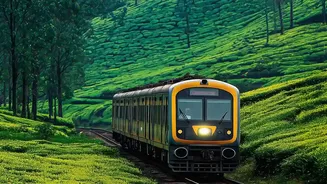
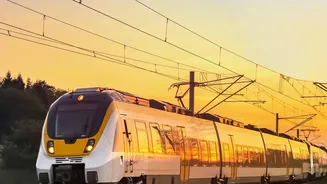
Choosing the train is choosing a different kind of holiday. It's an escape from the stress of navigation, traffic jams, and the fatigue of long-distance driving. The journey from Mumbai to Goa, for instance, can take 10-13 hours by road, often on congested or under-construction highways. The train, covering a similar duration, replaces that stress with relaxation. Modern additions like Vistadome coaches, with their panoramic windows and rotating seats, have been specifically designed to enhance this scenic experience, turning the ride into an attraction itself. Ultimately, the highway is built for speed, but the coastal railway is built for seeing. It reminds us that the distance between two points is not something to be conquered, but something to be savoured.