







A New Space Race Begins
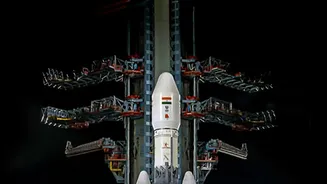
The roar of the rocket has been replaced by the hum of innovation in design labs across India. Fresh off the global success of the Chandrayaan-3 mission, the nation's focus is expanding from a government-led endeavour to a dynamic public-private ecosystem.
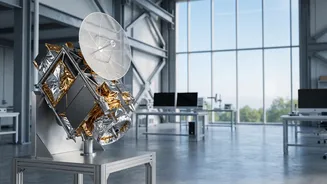
The Indian Space Policy 2023 officially opened the doors for private companies to participate in end-to-end space activities, catalysing a surge in entrepreneurship. As of 2026, India is home to hundreds of space-tech startups, several of which have been founded by alumni of prestigious institutions like the IITs and BITS Pilani. These companies are not just aiming to support the Indian Space Research Organisation (ISRO); they are building their own rockets, satellites, and, most audaciously, lunar rovers for a global clientele.
Meet the Lunar Trailblazers
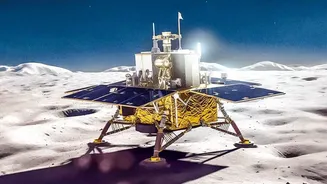
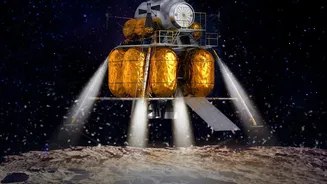
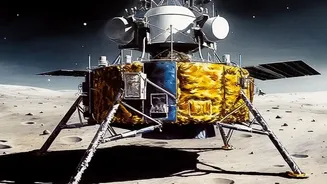
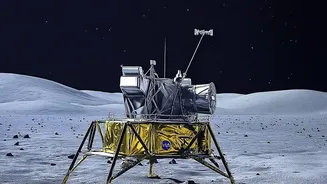
While many startups focus on launch vehicles and satellites, a few are looking 384,400 kilometres away—to the Moon. Companies like ORBITBeyond are establishing significant operations in India to design and manufacture lunar landers and rovers. The company is setting up a global space systems centre in Bhubaneswar, leveraging local engineering talent with experience from ISRO's Chandrayaan missions. This isn't just an assembly line; the Indian arm is a core part of the engineering and design process. The history of private Indian lunar exploration includes firms like TeamIndus, which was the only Indian team to compete for the Google Lunar XPRIZE and developed significant expertise in lander and rover technology, even partnering with international teams. While that specific prize concluded without a winner, the expertise and ambition it fostered continue to fuel the sector.
The 'Low-Cost' Advantage
How do these startups plan to build Moon rovers for a fraction of the cost of traditional space agency missions? The strategy involves a combination of innovative design, the use of off-the-shelf components, and a focus on smaller, more specialised vehicles. For instance, the global trend, which Indian startups are tapping into, is towards 'CubeRovers'—compact, lightweight rovers weighing just a few kilograms. This dramatically reduces launch costs, which are a major part of any mission's budget. Instead of designing every component from scratch, which is incredibly expensive, startups can adapt existing technologies from other industries. This approach, often called 'frugal innovation,' allows them to offer 'mobility as a service' on the Moon, where a university or a foreign space agency can book space for their scientific instrument on a rover without having to build one themselves.
The Business of Exploring the Moon
The market for these low-cost rovers is surprisingly diverse. The primary customers are scientific bodies and universities that have payloads and experiments they want to run on the lunar surface but lack the multi-billion dollar budget for a full-fledged mission. Furthermore, with India signing the Artemis Accords and NASA inviting ISRO to participate in its Moon Base program, a new commercial opportunity has emerged. NASA's Commercial Lunar Payload Services (CLPS) initiative actively contracts private companies to deliver science and technology to the Moon. This opens the door for Indian startups, either directly or through partnerships, to bid for contracts to transport payloads. As nations and corporations look to explore the Moon for resources like water ice, these affordable rovers could become the go-to solution for initial prospecting and site surveys.
Navigating the Final Frontier
The path to the Moon is not without its craters. The biggest challenge for these startups is the immense technical difficulty and cost of proving their technology. Space is an unforgiving environment, and a single failure can be catastrophic. Securing funding for such high-risk, long-term projects remains a significant hurdle. While investment in the Indian space-tech sector is growing, it is still modest compared to the global scale. However, the increasing collaboration between ISRO and the private sector is a promising sign. ISRO is actively providing its expertise, facilities, and support to startups, helping them test their engines and systems, which de-risks their ventures and accelerates development. This hand-holding approach is crucial for building a robust and reliable commercial space industry in the country.