






A Lunar Layer Cake
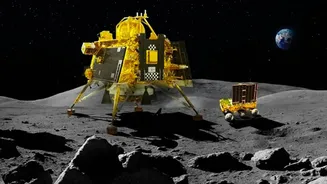
The Moon’s surface may appear to be a uniform sea of dust, but findings from the Vikram lander tell a different story. An analysis of data from the Chandra’s Surface Thermophysical Experiment (ChaSTE) shows that the top 10 centimetres of lunar soil, or regolith,
at the Shiv Shakti Point is not uniform at all. Instead, it is composed of three distinct layers, each with its own physical and thermal properties, a discovery that scientists had not previously observed or expected on such a fine scale. This multi-layered structure offers a new window into the Moon's geology and the history of its surface.
Unpacking the Layers
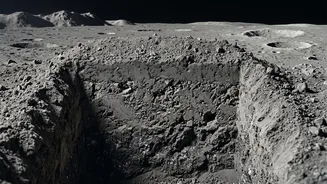
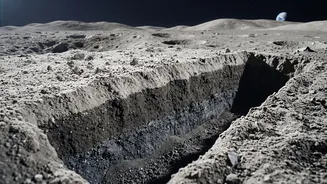
The ChaSTE instrument, a probe designed to penetrate the lunar surface and measure temperature, revealed the cake-like structure. The topmost layer, extending down about 3 cm, is extremely porous and fluffy, with a porosity of around 80% and a low density. Below this lies a middle layer, from 3 to 6 cm deep, which is more compact and conducts heat better. The third layer, from 6 to 10 cm, is denser still, with its bulk density increasing to about 1,500 kg per cubic metre, more than double that of the top layer. This stratification means that walking on the Moon might feel like stepping on dry flour that quickly gives way to something more akin to firm, damp clay just inches below.
How ChaSTE Made the Discovery
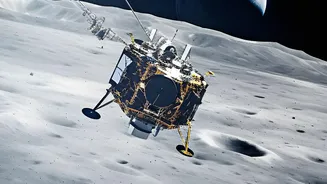
The ChaSTE payload, developed by the Physical Research Laboratory (PRL) and the Space Physics Laboratory in India, is an engineering marvel. It features a probe with 10 individual temperature sensors that was pushed 10 cm into the lunar regolith. A key opportunity for detailed analysis came from Vikram's 'hop' manoeuvre, where the lander fired its engines to lift off and land about 50 cm away. This brief engine blast blew away the top 2-3 cm of loose soil at the new location, allowing ChaSTE to measure the properties of the freshly exposed sub-layer and compare them to the original, undisturbed site. This provided a unique before-and-after look at the regolith's structure.
A Tale of Ancient Impacts
Scientists believe this layering may be the result of successive asteroid and micrometeorite impacts over billions of years. The Shiv Shakti Point is located in a complex region near the massive South Pole-Aitken basin. Researchers propose that ejecta—material thrown out from different impact events from nearby craters—settled over time, depositing layers with varying compositions and densities. The finding highlights the landing site as a geologically rich area that has preserved a long history of lunar events, offering a stark contrast to the regions visited by previous missions like Apollo.
Why These Layers Matter for Future Missions
This discovery is more than just a geological curiosity; it has profound implications for the future of lunar exploration. Understanding the soil's properties is crucial for designing habitats, rovers, and landing equipment. For instance, the insulating properties of the top layer, which cause a massive temperature drop of nearly 60-70 degrees Celsius within just a few centimetres, could be leveraged to protect future lunar bases from the extreme temperature swings on the surface. Knowing that the soil becomes much denser and more cohesive with depth will inform how to build stable foundations and extract resources, a key step toward establishing a sustained human presence on the Moon.