






Beyond a Digital Dictionary
Imagine a textbook that knows when you’re struggling and adapts to help you. This is the promise of custom reading AI. Unlike a simple spell-checker or a digital dictionary you have to consult manually, these advanced systems are designed to be dynamic
learning partners. Their goal isn't just to define a difficult word but to ensure comprehension by subtly modifying the text a student is reading. By creating a personalised reading experience, this technology aims to bridge the often-vast gap between a student's current reading level and the complex language required for subjects like science, history, or law. It’s a shift from static text to a fluid, responsive learning environment, tailored to one individual at a time.
How the AI 'Reads' the Reader
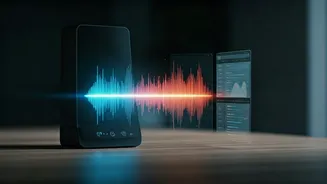
The magic begins with analysis. To customise the text, the AI first needs to understand the reader's abilities. More basic versions of this technology might track which words a student looks up or how quickly they progress through a passage. More sophisticated systems, however, employ a range of techniques. Some use the microphone on a tablet or computer to listen to a student read aloud, analysing their fluency, pronunciation, and hesitation points. This helps the AI identify specific words or phonetic patterns that are causing trouble. Other platforms might use interactive quizzes embedded in the text to check for comprehension in real-time. The most advanced concepts even involve eye-tracking to see which words a reader lingers on or skips over, providing an incredibly detailed map of their cognitive load and reading challenges.
Simplifying Text in Real Time
Once the AI has a clear picture of the student's skills, it gets to work on the 'editing' part. This is where the technology truly shines. If the AI detects that a student is struggling with a word like 'photosynthesis,' it won't just offer a definition. Instead, it might dynamically replace it with a simpler phrase like 'the process plants use to make food from sunlight.' For another student who understands the concept but not the word, it might just provide a quick synonym. This editing can be tiered. A first-time encounter with a difficult word might trigger a simple substitution. On subsequent encounters, the AI might re-introduce the original academic term, now with a clickable definition, gradually scaffolding the student’s vocabulary until they can handle the original, unedited text with confidence.
A Potential Game-Changer for India
In the Indian educational context, the potential for such technology is immense. In classrooms with large student-to-teacher ratios, providing individualised attention is a persistent challenge. An AI tutor could offer that one-on-one support, helping students at their own pace. Furthermore, for the millions of students learning in English as a second or third language, this tool could be transformative. It can help them navigate the dense, jargon-filled English of STEM and humanities textbooks, building both subject knowledge and language proficiency simultaneously. By levelling the linguistic playing field, it could help more students access and excel in higher education and competitive exams, where strong reading comprehension is non-negotiable.
The Road Ahead and Its Challenges
Of course, this technology is not a magic bullet. For it to be effective, equitable access to devices and reliable internet is crucial, a challenge that persists in many parts of the country. There are also important questions about data privacy and the potential for over-reliance on technology, which could hinder the development of traditional reading resilience. Educators and developers must ensure these tools are used to supplement, not replace, the invaluable guidance of a human teacher. The goal is to empower students, not to create a dependency on a digital crutch. As with any powerful new tool, the key will be thoughtful implementation, focusing on how it can best serve the ultimate goal: creating more confident, capable, and curious learners.