



The Heart of the Halwa: Winter Carrots
The secret to an authentic Gajar Halwa lies in its star ingredient: the 'desi gajar', or red carrot. Available only during the colder months, these carrots are noticeably sweeter, juicier, and more tender than their year-round orange counterparts. This
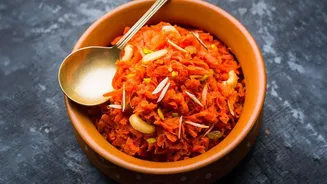
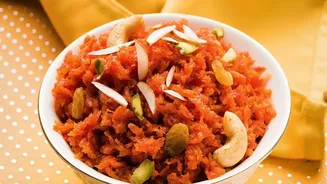
natural sweetness means less sugar is needed, allowing the earthy flavour of the carrot to shine through. Their vibrant, deep red colour, which comes from lycopene, gives the halwa its signature, beautiful scarlet hue. While the orange carrot is a feasible substitute, those who have tasted halwa made from winter red carrots will attest that there is simply no comparison. The arrival of these carrots in the market signals the true beginning of winter for many food lovers, marking the start of 'halwa season'. This seasonal exclusivity makes the dish feel all the more special.
A Labour of Love: The Slow-Cooking Method
Traditionally, making Gajar Halwa is a patient, slow-cooked affair. The process begins with the laborious task of grating several kilograms of carrots by hand. These grated carrots are then simmered in a large, heavy-bottomed pan with full-fat milk. The mixture is cooked down slowly, often for over an hour, requiring regular stirring as the milk gradually evaporates and infuses the carrots. This slow reduction is crucial; it’s what gives the halwa its creamy, melt-in-the-mouth texture. Once most of the milk is absorbed, sugar and ghee (clarified butter) are added. The final stage involves roasting the mixture in ghee until it becomes glossy and fragrant, a process known as 'bhunai' which deepens the flavour and colour. While modern shortcuts exist, this traditional method is a true labour of love, and the resulting taste is considered well worth the effort.
A Symphony of Flavours and Aromas
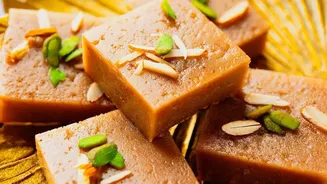
While carrots, milk, and sugar form the holy trinity of Gajar Halwa, it’s the supporting ingredients that elevate it. Ghee is essential, lending the dessert a rich, nutty aroma and a glossy finish. Green cardamom powder is another key component, infusing the halwa with its distinct, warm, and floral fragrance that cuts through the richness. To finish, the halwa is often garnished with an assortment of nuts and dried fruits. Toasted almonds, cashews, and pistachios provide a delightful crunch, while plump raisins add small bursts of sweetness. Some recipes also call for saffron, which adds a subtle flavour and enhances the dessert's radiant colour. Together, these elements create a complex and harmonious blend of textures and tastes in every spoonful.
From Royal Kitchens to Family Homes
The history of 'halwa' itself is rooted in Arabic and Persian cuisines, arriving in India via trade and cultural exchange. Gajar Halwa specifically is believed to have been popularised during the Mughal era, where royal kitchens were known for their rich milk-based sweets. Associated strongly with the Punjab region, it quickly became a beloved dessert across North India. Today, it’s a dish that transcends social boundaries, enjoyed in humble homes and at lavish weddings alike. It is a staple during winter festivals like Diwali and family gatherings, where it symbolises celebration, prosperity, and the comforting warmth of home. For many, the aroma of halwa cooking is deeply tied to childhood memories and family traditions.
Modern Twists on a Classic
While the traditional slow-cooked method remains the gold standard for many, modern life has given rise to several popular variations that save time without sacrificing too much flavour. A common shortcut is to use khoya (also known as mawa), which are dried milk solids. Adding khoya gives the halwa an intensely rich and granular texture while significantly reducing the cooking time needed to evaporate the milk. Another quick method involves using sweetened condensed milk, which replaces both the milk and sugar, creating a sweet, creamy halwa in a fraction of the time. There are even recipes adapted for pressure cookers and Instant Pots, which make the process even more convenient. These adaptations ensure that this beloved winter dessert can be enjoyed even on a busy schedule.