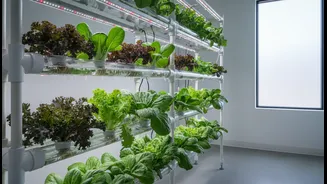







What Are Liquid-Base Hydroponics?
Hydroponics is a method of growing plants without soil. Instead, it uses a water-based nutrient solution to deliver everything a plant needs directly to its roots. Liquid-base systems are the simplest form of this technique, perfect for beginners. In these
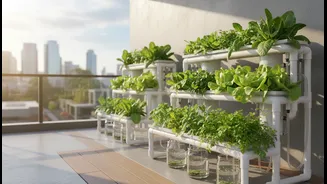
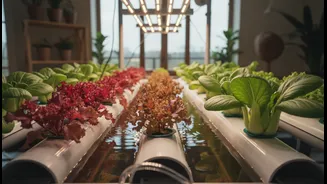
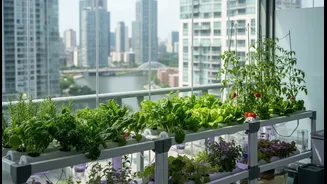
setups, the plant roots are either submerged in or have constant contact with this nutrient-rich water. The two most popular methods for home growers are Deep Water Culture (DWC) and the Kratky method. DWC involves suspending plants over a reservoir of aerated water, while the Kratky method is a passive system with no moving parts, making it incredibly low-maintenance. Both are ideal for growing leafy greens in compact indoor spaces.
Your Essential Beginner's Toolkit
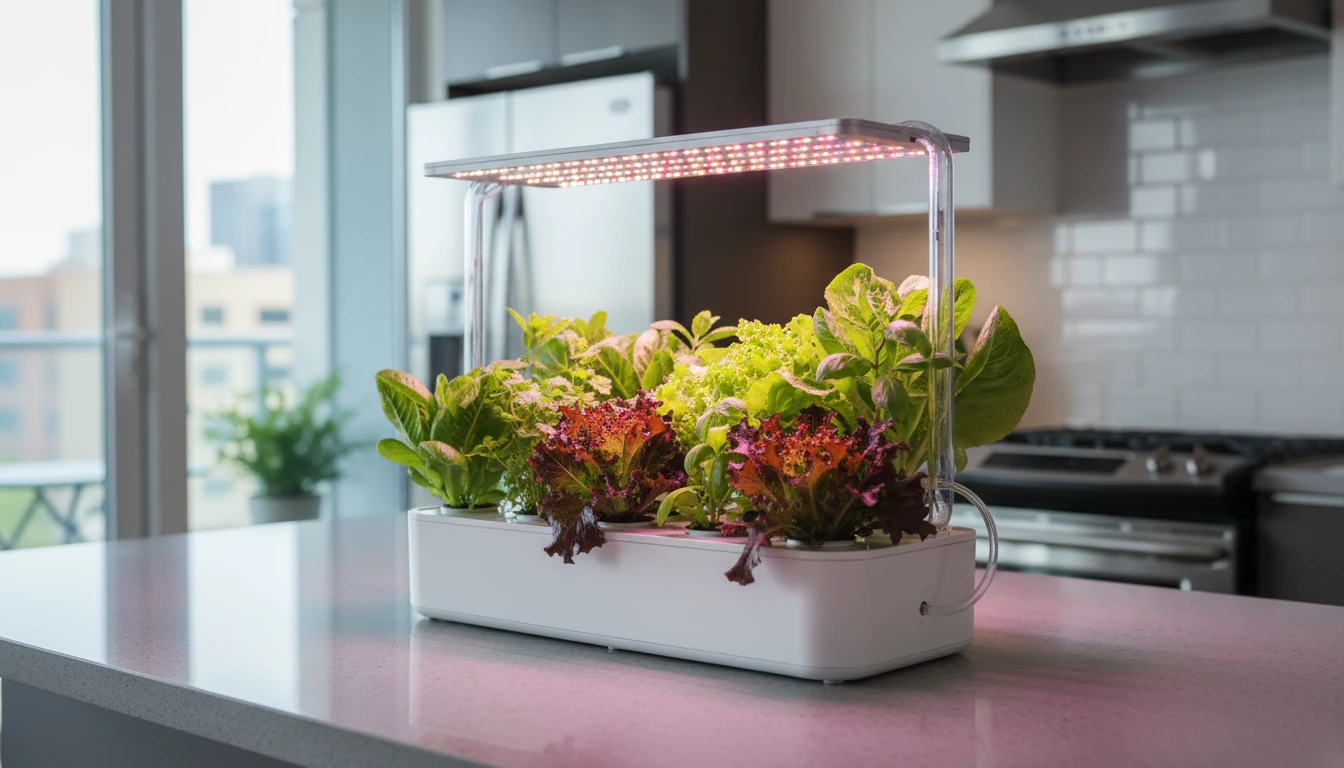
Getting started is less complicated than it sounds. You only need a few key items. First, a container to serve as a reservoir; an opaque bucket or storage tote works well to prevent algae growth. You'll also need net pots to hold your plants, and a growing medium like rockwool or clay pebbles to support them. The most crucial component is the hydroponic nutrient solution, which contains all the essential macro and micronutrients plants need. Finally, unless you have a very sunny spot, you'll need a full-spectrum grow light to ensure your plants get the 12-16 hours of light they need for healthy photosynthesis.
Setting Up Your First System
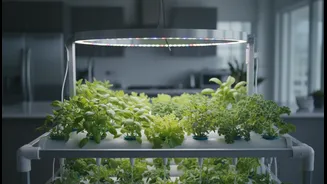
Let's build a simple DWC system. Start by cutting holes in the lid of your container, spaced to prevent overcrowding, just large enough to fit your net pots. Fill the reservoir with water and mix in your hydroponic nutrients according to the package directions. It's vital to check the pH of the solution, as most greens thrive in a pH range of 5.5 to 6.5; you can use a simple testing kit and pH up/down solutions to adjust it. If you're using an air pump (recommended for DWC), place an air stone at the bottom of the reservoir and run the airline tubing outside. Place your seedlings, already sprouted in a medium like rockwool, into the net pots and set them in the lid. Ensure the roots are just touching the surface of the nutrient solution. Position your grow light a few inches above the plants and set it on a timer.
Choosing Your Exotic Greens and Herbs
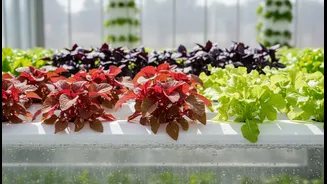
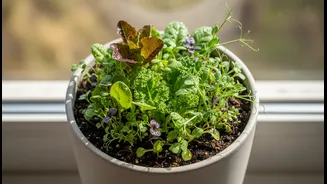
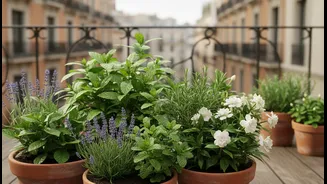
The best part is deciding what to grow. Liquid hydroponic systems are excellent for fast-growing leafy greens and herbs. For a touch of the exotic, move beyond standard lettuce. Try growing nutrient-dense options like kale, Swiss chard, and spinach. Arugula adds a peppery kick to salads, while herbs like basil, mint, cilantro, and parsley flourish indoors and provide incredible flavour. These plants have a rapid growth cycle, often ready for harvesting in just a few weeks, and don't require the more complex nutrient formulas that fruiting plants need.
Light, Nutrients, and Ongoing Care
Maintenance is straightforward. Change the nutrient solution every one to two weeks to prevent nutrient imbalances and keep the water fresh. During this change, it's a good time to clean the reservoir to manage any potential algae. Keep an eye on your plants for signs of trouble. Yellowing leaves, for example, can indicate a nutrient deficiency or a pH issue. Most nutrient deficiencies are actually caused by an incorrect pH level that prevents plants from absorbing the available minerals. Also, maintain a comfortable room temperature between 18-24°C, as extreme temperatures can stress the plants.
Common Beginner Pitfalls to Avoid
A few common mistakes can be easily avoided. The first is ignoring pH levels; daily or weekly checks are crucial for plant health. Another is providing inadequate light. A sunny windowsill is often not enough, so investing in a good grow light is key. Overcrowding plants is also a frequent error, as it can restrict airflow and lead to issues. Finally, one of the most serious problems is root rot, caused by poor oxygenation. In a DWC system, an air stone is your best defence. If you notice roots turning brown and mushy, it's a sign they need more oxygen.