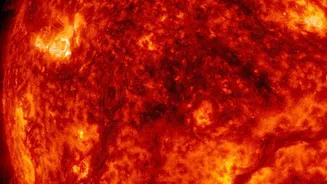


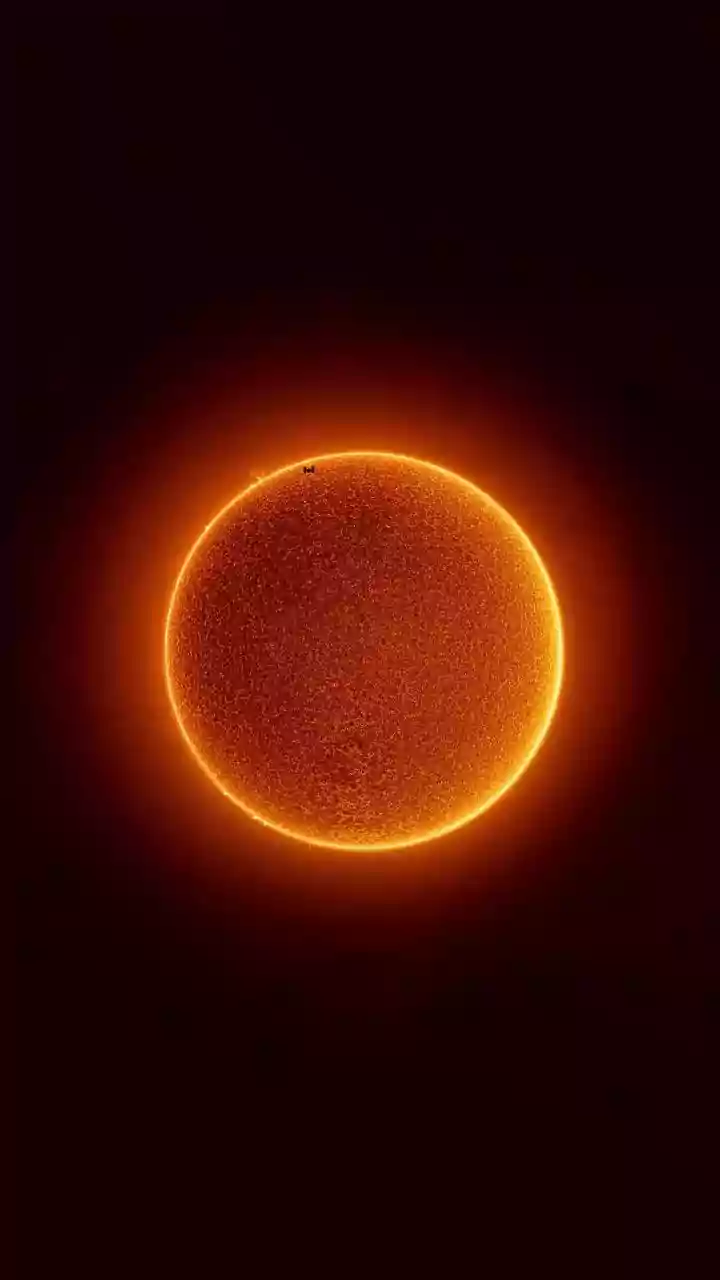

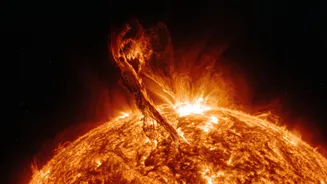
Our Sun, the star that makes life on Earth possible, has a turbulent and mysterious side. Now, a landmark collaboration between India’s Aditya-L1 and Europe’s Proba-3 missions is peeling back the layers of our star’s most violent secrets.
A New Era of Solar Science
For the first
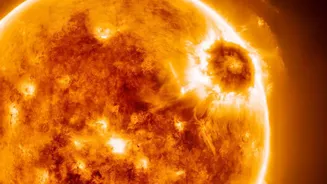
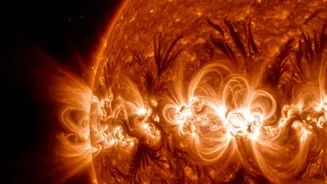
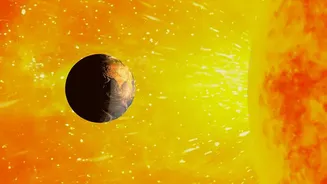
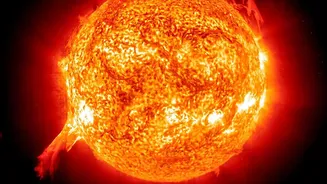
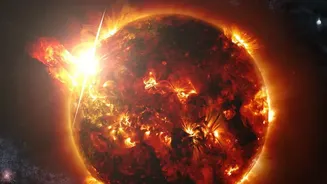
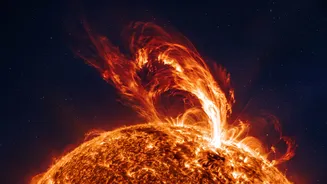
time, scientists have combined observations from India's maiden solar mission, Aditya-L1, and the European Space Agency's (ESA) Proba-3 to study the same solar eruptions. This joint effort provides a more complete picture of Coronal Mass Ejections (CMEs), which are massive expulsions of plasma and magnetic fields from the Sun. When aimed at Earth, these eruptions can disrupt satellites, communication networks, and power grids. Understanding how they begin is crucial for improving space weather forecasts. Until now, observing the initial moments of these eruptions has been incredibly challenging because the Sun's blinding glare obscures the faint light of its outer atmosphere, the corona. This new partnership, however, is changing the game.
India's Unblinking Eye: Aditya-L1
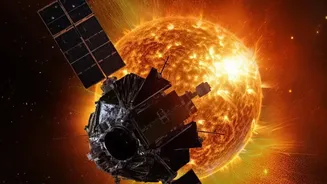
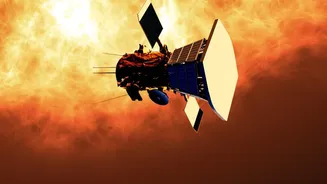
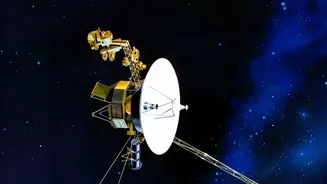
Launched by ISRO on September 2, 2023, Aditya-L1 is India’s first space-based solar observatory. Positioned at Lagrange Point 1 (L1), about 1.5 million kilometres from Earth, it has an uninterrupted view of the Sun. One of its key instruments, the Visible Emission Line Coronagraph (VELC), was developed by the Indian Institute of Astrophysics. VELC is a coronagraph, an instrument that blocks the Sun's bright disk to see the much dimmer corona. It uses spectroscopy to analyse the light from the corona, allowing scientists to measure properties like the temperature, velocity, and density of the plasma. This gives crucial clues about the conditions that lead to an eruption. In a recent joint study, VELC successfully caught two CMEs in their very early stages in September 2025.
Europe's Artificial Eclipse: Proba-3
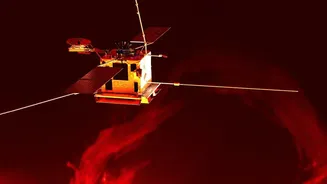
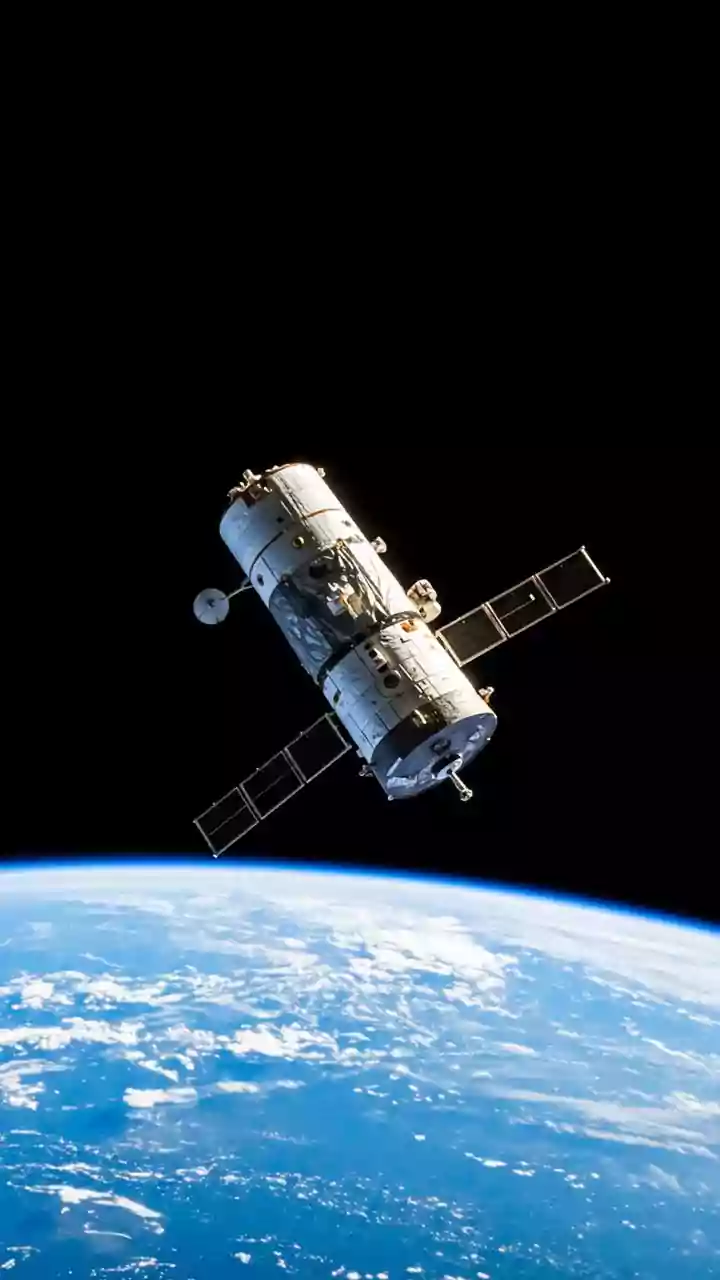
The ESA's Proba-3 mission, which was also launched by an ISRO PSLV rocket in December 2024, takes a revolutionary approach. It is the world's first precision formation-flying mission, consisting of two satellites flying in a tight formation, 150 metres apart. One satellite acts as an 'occulter', casting a precise shadow onto the second satellite, which carries the coronagraph instrument named ASPIICS. This creates a perfect, long-lasting artificial solar eclipse in space, allowing for exceptionally clear images of the inner corona—the very region where eruptions are born. This technique dramatically reduces the stray light that plagues traditional single-spacecraft coronagraphs, revealing finer details than ever before.
Stronger Together: A Tale of Two Missions
The true power of this collaboration lies in combining the different strengths of each mission. Aditya_L1's VELC provides spectroscopic data, giving scientists the 'what'—the physical properties of the erupting gas. Proba_3's ASPIICS provides sharp, detailed images, giving them the 'where' and 'how'—the shape, structure, and movement of the eruption. By observing the same CMEs simultaneously, such as the two events in September 2025, scientists from the Indian Institute of Astrophysics and their international partners could cross_check their data. They were able to independently calculate the mass, density, and energy of the eruptions using two different methods, yielding a more robust and complete understanding of how these powerful events develop just moments after they leave the Sun.
Why This Matters for India and the World
This India–Europe partnership is more than just a scientific curiosity; it has profound practical implications. As our world becomes more dependent on space–based technology like GPS and satellite communications, our vulnerability to space weather increases. Violent solar eruptions are the primary driver of dangerous space weather. By understanding the physics of their origin, scientists can build better predictive models. This collaboration demonstrates the leading role that India's space programme plays on the global stage, not only in launching capabilities but also in generating cutting–edge scientific data. The joint observations are a testament to the power of international cooperation in tackling some of science's biggest mysteries and in helping to protect our technological infrastructure on Earth and in orbit.