
The Shag: Effortless, Cool Volume
The shag haircut is arguably one of the most defining looks of the decade, embodying a carefree and rebellious spirit. Made famous by icons like Jane Fonda and Joan Jett, the shag’s magic lies in its choppy, uneven layers. The style features shorter layers on top
and around the crown, which creates natural lift and texture, while the lengths are left longer and wispier. This layered structure is the key to its signature top-heavy volume, giving the hair movement and an intentionally 'undone' look that feels both cool and effortless. It’s a versatile cut that works on straight, wavy, or curly hair, as the layers are designed to enhance natural texture.
The Feathered Flip: Glamour and Bounce
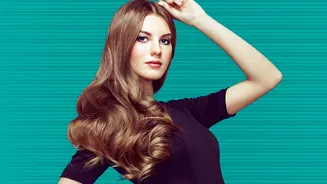
No discussion of 70s hair is complete without mentioning 'The Farrah'. Popularized by 'Charlie's Angels' star Farrah Fawcett, this feathered hairstyle became a cultural phenomenon. The look was defined by its soft, sweeping layers that were styled away from the face, creating voluminous 'wings' around the cheeks and temples. While the layers created movement throughout, the style always featured significant volume and lift at the crown, preventing the hair from falling flat. This combination of height at the top and airy, flipped-out ends created a look that was glamorous, bouncy, and the absolute pinnacle of late-70s chic.
Disco Curls and Afros: Maximum Fullness
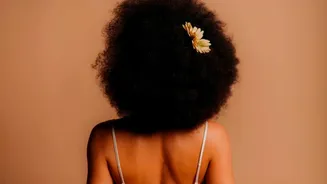
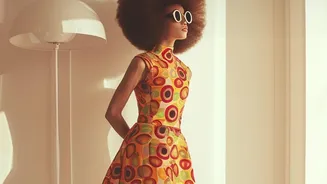
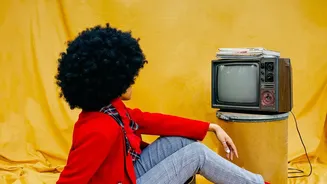
On the dance floors, volume was everything. Disco hairstyles were bold, shiny, and unapologetically big. Stars like Donna Summer and Diana Ross championed voluminous curls and glorious Afros, styles that celebrated fullness and natural texture. For curly hair, the goal was often a halo of soft, brushed-out curls that emphasized bounce and movement under the disco lights. The Afro, a powerful symbol of pride and self-acceptance, embraced the hair’s natural texture and volume, often shaped into a beautifully rounded silhouette. Both styles were all about maximizing the hair's presence, creating a dramatic and confident look from every angle.
The Soft Bouffant: A Hint of the 60s
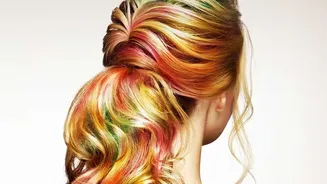
While the 70s leaned into more natural looks, the influence of the 1960s bouffant hadn't entirely disappeared. Instead, it was softened and relaxed for the new decade. High ponytails were often styled with a 'poof' at the crown, achieved by teasing or backcombing the hair before securing it. This gave the style height and a touch of formal glamour without the rigid structure of a true beehive. This lingering affection for crown volume could also be seen in half-up styles, where the top section was clipped back to create lift, blending 60s height with 70s softness.
How to Get the Volume Today
Achieving that signature 70s crown lift today is easier than you think. The right haircut is the foundation; ask your stylist for layers, especially around the crown, to create natural volume. For styling, modern tools and products are your best friends. Start by applying a volumizing mousse or spray to the roots of damp hair. When blow-drying, flip your hair upside down to lift the roots away from the scalp. For targeted height, use a round brush at the crown, pulling the hair straight up as you dry. Hot rollers are also a fantastic tool for recreating that bouncy, 'flipped' look. For a final touch and lasting hold, a gentle backcombing or teasing at the crown, followed by a mist of texture spray, will lock in that perfect 70s volume.