






As summer's long days fade, the night sky reclai ms the evening, rollin g out a celestial carpe t sooner than any other season. This is autumn's gift to stargazers: crisp air, comfortab le temperatures, and an early start to cosmic exploration.
Autumn's Perfect Celestial Conditions
So, why
is autumn such a prime season for looking up? It's a combination of factors that create a perfect storm for stargazing. First, the practical: darkness arrives earlier. Unlike summer, when you might wait until 10 p.m. for true darkness, autumn nights are properly dark well before many people's bedtimes. This makes it far more accessible for families and those with early morning commitments. Meteorologically, the air is often more cooperative. The high humidity of summer, which can cause atmospheric haze and distortion, gives way to cooler, drier air. This stability leads to clearer, steadier views, making stars appear sharper and brighter. It’s also a transitional period in the sky. The bright, star-dense core of the Milky Way, a summer spectacle, is setting in the west, but a new cast of prominent characters is rising high overhead, ready for their turn in the spotlight.
Jupiter and the Dance of its Moons
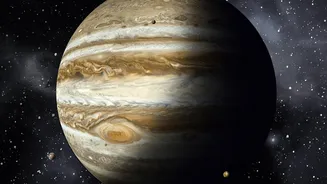
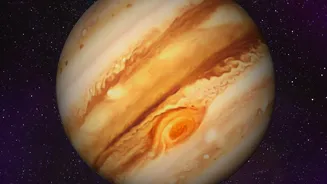
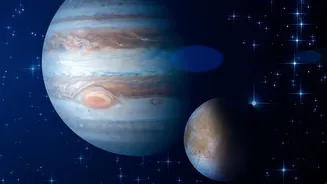
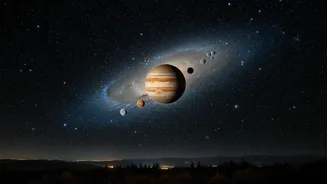
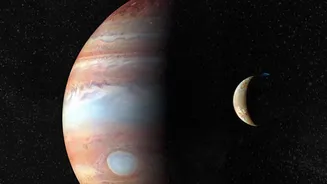
The undisputed king of the autumn 2026 planetary scene is Jupiter. While visible in the pre-dawn hours in late September, it will become an increasingly brilliant feature as the season progresses. On October 6, 2026, a particularly special event occurs: a lunar occultation, where the waning crescent Moon will pass directly in front of Jupiter, temporarily hiding it from view. But you don't need a special event to appreciate the gas giant. The real magic for a beginner with a simple pair of binoculars is seeing its four largest moons—Io, Europa, Ganymede, and Callisto. Known as the Galilean moons, they appear as tiny, bright pinpricks of light flanking the planet. Observing them from one night to the next reveals their constant dance as they orbit Jupiter, a miniature solar system visible from your own backyard. It’s a profound sight that transforms Jupiter from a bright star into a dynamic, distant world.
A Glimpse of Galaxies Far, Far Away
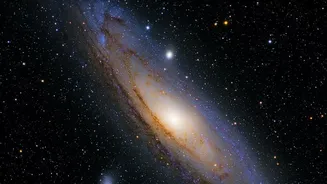
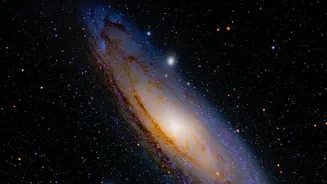
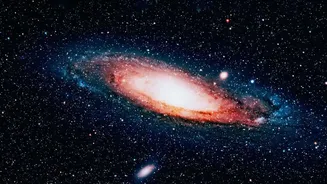
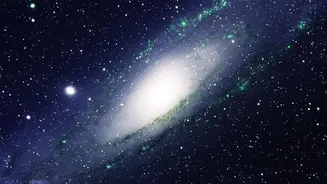
Autumn is the premier season for viewing the most distant object visible to the naked eye: the Andromeda Galaxy. Known as M31, this majestic spiral galaxy is our closest major galactic neighbor, yet it sits an almost incomprehensible 2.5 million light-years away. During autumn evenings, it climbs high into the sky, making it easier to see. To find it, first locate the W-shaped constellation Cassiopeia. From a location with dark skies, away from city light pollution, Andromeda appears as a faint, fuzzy patch of light, like a small, ethereal cloud. Even this smudge is awe-inspiring when you consider you're looking at a trillion stars. Binoculars will resolve its shape more clearly, revealing its brighter central core. For those with a small telescope, the fainter Triangulum Galaxy (M33) is another excellent autumn target, though it requires truly dark skies to spot.
Connecting the Autumn Dots
Navigating the night sky is easier when you can recognize the season's key constellations. Autumn's star patterns are dominated by figures from Greek mythology. The most prominent asterism is the Great Square of Pegasus, a large box of four similarly bright stars that represents the body of the mythical winged horse. This celestial landmark serves as a great starting point. Branching off from one corner of the square is the constellation Andromeda. High in the northern sky, you'll find the unmistakable 'W' of Cassiopeia, the Queen. These constellations, along with others like Perseus, Pisces, and Aquarius, form the signposts of the autumn sky, guiding you to deeper and more fascinating sights.
Your Stargazing Starter Kit
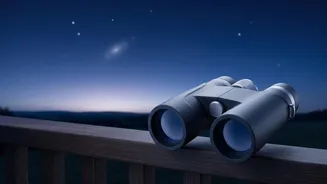
The best part about stargazing is that you need very little to get started. The most crucial element is finding a dark location, as far from city light pollution as possible. Once there, your most important tool is patience. It takes your eyes about 20 to 30 minutes to fully adapt to the darkness, a process that can be instantly ruined by a glance at a bright phone screen. If you need light, use a red-light torch, as red light doesn't spoil your night vision. Before investing in a telescope, start with a good pair of binoculars. They are perfect for scanning the Milky Way, getting a closer look at the Moon, and easily spotting Jupiter's moons and the fuzzy glow of the Andromeda Galaxy. Finally, dress in warm layers, as even mild autumn days can turn into chilly nights.