






The Rise of a New ‘Colleague’
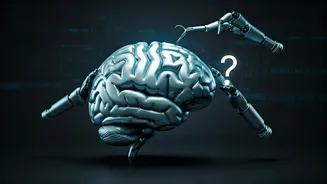
Let’s be honest: the conversation around Artificial Intelligence in creative and professional fields often swings between wild hype and existential dread. For writers, the threat can feel particularly personal. Is a machine going to take over the art of storytelling,
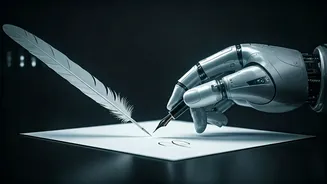
analysis, and persuasion? The short answer is no. But the longer, more useful answer is that it depends entirely on how we choose to use it. The fear of being replaced is understandable, but it’s also a distraction from a much more productive reality: AI isn't our competitor; it’s a potential collaborator. Thinking of AI as a replacement for human creativity is a fundamental misunderstanding of what it does best. Instead, we should reframe our approach and treat it like a new type of colleague—a draft partner.
What a Good Draft Partner Does
Think about the best creative partner you’ve ever had. They don't write your piece for you. Instead, they listen to your half-baked ideas and help you find the good ones. They read your messy first draft and point out where the argument gets lost or a character feels flat. They can be a sounding board, a ruthless (but fair) editor, and a source of inspiration when you hit a wall. A good partner amplifies your abilities; they don't replace them. This is the perfect role for AI. It can brainstorm endless ideas, structure a chaotic pile of notes, and proofread your work with tireless precision. What it cannot do is replicate your unique voice, experience, and insight—the very things that make your writing valuable.
The Brainstorming Engine
Every writer knows the terror of a blank page. This is where your AI partner excels. Instead of asking it to 'write an article about X,' which often results in generic, soulless text, use it as an idea generator. Ask it for ten different angles on a topic, five potential headlines, or a list of contrarian viewpoints to consider. You can prompt it for character sketches, plot twists, or analogies to explain a complex subject. Most of the outputs might be unusable, but that’s the nature of brainstorming. The goal isn't for the AI to give you the perfect idea, but to generate enough raw material to spark your own creativity.
An Unemotional Editor
One of the hardest parts of writing is editing your own work. We get attached to certain phrases or are blind to our own confusing sentences. Your AI draft partner has no such attachments. You can paste a clunky paragraph and ask it to suggest three clearer versions. AI tools are excellent at spotting repetitive language, identifying passive voice, and suggesting ways to make your writing more concise. Unlike a human editor, it has no feelings to hurt and is available 24/7. This frees you up to focus on the bigger picture—the flow of your argument and the emotional impact of your story—while the AI handles the more mechanical aspects of polishing your prose.
Setting Healthy Boundaries
Of course, this partnership comes with critical ground rules. The most important is to never let the AI do the core intellectual work. Its output should be treated as a rough draft or a set of suggestions, not a final product. Fact-checking is non-negotiable, as AI models are known to generate false information, often called “hallucinations.” Furthermore, ethical considerations like plagiarism and copyright are paramount. Major institutions and publishers now have strict guidelines on disclosing the use of AI, and using it to generate entire works is considered academic and professional dishonesty. Your voice must remain the dominant force; the AI is there to assist, not to author.