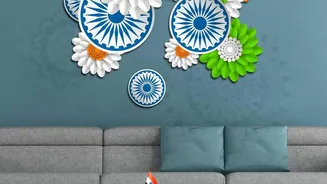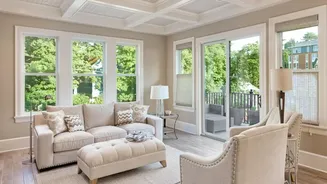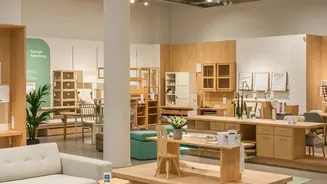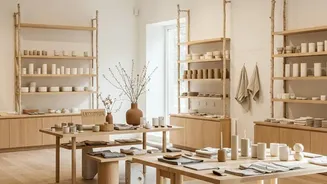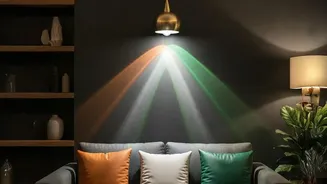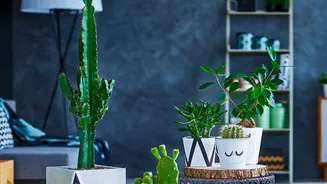




The modern Indian living room is a study in contrasts: clean lines meet rich textures, and neutral palettes are punctuated by bold statements. A growing trend sees homeowners moving beyond generic decor to embrace their roots. But how do you do it?
The Soul of the Modern Home
In
an age of mass-produced minimalism, there is a quiet but powerful return to the authentic and the handcrafted. Homeowners are increasingly looking for decor that tells a story, moving away from impersonal, catalogue-like styling to create spaces that feel personal and lived-in. This has sparked a renaissance for traditional Indian craft motifs, which are being seamlessly woven into the fabric of contemporary interiors. The goal isn't to recreate a museum or a historical theme, but to infuse modern, often minimalist, spaces with the warmth, character, and soul of India's artistic heritage. The result is a home that is both globally relevant and culturally rooted.
Kalamkari: From Temple Art to Statement Wall
Originally used to depict mythological stories on large temple hangings, Kalamkari is an ancient art of hand-painting or block-printing on cloth. Today, its earthy palette of indigo, mustard, and terracotta lends an organic richness to modern spaces. Instead of busy, narrative-heavy textiles, designers are using Kalamkari in more focused ways. A single, large framed panel can serve as a stunning piece of wall art above a sleek console or behind a minimalist sofa, acting as the room's anchor. For a subtler touch, cushion covers with simplified Kalamkari patterns can add a pop of heritage to a neutral couch without overwhelming the space.
Ikat: The Beauty of the Blur
Known for its characteristic blurred patterns, Ikat is a complex dyeing technique where yarns are tied and dyed before being woven. Its geometric and abstract designs make it a natural fit for contemporary aesthetics. The versatility of Ikat allows it to be used in various forms, from bold upholstery on an accent chair to elegant curtains that filter light with a touch of drama. The pattern's inherent movement can energise a room without making it feel cluttered. Even small applications, like lampshades or a single statement cushion, can introduce personality and a dash of global-meets-local sophistication.
Madhubani: Folk Art Goes Minimal
Hailing from the Mithila region of Bihar, Madhubani art is famous for its intricate line work and symbolic motifs, such as fish for prosperity and peacocks for love. While traditionally dense and vibrant, its modern adaptation is all about restraint. Instead of covering entire walls, Madhubani is now often seen in framed compositions. A monochromatic Katchni (line work) style painting can add intricate detail to a minimalist room without clashing with its clean aesthetic. Another approach is to isolate a single, powerful motif on a neutral background, allowing the art form's storytelling power to shine through in a controlled, contemporary way.
How to Style with Intention
Integrating these rich traditions into a modern home is an art of balance. The key is to avoid turning your space into a theme park of 'Indianness'. Start with a single focal piece. Let one strong artwork, like a Gond or Pattachitra painting, anchor the room and inform the colour palette. The rest of the decor can remain simple and modern. Contrast is your friend; pair a traditional textile with clean-'lined furniture. Think about texture as much as pattern—handwoven fabrics, terracotta planters, or brass figurines add warmth and depth. The idea is to let each handcrafted piece breathe, making it a point of connection and conversation rather than just another object in a crowded room.