

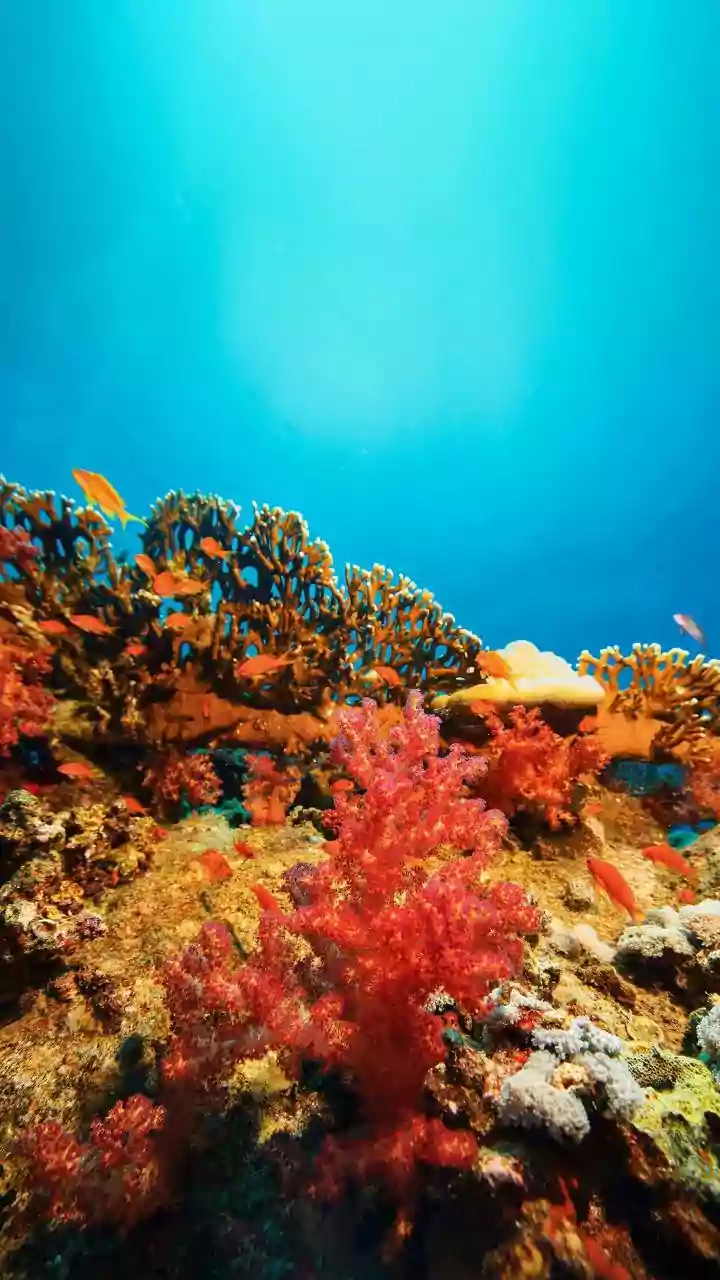





The Planet's Hidden Sponge
For decades, the world's oceans have been acting as a gigantic sponge, soaking up the consequences of human activity. The ocean has absorbed an astonishing 90% of the excess heat trapped by greenhouse gases, along with nearly a third of the carbon dioxide
we've emitted. Without this service, the air temperatures we experience on land would be rising far more dramatically. But this heat and carbon don't just stay at the surface. A complex system of global currents ensures that what happens at the top eventually makes its way down into the abyss, thousands of metres below. This process has shielded us, but it has also initiated profound and potentially irreversible changes in the largest and least understood habitat on Earth.
How Heat Travels to the Abyss
The transfer of heat to the deep sea is not a simple process of mixing. It is driven by a massive, planet-spanning network of currents often called the 'global conveyor belt' or thermohaline circulation. In the cold, salty waters of the polar regions, particularly the North Atlantic, surface water becomes very dense, sinks, and begins a slow, centuries-long journey along the ocean floor. This sinking water carries dissolved heat and carbon dioxide with it, effectively burying them in the deep ocean. As this happens, warmer surface water flows north to replace it, creating a constant cycle that helps regulate global climate patterns. However, recent studies from as recently as May 2026 provide strong evidence that this crucial current system, known as the Atlantic Meridional Overturning Circulation (AMOC), has been weakening for nearly two decades.
A Warming and Rising Deep
The consequences of the deep sea absorbing so much heat are twofold. The first and most direct is that the deep ocean itself is warming. While the temperature increase of about 1°C projected by the end of the century may seem small, deep-sea ecosystems are adapted to incredibly stable conditions, and even minor warming can have major impacts. The second consequence affects us all directly: sea-level rise. As water warms, it expands, a phenomenon known as thermal expansion. With the vast volume of the deep ocean slowly heating up, it is a major contributor to the rising seas that threaten coastal communities across India and around the world. This warming also alters ocean circulation patterns, which can disrupt weather and intensify storms.
The Carbon Problem and Acidification
Beyond heat, the deep sea is also a massive carbon sink. This occurs through two main pathways: a physical one, where CO2 dissolves into cold surface water and sinks, and a biological one. The biological pump involves tiny marine organisms called phytoplankton, which absorb CO2 for photosynthesis. When they die, a portion of their carbon-rich bodies sinks to the seafloor, sequestering that carbon for long periods. But this absorption has a dangerous side effect: ocean acidification. When CO2 dissolves in seawater, it forms carbonic acid, increasing the water's acidity. This process is no longer confined to the surface; it is spreading into deeper waters. Higher acidity makes it harder for organisms like corals, shellfish, and some plankton to build their shells and skeletons, a condition dubbed 'coralporosis'. This threatens the very foundation of deep-sea food webs and ecosystems.
Signs of a System Under Strain
The deep ocean's capacity to absorb heat and carbon is not infinite, and the system is showing clear signs of stress. The observed slowdown of the AMOC is a significant concern for scientists. A potential collapse of this current system could have catastrophic consequences, including drastic changes to weather patterns, more extreme storms, and a weakening of the vital Asian and African monsoons. A recent, non-peer-reviewed study from September 2026 even forecast that a significant AMOC decline could cripple agriculture in major global breadbaskets, threatening food security. The steady warming and acidification of the deep sea represent a combined stressor that could compromise key ocean services, threaten biodiversity, and ultimately reduce the ocean's ability to buffer us from further climate change.