







The Legend Beneath the Waves
The magnificent Shore Temple at Mahabalipuram, a UNESCO World Heritage site, has stared out at the Bay of Bengal for over 1,300 years. According to enduring local legends and accounts from early European travellers, this iconic structure was not alone.
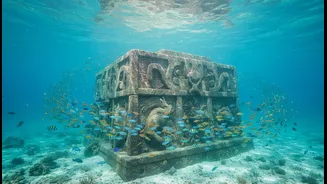
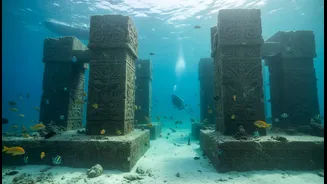
It was believed to be the last survivor of a complex of seven grand temples, or 'pagodas'. The story goes that the gods grew jealous of the city's splendour, sending a great flood that swallowed the other six temples, hiding them beneath the waves. For generations, fishermen have shared tales of glimpsing submerged ruins while out on the water, keeping the legend alive. While historians were long sceptical, these stories laid the groundwork for one of India's most fascinating archaeological quests.
From Myth to Modern Mission
The search for the lost temples has seen sporadic efforts over the years, but it was the 2004 Indian Ocean tsunami that dramatically reignited interest. As the sea temporarily receded by almost 500 metres, eyewitnesses reported seeing a long line of large stone structures emerge from the water before being submerged again. This event seemed to confirm what local folklore had claimed all along. In the years that followed, explorations by the Archaeological Survey of India (ASI) and the National Institute of Oceanography (NIO) used sonar technology and diving operations to map the seabed. These initial surveys found evidence of submerged walls and scattered man-made stone blocks, suggesting a large complex had indeed been lost to the sea.
What the Seabed Has Revealed
The latest mission, a renewed effort by the ASI's Underwater Archaeology Wing, is building on these earlier discoveries with more advanced technology. Teams are now equipped with Remotely Operated Vehicles (ROVs) that can capture high-resolution video in deeper waters without disturbing the delicate site. Early findings from this advanced phase are promising. The focus is on a vast area up to 800 metres from the shoreline, where previous missions identified submerged structures at depths of six to eight metres. Divers and sonar have mapped long walls—one stretching over 10 metres—as well as scattered, dressed stone blocks that appear to be part of fallen buildings. Some discoveries include what look like steps leading to a platform and remnants that suggest the layout of ancient Pallava-era temples. Though covered in thick marine growth, the positioning of these ruins strongly indicates they were once part of a significant, man-made complex.
Connecting Past and Present
Archaeologists believe these structures date back 1,200 to 1,500 years, placing them firmly in the Pallava period when Mahabalipuram was a bustling port city. The question is no longer if something is down there, but what it was. The evidence points towards a large part of the ancient Pallava town being submerged over time. The cause is believed to be a combination of factors, including severe coastal erosion, which has been measured at a significant rate in the region, and possible tsunami events in centuries past. The current mission is not just about finding temples; it's about reconstructing the history of this vibrant port city. Each submerged wall and stone block offers a clue to understanding the scale of Mahabalipuram at its peak and the natural forces that reshaped its coastline.