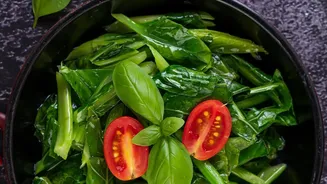







In the landscape of Indian comfort food, few dishes evoke the warmth and nourishment of saag. But beyond its delicious flavour, this beloved classic is a masterclass in nutrition, showcasing the vital role of leafy greens in a balanced diet.
More Than Just One Dish
When many
hear 'saag', they often picture 'sarson ka saag', the iconic Punjabi dish made from mustard greens and famously paired with makki di roti. While that is a celebrated example, the term 'saag' in Indian cuisine refers to a broader category of dishes prepared from a wide variety of leafy green vegetables. From spinach (palak) and fenugreek (methi) to amaranth (chaulai) and bathua (chenopodium), saag is a culinary tradition that embraces the diverse and abundant greens grown across the subcontinent. Each region and household may have its own unique blend, turning simple leaves into a hearty, flavourful preparation.
A Nutritional Powerhouse
Leafy green vegetables are celebrated for being nutritional powerhouses, and saag is a prime example of their benefits. These greens are densely packed with essential vitamins and minerals. They are an excellent source of Vitamin K, crucial for bone health, and Vitamin A, which supports vision and immune function. They are also rich in Vitamin C, an antioxidant that helps the body fight off infections. Furthermore, saag provides significant amounts of iron and calcium, which are vital for preventing anaemia and maintaining strong bones. The high dietary fibre content aids digestion, promotes a feeling of fullness to help with weight management, and can help stabilise blood sugar levels.
The Strength in Variety
One of the greatest nutritional strengths of saag comes from the common practice of mixing several types of greens. A traditional sarson ka saag, for instance, often combines the pungent flavour of mustard greens with the milder taste of spinach and the earthy notes of bathua. This isn't just for taste; it's a nutritionally intelligent approach. Different greens have different nutrient profiles. For example, mustard greens are exceptionally high in Vitamins C and K, while spinach is a great source of iron and folate. Fenugreek (methi) is known for its potential to help regulate blood sugar, and amaranth (chaulai) is a good source of protein and calcium. By combining them, you create a dish with a more comprehensive and balanced nutritional profile, embodying the principle of a varied diet in a single bowl.
Maximising the Health Benefits
How saag is prepared and eaten can enhance its health benefits. Traditional preparations often include spices like ginger, garlic, and turmeric, which have their own anti-inflammatory properties that complement the antioxidants found in the greens. While often cooked for a long time to achieve a creamy consistency, it's wise to avoid overcooking to preserve heat-sensitive nutrients like Vitamin C. The classic addition of a dollop of ghee or butter is not just for flavour; these healthy fats can help the body absorb fat_soluble vitamins like A and K, which are abundant in leafy greens. Pairing saag with whole_grain flatbreads like roti or millets adds more fibre and sustained energy to the meal.
Incorporating Greens Beyond Saag
Inspired by the wisdom of saag, it's easy to incorporate a wider variety of greens into your daily meals. Finely chopped fenugreek leaves can be kneaded into thepla or paratha dough, adding a distinct flavour and nutritional boost. Spinach can be stirred into dal or khichdi towards the end of cooking for added iron and vitamins. Amaranth leaves can be quickly stir_fried with garlic and spices for a simple and fast sabzi. Even radish greens, often discarded, can be used in saag preparations or stir_fries, providing a peppery kick and a host of nutrients like magnesium and potassium. Exploring these simple additions is a practical way to ensure your diet is rich and varied.