







What is El Niño and Why Does It Matter?
El Niño, which translates to 'the little boy' in Spanish, is a naturally occurring climate pattern defined by the unusual warming of surface waters in the central and eastern equatorial Pacific Ocean. This isn't just a distant oceanic event; it disrupts
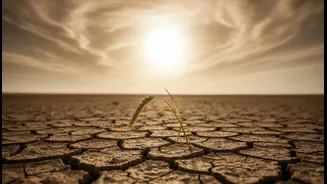
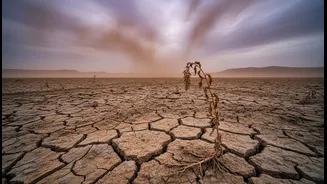
global weather patterns, and for India, the consequences can be severe. A strong El Niño has historically been linked to a weaker southwest monsoon, the lifeblood of the country's agriculture. The monsoon delivers about 70% of India's annual rainfall, and its performance is critical for filling reservoirs and for the vast rain-fed agricultural lands. When El Niño weakens these monsoon winds, it often leads to below-normal rainfall, raising the risk of drought and impacting everything from farm output to water availability.
A Troubling Start to the Season
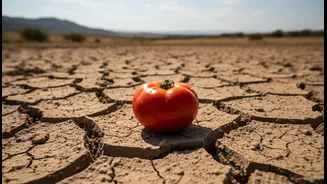
The concerns are not merely theoretical for 2026. Global and Indian weather agencies have confirmed that El Niño conditions are already underway and are predicted to strengthen through the latter half of the year. The impact was felt almost immediately, with India recording a rainfall deficit of nearly 40% in June, one of the driest in recent history. This has delayed the crucial sowing of kharif (summer) crops across the country. As of early July, acreage for major crops like rice, pulses, oilseeds, and cotton was significantly lower than the previous year. This delay puts the entire agricultural calendar under stress, as farmers wait for sufficient rain to plant their fields, risking lower yields and a smaller harvest.
From the Farm to Your Kitchen
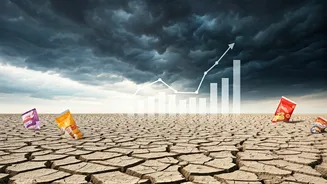
The ripple effects of a weak monsoon extend directly to the common household budget. A shortfall in agricultural production inevitably leads to food inflation. Vegetables, which are highly sensitive to weather fluctuations, are often the first to see sharp price spikes. The reduced output of pulses and oilseeds, for which India is already a significant importer, could further strain supplies and push prices higher. Economists are watching closely, recalling the last strong El Niño event which corresponded with a period of high food inflation. While the government maintains that buffer stocks of essential grains like wheat and rice are adequate, the broader basket of food items remains vulnerable to price shocks, threatening to pinch household budgets across the country.
The Government's Action Plan
The Indian government is on high alert and has activated a multi-pronged strategy to mitigate the impact. Union ministries are coordinating on preparedness, with Union Home Minister Amit Shah recently reviewing the situation. Contingency plans have been rolled out for hundreds of districts identified as particularly vulnerable to deficient rainfall. These plans include advising farmers to switch to alternative, less water-intensive crops like millets and pulses. The government has assured that it has secured sufficient stocks of drought-tolerant seed varieties to support these alternative cropping patterns. Additionally, authorities are closely monitoring water levels in reservoirs and preparing to manage power supplies, as a weak monsoon also affects hydropower generation while warmer temperatures increase electricity demand for cooling.