






A New Space Race Begins
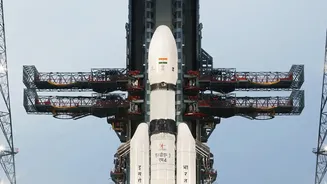
For decades, Indian space exploration was synonymous with the Indian Space Research Organisation (ISRO). But a monumental shift is underway. The government's decision in 2020 to open the space sector to private players has ignited a new kind of space race,
one driven by entrepreneurs and innovators. This policy shift led to the creation of the Indian National Space Promotion and Authorisation Centre (IN-SPACe), a single-window agency designed to guide and regulate private companies. IN-SPACe acts as a bridge, allowing startups to access ISRO's world-class infrastructure, testing facilities, and expertise, thereby lowering the barrier to entry and accelerating growth. This has unleashed a wave of investment and activity, with the number of space startups soaring from just a handful to over 400. The goal is ambitious: to significantly increase India’s share of the global space economy, which is projected to grow from around $8 billion to over $40 billion in the next decade.
Building the Highway to Orbit
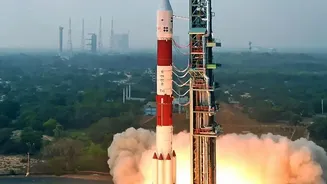
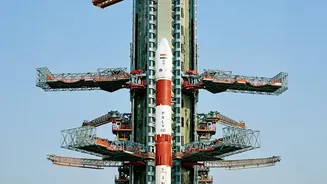
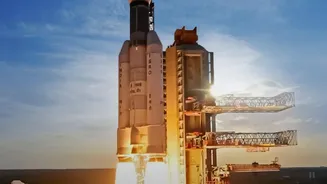
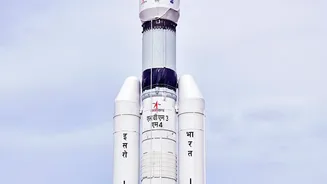
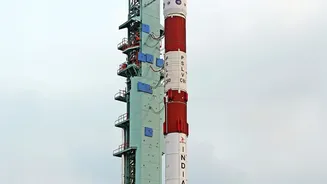
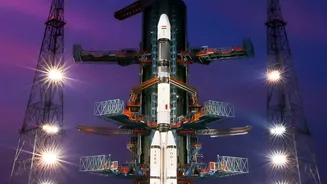
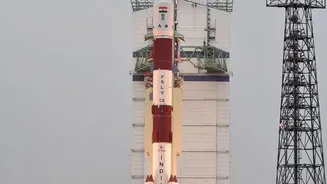
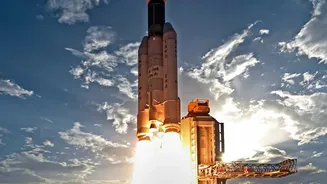
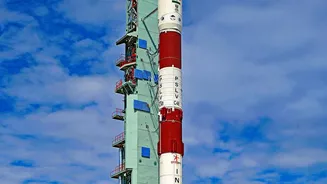
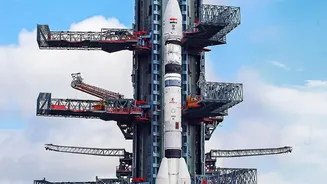
At the forefront of this new wave are companies building the rockets themselves. Startups like Hyderabad-based Skyroot Aerospace and Chennai's Agnikul Cosmos are developing a new generation of launch vehicles designed to be cost-effective and responsive to the growing demand for small satellite launches. Skyroot made history in July 2026 with the successful orbital launch of its Vikram-1 rocket, making India only the third country where a private company has achieved this feat. Agnikul Cosmos is also making strides, focusing on its highly customizable Agnibaan rocket, which features a unique, single-piece 3D-printed engine. The company is also investing heavily in infrastructure to test reusable rocket stages, a technology pioneered by global giants like SpaceX. These companies aren't just building rockets; they're creating a domestic capability for on-demand access to space, reducing reliance on foreign launchers and catering to a global market that wants more flexibility than traditional rideshare missions can offer.
India's Eyes in the Sky
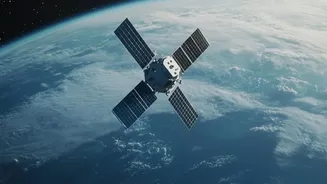
While launch startups grab headlines, another revolution is happening in orbit. Companies like Bengaluru-based Pixxel are building constellations of advanced Earth-observation satellites. Pixxel is a leader in hyperspectral imaging, a technology that captures data across hundreds of wavelengths of light, far beyond what the human eye or standard cameras can see. This allows for the creation of detailed 'spectral fingerprints' of the Earth’s surface. After successfully launching its initial 'Firefly' satellites in 2025, Pixxel is providing imagery that is many times more detailed than conventional satellites. This rich data can reveal the chemical composition of land and water, crop health, and sources of pollution with incredible precision. Another startup, GalaxEye, launched its 'Drishti' satellite in May 2026, the first in the world to combine both optical and radar sensors (OptoSAR), allowing it to see through clouds and at night.
The Real Gold is Downstream
The true economic potential of India's space boom lies not just in launching rockets or building satellites, but in the data they provide. This 'downstream' market is where the real value is being created, with applications spanning dozens of sectors. Satellite data is being translated into actionable intelligence for agriculture, helping to monitor crop health and improve yields. It's used in urban planning to manage infrastructure growth, in disaster management for quicker response times, and by financial services for risk assessment. For instance, hyperspectral data from Pixxel can be used to detect illegal mining, monitor deforestation, and identify oil spills. According to a recent EY-CII report, over 200 such use cases have been identified, turning space capabilities into practical tools that can drive economic growth and improve lives across the country.