



Delhi's Annual Winter Pollution Battle
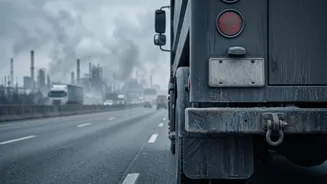
Every year, as winter approaches, a toxic haze blankets the National Capital Region (NCR). This isn't just fog; it's a dangerous mix of pollutants from various sources, including vehicle emissions. To combat this public health crisis, authorities implement
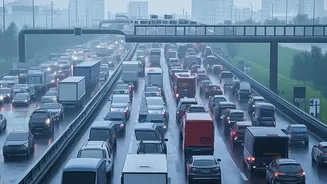
a set of emergency measures known as the Graded Response Action Plan (GRAP). This plan is a rulebook that dictates progressively stricter actions as the Air Quality Index (AQI) worsens. For anyone driving into the city, understanding GRAP is the first step to a hassle-free visit, as these rules directly impact which vehicles are allowed on the roads. Transport is a major contributor to Delhi's pollution, making vehicles a primary target for regulation.
The GRAP System and Vehicle Restrictions
GRAP is divided into four stages, activated based on AQI levels. While early stages focus on dust control and banning open burning, the later stages—'Severe' (AQI 401-450) and 'Severe+' (AQI above 450)—trigger stringent vehicular restrictions. A key rule that affects tourists is the ban on specific types of vehicles registered outside Delhi. As of November 2026, authorities have announced that non-BS-VI vehicles registered outside the capital will be barred from entry during the peak winter months, typically from November 1 to January 31. In more severe pollution episodes, this can extend to a complete ban on BS-III petrol and BS-IV diesel four-wheelers, regardless of where they are registered. Commercial vehicles and buses face even tighter controls.
Is Your Vehicle Compliant? Understanding BS Norms
The most critical factor determining your vehicle's entry is its Bharat Stage (BS) emission standard. The rule of thumb is that only vehicles compliant with BS-VI norms are consistently permitted. So, how do you check your car's BS standard? The easiest way is to look at your vehicle's Registration Certificate (RC), which will mention the emission norm. Generally, cars registered on or after April 1, 2020, are BS-VI compliant. For older vehicles, cars bought between 2010 and March 2020 are likely BS-IV, and those from 2005-2010 are BS-III. You can also find this information on the government's VAHAN portal by entering your vehicle's registration number.
The Essential Document and Sticker Checklist
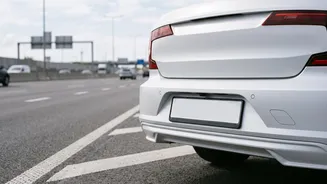
Besides meeting the BS-VI standard, there are other critical compliance requirements. Failure to have these can result in significant penalties, even if your car is new. First is a valid Pollution Under Control (PUC) Certificate. Delhi enforces a 'No PUC, No Fuel' rule, meaning petrol pumps will refuse to sell you fuel without a valid certificate. The fine for not having a valid PUC can be as high as ₹10,000. Second, your vehicle should be fitted with a High-Security Registration Plate (HSRP). Third, a colour-coded fuel sticker on your windscreen is mandatory. These stickers have a light blue background for petrol/CNG cars and orange for diesel cars. BS-VI compliant vehicles have an additional 1 cm green strip at the top. Enforcement teams often use these stickers for quick visual checks at border points.
The Heavy Cost of Non-Compliance
Ignoring these regulations can be a costly mistake. If your vehicle is found to be non-compliant with the prevailing GRAP restrictions—for instance, driving a BS-IV diesel car during a ban—you could face a hefty fine of ₹20,000 under the Motor Vehicles Act. Enforcement teams are deployed at all major entry points to Delhi, and vehicles are often stopped, checked, and either fined or forced to turn back. During peak pollution periods, there are reports of thousands of vehicles being fined or even impounded for violations. The hassle of having your vehicle seized, along with the steep financial penalty, can completely derail your travel plans.
How to Prepare for Your Drive to Delhi-NCR
A few simple checks before you begin your journey can save you a lot of trouble. First, verify your vehicle’s BS emission standard from your RC or the VAHAN portal. If it is below BS-VI, seriously reconsider driving to Delhi during the winter months. Second, ensure your PUC certificate is up-to-date. If it's expiring soon, get a new one made. Third, confirm you have both an HSRP and the correct colour-coded fuel sticker. Finally, just before you travel, check the current GRAP stage implemented in Delhi. Official notifications from the Commission for Air Quality Management (CAQM) or Delhi Traffic Police will provide the most accurate, real-time information on which vehicles are restricted.