

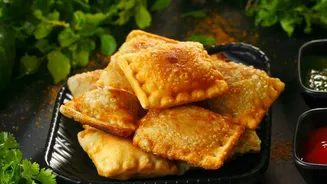
The Science of the Swap
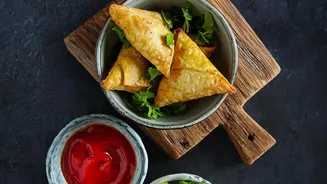
A traditional samosa gets its signature flaky, bubbly crust from being submerged in hot oil. This deep-frying process is what makes it so indulgent, but it’s also where the excess calories come from. The pastry absorbs a significant amount of oil, which
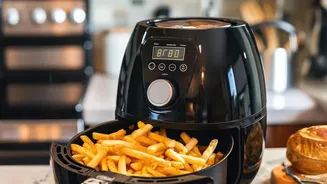
adds fat and calories. An air fryer, on the other hand, is essentially a compact convection oven. It works by circulating superheated air at high speed around the food. This rapid air circulation mimics the effect of deep-frying, creating a crispy exterior with just a fraction of the oil—often just a light brush or spray is needed. The result is a similar crunchy texture without the food being saturated in fat.
The Calorie Countdown
The main advantage of air-frying is the dramatic reduction in calories and fat. A medium-sized deep-fried samosa can contain anywhere from 250 to over 300 calories and 15 to 18 grams of fat. By switching to an air fryer, that number drops significantly. An air-fried samosa of a similar size typically has around 180 to 220 calories and only 5 to 8 grams of fat. This means you could be saving 70 to 100 calories and cutting fat by up to 60% per samosa. This reduction comes almost entirely from avoiding the oil absorption that happens during deep-frying. For those who love their evening snack but are watching their calorie intake, this swap makes a substantial difference.
But What About the Taste?
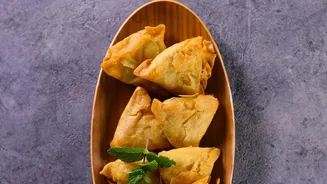
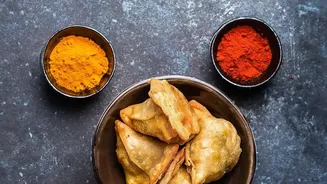
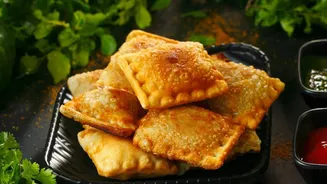
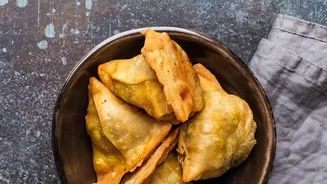
This is the crucial question for any samosa purist. Let's be clear: an air-fried samosa is not identical to its deep-fried cousin, but it is delicious in its own right. The filling inside will taste exactly the same. The primary difference is in the pastry. A deep-fried samosa has a richer, flakier, and often more bubbly crust. An air-fried version produces a crust that is very crispy and lighter, but can be slightly drier. Many find this trade-off more than acceptable, describing the texture as satisfyingly crunchy without the greasy aftertaste. The key is managing expectations: you are getting a different kind of crispiness, one that is lighter and less oily.
Your Guide to the Perfect Air-Fried Samosa
Achieving a golden, crispy samosa in the air fryer is easy if you follow a few simple steps. First, preheat your air fryer to around 180°C or 190°C. While it's heating, lightly brush or spray your samosas with a small amount of oil; this is essential for achieving that golden-brown colour and crisp texture. Arrange the samosas in a single layer in the air fryer basket, making sure not to overcrowd them so the hot air can circulate freely. Cook for about 12 to 15 minutes, flipping them halfway through. Cooking times may vary slightly depending on your air fryer model and the size of your samosas, so keep an eye on them the first time you try it.
More Than Just Fewer Calories
The benefits of air-frying go beyond calorie counting. There's significantly less mess compared to deep-frying—no large pot of oil to handle or dispose of. The cooking process is faster and more energy-efficient than using a conventional oven. Furthermore, reducing your intake of deep-fried foods can have broader health benefits, including a lower risk of consuming unhealthy trans fats and potentially harmful compounds like acrylamide, which can form during high-heat frying. It’s a convenient, cleaner, and all-around smarter way to prepare many of your favourite foods, not just samosas.