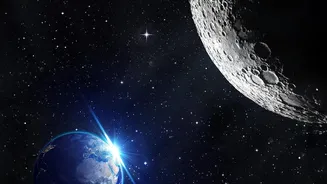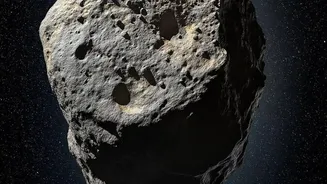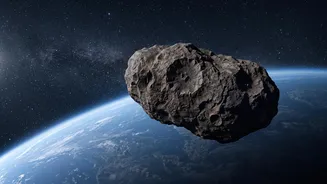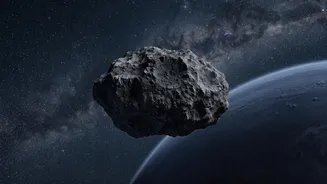

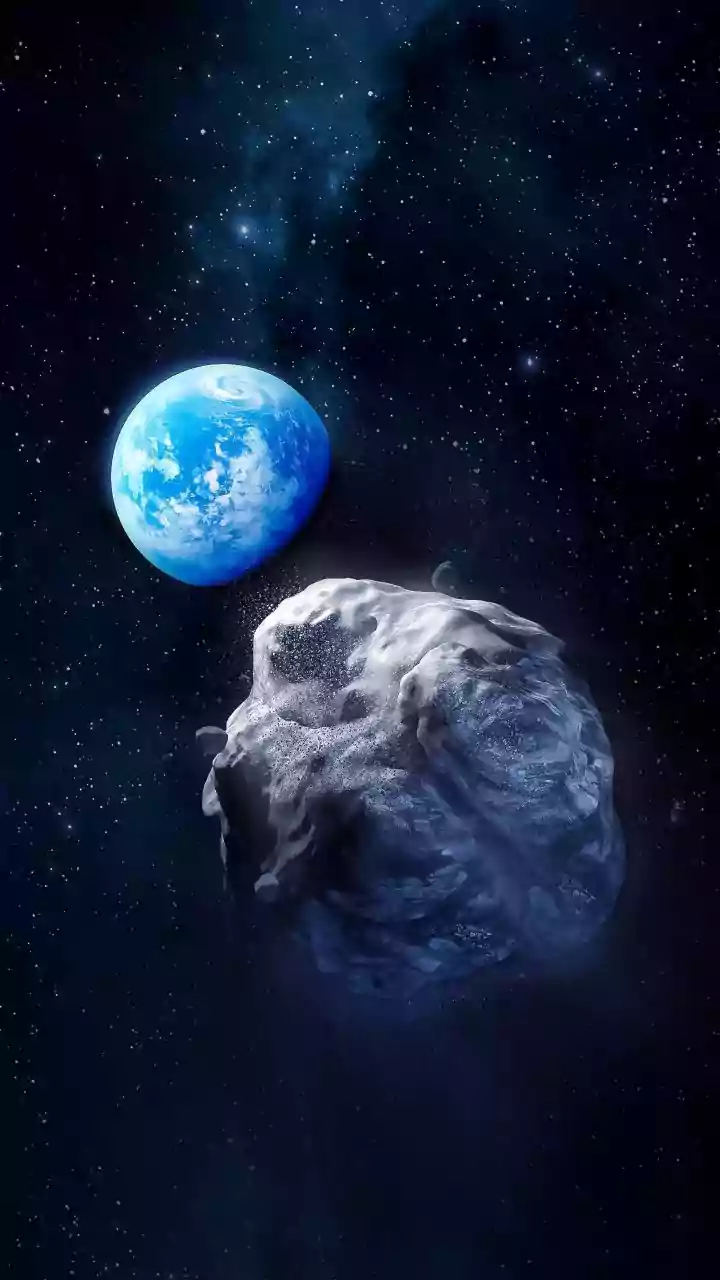
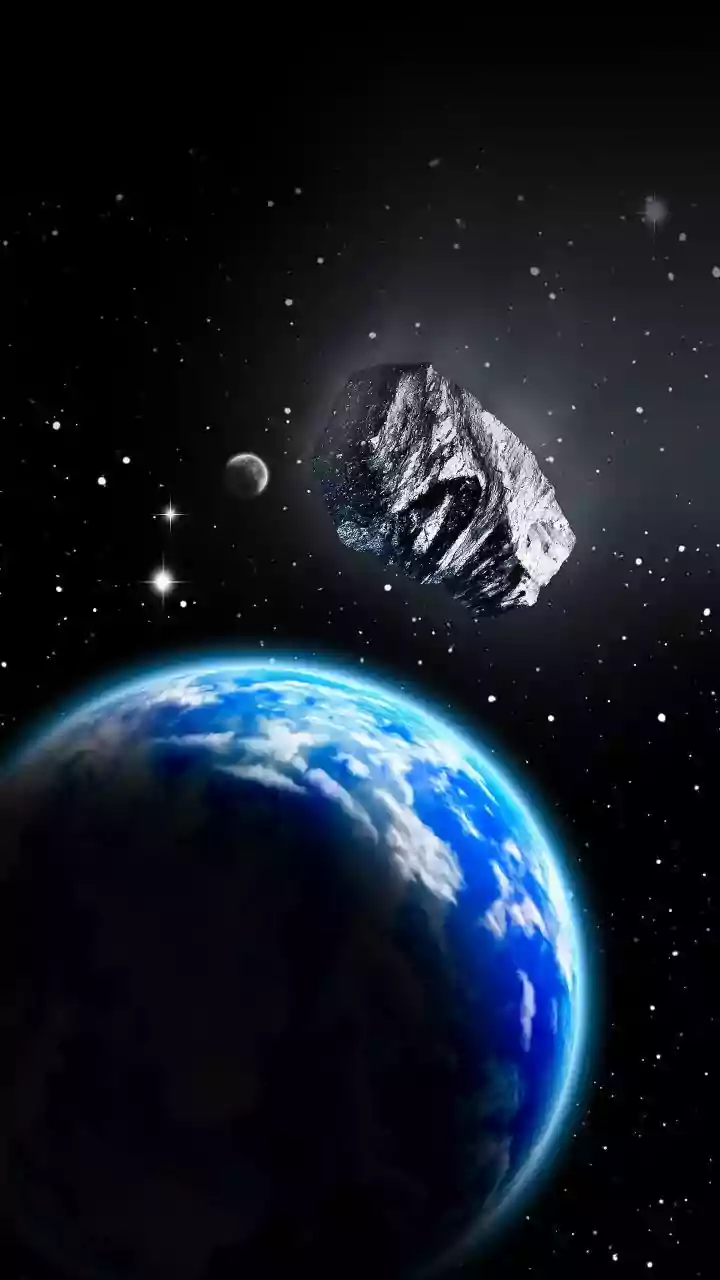


For the past several months, Earth has had a secret companion. Beyond our familiar Moon, a tiny asteroid has been quietly circling our planet. But this 'mini-moon', 2026 QQ8, is about to say goodbye, with its departure expected in early December.
A Fleeting Celestial Visitor
Astronomers
have confirmed that a small near-Earth asteroid, officially designated 2026 QQ8, was gravitationally captured by our planet back in April 2026. This cosmic visitor was first spotted in August by Hungarian astronomer Krisztián Sárneczky while conducting a routine search for near-Earth asteroids. Initially, scientists were unsure if the object was a natural asteroid or a piece of human-made space debris, a common challenge with such discoveries. After several weeks of follow-up observations using powerful instruments like the Lowell Discovery Telescope in Arizona and a telescope at the University of Hawaii, its natural origin was confirmed, earning it the popular nickname 'mini-moon'.
What Exactly is a Mini-Moon?
A mini-moon isn't a moon in the traditional sense, like our large, permanent satellite. Instead, the term refers to any space rock that is temporarily pulled into orbit around Earth before eventually breaking free. These objects are typically very small, and 2026 QQ8 is no exception, measuring just one to two metres across — roughly the size of a small car. Our planet is constantly visited by such objects, with scientists estimating Earth may host at least one at any given time. However, their small size and distance make them incredibly difficult to detect, which is why the confirmed list of mini-moons remains short. They are captured when their path brings them into Earth's 'Hill sphere', a region where our planet's gravity is dominant over the sun's.
The Gravitational Dance of Departure
The orbit of a mini-moon is not a neat, stable circle like that of our main Moon. Instead, it follows a complex, looping path as it's pulled by the competing gravitational forces of the Earth, Moon, and Sun. 2026 QQ8's journey has been a chaotic wobble around our planet. Current projections show that this delicate gravitational balance is about to tip. While it was captured in April, calculations indicate it will escape Earth's influence sometime between early December 2026 and January 2027. After its departure, 2026 QQ8 will return to its independent orbit around the Sun, a journey that takes it approximately 359 days to complete.
Can You See This Farewell?
Unfortunately, spotting this departing guest is not possible for amateur skywatchers. 2026 QQ8 is far too small and dim to be seen with the naked eye, binoculars, or even a standard backyard telescope. At its closest, it remains about one and a half times farther away from us than our own Moon. Detecting it requires large, professional-grade observatory telescopes equipped with sensitive cameras. Furthermore, there is absolutely no risk of it colliding with Earth. Even if its path were to bring it towards us, an object this small would completely burn up in the atmosphere, at most creating a bright fireball or meteor.
The Search for More Hidden Moons
While 2026 QQ8's time with us is short, the discovery highlights the dynamic nature of our corner of the solar system. Scientists believe such events are relatively common, with a bus-sized asteroid potentially being captured every 10 to 20 years. The study of these temporary satellites provides valuable insights into the population of near-Earth asteroids. As telescope technology advances, particularly with the upcoming Vera C. Rubin Observatory, astronomers expect to find many more of these fleeting companions. This will help create a more complete map of the objects travelling near our planet. For now, we can appreciate the brief visit from our tiny, temporary second moon before it continues its lonely journey through space.