





The Foundation of Fasting Foods
The core principle of a Navratri fast involves avoiding everyday grains like wheat and rice, as well as onions, garlic, and certain spices. This practice is rooted in Ayurveda, which categorises these foods as 'tamasic' or heavy, believed to induce lethargy.
Instead, the diet shifts to 'sattvic' foods that are light, pure, and energy-promoting. This culinary reset gives the digestive system a break during the seasonal transition and is thought to purify the mind and body. The ingredients that replace common grains are not random; they are chosen for their nutritional value, providing sustained energy through complex carbohydrates, protein, and essential minerals. This ensures the fast is a period of nourishment, not deprivation.
North: Hardy Grains and Root Vegetables
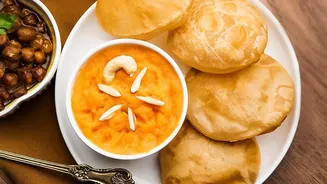
In North India, the Navratri thali is defined by its use of robust, warming ingredients suited to the region's climate. Flours like Kuttu ka atta (buckwheat flour) and Singhare ka atta (water chestnut flour) are staples. These pseudo-grains are gluten-free, high in protein and fibre, and are used to make pooris, parathas, and pakoras. Potatoes and arbi (taro root) are widely used, often in simple, flavourful curries seasoned with rock salt (sendha namak), cumin, and black pepper. This combination of dense flours and hearty vegetables provides the necessary energy for the nine-day period, reflecting the agricultural abundance of the Gangetic plains.
West: The Ubiquitous Sabudana and Peanuts
Travel to Maharashtra and Gujarat, and Sabudana (sago or tapioca pearls) reigns supreme. Sabudana Khichdi, a light yet filling dish made with soaked sago, roasted peanuts, potatoes, and mild spices, is a quintessential vrat favourite. The high carbohydrate content of sago provides instant energy, while peanuts add a satisfying crunch and a dose of protein. Other popular preparations include crispy Sabudana Vadas and savoury pancakes called Thalipeeth. Amaranth flour (rajgira) is also widely used for making rotis and sweets. The prevalence of peanuts and sago in this region's fasting cuisine points to local agricultural patterns and trade history.
South: Millets, Coconut, and Light Preparations
In Southern India, Navratri fasting rules can be slightly different. While some families avoid grains, others adopt a sattvic diet that permits rice, as long as it's prepared without onion or garlic. A key feature is the preparation of Sundal, a simple and protein-rich dish made from legumes like chickpeas or green gram, tempered with mustard seeds, curry leaves, and coconut. For those avoiding rice, millets such as barnyard millet (samak rice) are used to make dishes like idlis, upma, and sweet Pongal. The generous use of fresh coconut reflects the coastal landscape, adding flavour and healthy fats to the meals.
East: A Focus on Fruits and Sweets
In Eastern states like West Bengal, Navratri coincides with Durga Puja, the region's biggest festival. Here, the concept of fasting is less about abstaining from grains and more about feasting and celebration. While many do not observe a strict grain-free fast, the emphasis is on vegetarian food. For those who do fast, the diet is often simpler, relying heavily on fruits and dairy products. Sweets are a major component, with delicacies made from milk, chenna (a form of cottage cheese), and coconut, like Narkel Naru (coconut laddus), being particularly popular. This highlights a cultural approach where celebration and indulgence are as important as dietary restrictions.