





An Unexpected Discovery
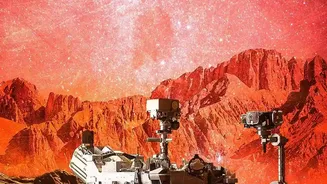
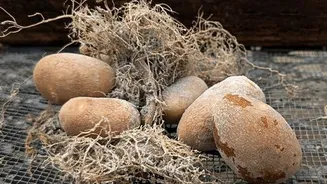
In May 2024, while traversing Gediz Vallis, a channel carved into the side of Mount Sharp, the Curiosity rover drove over an unassuming rock and cracked it open. Inside, scientists were stunned to see bright yellow crystals. While Mars is known to be
rich in sulfates—salts containing sulphur and oxygen that form when water evaporates—this was different. Analysis confirmed it was elemental sulphur, the first time the element had been found in its pure form on the Red Planet. This was a surprise because pure sulphur typically forms under specific conditions, often involving high heat from volcanic or hydrothermal activity, for which there was no other evidence in the immediate area.
The Sulphur Cycle Puzzle
This discovery adds a major new piece to the puzzle of the Martian sulphur cycle—the process by which sulphur moves between rocks, liquids, and the atmosphere. For decades, scientists have studied Martian meteorites and surface rocks, finding sulphur in different chemical states. Meteorites often contain 'reduced' sulphur, while the surface is dominated by 'oxidized' sulphur in the form of sulfates. The presence of pure, elemental sulphur suggests that the planet's chemical past was far more diverse and complex than previously understood. According to Ashwin Vasavada, Curiosity's project scientist, finding a field of these stones was like 'finding an oasis in the desert'. He noted, 'It shouldn't be there, so now we have to explain it'.
Theory 1: Trapped Volcanic Gases
One leading theory, detailed in a 2026 study in the journal 'Science', proposes a non-volcanic process that still has volcanic origins. Billions of years ago, volcanic activity could have released sulfur-bearing gases. Instead of erupting, these gases may have become trapped underground, possibly within ice structures called clathrates. Much later, as erosion from wind and ancient floods carved out Gediz Vallis, the pressure was released. The trapped gases could then have escaped and reacted chemically to form pure sulphur deposits without needing intense, localized heat. This model suggests the sulphur field could have formed between 2.8 and 3.1 billion years ago and remained largely unchanged since.
Theory 2: A Chemical Reaction in Water
A second study, published in 'Geophysical Research Letters', offers an alternative pathway that involves water. Researchers showed that elemental sulphur can be produced at room temperature by mixing dissolved sulfide with chlorate in acidic water. These are chemicals that scientists believe may have been present in the water on ancient Mars. This laboratory experiment demonstrated that living organisms are not required to create pure sulphur, providing a plausible abiotic explanation. While the crystals produced in the lab were microscopic, the researchers suggest that similar reactions occurring over vast geological timescales could build up the larger deposits seen by Curiosity.
Theory 3: An Ancient Asteroid Impact
A third hypothesis points to a more dramatic event: a meteor strike. Researchers identified a possible ancient impact crater upslope from where Curiosity found the sulphur. According to this theory, a meteor could have struck a sulfur-rich layer of soil, melting it and creating a flow of molten sulphur that pooled downhill. As this molten pool cooled, it would have formed the pure elemental sulphur crystals that the rover eventually discovered. This explanation provides another way to form the deposit without active volcanoes or hot springs at the site.
Why This Mystery Matters
Figuring out how this pure sulphur formed is about more than just solving a geological riddle. Each theory paints a different picture of Mars' ancient environment. Understanding the sulphur cycle is crucial for determining the planet's past climate and its potential to have supported life. For instance, certain sulphur gases released by volcanoes can create a greenhouse effect, which could have helped keep early Mars warm and wet enough for liquid water. The presence of different sulphur compounds also provides clues about the chemical energy that might have been available to sustain microbial life, similar to hydrothermal systems on Earth. This unexpected find by Curiosity gives scientists a rich, new set of clues to unravel the complex history of the Red Planet.