

Venus: The Hostile Sister Planet
Venus and Earth are similar in size, mass, and density, earning them the “twin planets” nickname. But the similarities end there. Venus is the hottest planet in our solar system, with surface temperatures high enough to melt lead. Its atmosphere is over
96% carbon dioxide, creating a runaway greenhouse effect that serves as a cautionary tale for climate change on our own planet. The entire world is shrouded in a thick, continuous blanket of clouds made primarily of sulfuric acid droplets, making its surface completely invisible to standard telescopes and cameras. These corrosive clouds are not just an obstacle; they are a primary scientific target for understanding the planet's extreme environment.
ISRO’s Next Interplanetary Leap: Shukrayaan-1
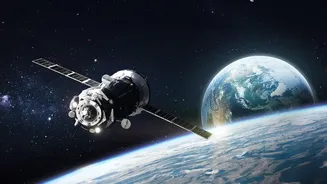
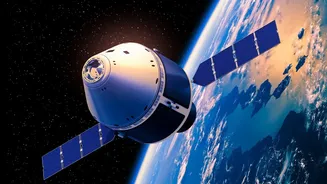
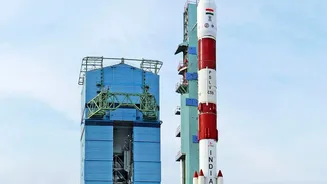
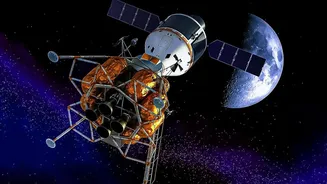
Following the monumental successes of Chandrayaan and the Mars Orbiter Mission (Mangalyaan), the Indian Space Research Organisation (ISRO) is setting its sights on our other planetary neighbour. The Shukrayaan-1 mission, planned for a 2028 launch, is an orbiter designed to conduct a comprehensive study of Venus for over four years. The mission has several key objectives: mapping the planet’s surface and subsurface geology, studying its atmospheric composition and dynamics, and investigating the interaction between the Venusian ionosphere and the solar wind. This endeavor marks India's second interplanetary mission and its first dedicated to Venus, positioning the nation among a select group of space agencies to explore the enigmatic planet.
The Scientific Toolkit for a Toxic World
To study a planet as inhospitable as Venus, Shukrayaan-1 will carry an impressive payload of around 100 kg, featuring scientific instruments from India and international partners, including Russia, France, Sweden, and Germany. A key instrument is a high-resolution Synthetic Aperture Radar (SAR), which is capable of peering through the dense cloud cover to map the surface in detail. It will be complemented by a ground-penetrating radar, a first for any Venus mission, which aims to investigate the planet's subsurface layers. Other instruments include infrared and ultraviolet cameras to monitor cloud movement and composition, a lightning sensor, and analysers to study the plasma environment and how solar wind strips away the planet's atmosphere.
Decoding the Sulfuric Acid Veil
The mission's focus on the sulfuric acid clouds is crucial. These clouds, extending 20 kilometers deep, are a major driver of Venus's climate. Understanding their chemical processes is key to piecing together the planet's history. Shukrayaan-1 will carry specific instruments, like the Venus InfraRed Atmospheric Gases Linker (VIRAL), developed in collaboration with Russia and France, to analyze the atmospheric chemistry. These sensors will measure the distribution of gases and look for clues about ongoing geological activity, such as volcanism, which may be releasing gases into the atmosphere. The data will help scientists model how a planet so similar to Earth could have evolved so dramatically differently.
Searching for Answers and Ancient Secrets
Beyond atmospheric dynamics, the mission touches upon one of science's most profound questions: the possibility of life beyond Earth. While the surface of Venus is uninhabitable, some scientists have theorized that its upper cloud layers, where temperature and pressure are more Earth-like, could potentially harbor microbial life. Recent studies have even shown that essential life-building molecules like amino acids can remain stable in concentrated sulfuric acid. Shukrayaan's detailed atmospheric analysis could provide crucial data in this debate, investigating the chemical composition of the clouds for unexpected anomalies or biosignatures. By understanding Venus's evolution, we gain invaluable insights into the conditions that define habitability on planets, including our own.