
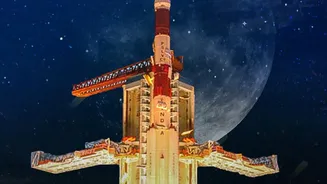
The Ultimate Insurance Policy
In human spaceflight, there are no second chances. The initial ascent, when the rocket is fighting gravity with immense, controlled power, is one of the most perilous phases. If any critical system on the launch vehicle were to fail, the consequences
could be catastrophic. This is why every crewed spacecraft is equipped with a launch abort system, often called a Crew Escape System (CES). Think of it as a highly advanced ejection seat, but instead of just ejecting the pilot, it is designed to pull the entire capsule containing the astronauts away from the failing rocket in milliseconds. This system is ISRO's life-saving insurance policy, designed to activate automatically if onboard computers detect a serious anomaly, ensuring the crew has a path to safety even during a worst-case scenario.
Simulating a Worst-Case Scenario
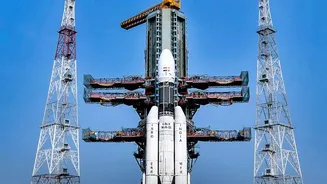
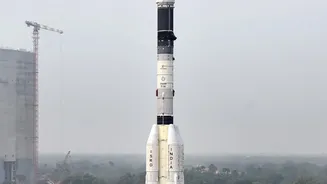
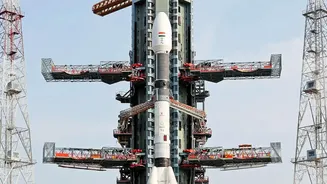
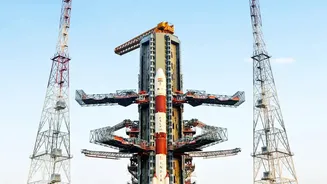
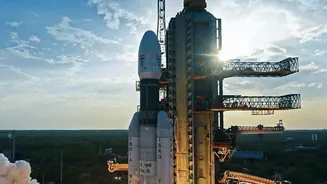
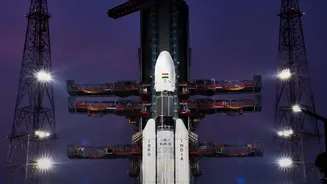
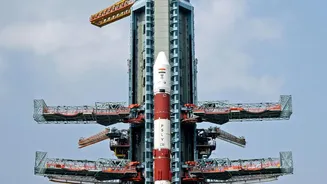
To ensure this life-saving system works flawlessly when needed, ISRO conducts a series of complex abort tests. One of the most critical is the in-flight abort test, like the Test Vehicle Abort Mission-1 (TV-D1). For this test, ISRO uses a specially designed single-stage liquid rocket to carry a fully instrumented but unpressurised Crew Module to a specific altitude and speed. The goal is to deliberately simulate a launch failure at a particularly stressful point of the flight, such as when the vehicle reaches maximum aerodynamic pressure (Max-Q) or transonic speeds. The TV-D1 mission, for example, triggered the abort at an altitude of about 17 kilometres while travelling at Mach 1.2, or 1.2 times the speed of sound. This demonstrates the system's ability to function under the most challenging conditions of ascent.
A Symphony of Split-Second Actions
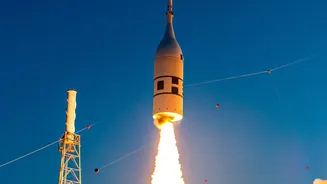
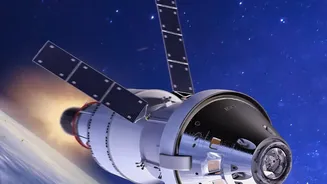
When the abort is triggered, a precise and rapid sequence of events unfolds. The Crew Escape System, a tower-like structure fixed to the top of the crew module, fires a set of powerful, quick-acting solid motors. These motors produce immense thrust, rapidly pulling the crew module up and away from the launch vehicle with an acceleration far greater than the rocket itself. In less than two seconds, the module is on a safe trajectory, clear of the potential danger zone. The system is engineered to handle various scenarios, whether an emergency on the launch pad before liftoff (a Pad Abort Test, which ISRO successfully conducted in 2018) or a failure during ascent. Once at a safe distance, the escape system jettisons itself from the crew module.
A Gentle Descent and Safe Recovery
Getting away from the rocket is only half the battle. The Crew Module must then return safely to Earth. After the escape system separates, the module's own descent sequence begins. First, a set of drogue parachutes deploy at high altitude to stabilise the capsule and begin slowing it down. Then, a cluster of large main parachutes unfurls to provide a gentle descent, ensuring the module splashes down into the sea at a survivable velocity. In the TV-D1 test, the module landed in the Bay of Bengal, approximately 10 kilometres from the Sriharikota coast, where recovery teams from the Indian Navy were on standby to retrieve it. The successful recovery of the module and the flight data recorder within is crucial for validating the performance of every system.
Paving the Way for Gaganyaan
Each successful abort test is a monumental step forward for the Gaganyaan programme. These tests are not just technical demonstrations; they are confidence-building measures that prove ISRO's commitment to the highest standards of astronaut safety. By successfully testing the Crew Escape System under realistic and challenging conditions, ISRO validates the 'human-rated' capabilities of its launch vehicle and capsule. The data gathered from hundreds of sensors during these tests informs refinements and confirms that all systems, from the abort motors to the parachute deployment, work in perfect harmony. These successful missions are critical milestones that clear the path for the first uncrewed and, ultimately, the historic first crewed Gaganyaan flight, making India the fourth nation to possess this critical safety technology.