



The Ultimate Insurance Policy
Human spaceflight is inherently risky, with the most perilous moments occurring during launch and ascent. The 'critical launch window' refers to the period from liftoff until the spacecraft reaches a stable orbit. During this time, the rocket is under
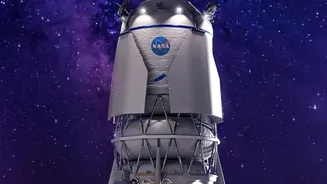
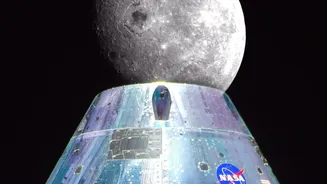
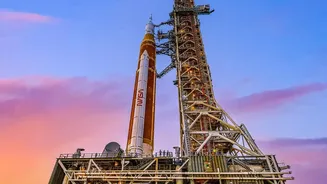
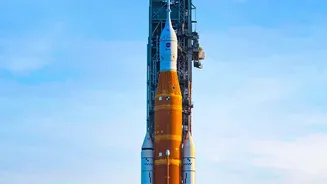
immense physical stress, traveling at supersonic speeds through the atmosphere. A catastrophic failure could happen in milliseconds. To counter this, modern crew capsules are equipped with a Launch Escape System (LES), or Launch Abort System (LAS). This system is designed to do one thing: get the crew away from a failing rocket, fast. Think of it as a highly advanced ejection seat, not for a single pilot, but for an entire space capsule. Systems like those on NASA's Orion and Boeing's Starliner use a tower of powerful solid-fuel rockets mounted on top of the capsule, designed to pull it away from danger. Others, like SpaceX's Crew Dragon, use integrated thrusters to push the capsule to safety.
Simulating Disaster at Supersonic Speeds
Engineers cannot simply hope these systems will work; they must prove it. This is where high-altitude crew escape tests come in. These dramatic tests are designed to push the escape system to its absolute limits under the most challenging conditions it could ever face. For NASA’s Orion spacecraft, the Ascent Abort-2 (AA-2) test was a key demonstration. In this test, a specially designed booster rocket carried an Orion test capsule to an altitude of about 31,000 feet, reaching over 1,000 mph. At this specific point—chosen to represent the moment of maximum aerodynamic pressure, or 'Max Q'—the abort was deliberately triggered. Similarly, SpaceX conducted a spectacular in-flight abort test for its Crew Dragon, triggering the escape system 84 seconds after launch while the Falcon 9 rocket was traveling at Mach 2.2. These tests are not just for show; they provide invaluable data to ensure the escape system can perform flawlessly under the violent stresses of a real emergency.
The Automated Decision
In a launch failure, there is no time for human reaction. The decision to abort must be instantaneous. This is why the ejection process is automated. A network of thousands of sensors on the rocket and capsule continuously monitors every critical parameter: pressure, velocity, engine performance, and trajectory. These systems are looking for any deviation from the expected flight plan. If a critical failure is detected—like a sudden loss of thrust or an uncontrolled turn—the onboard computers can trigger the abort sequence in milliseconds, far faster than a human astronaut or a ground controller could possibly react. While astronauts and mission control do have the ability to manually initiate an abort, the automated system ensures that even the most sudden and violent failures can be survived. This automated oversight is active from the moment the launch sequence begins on the pad until the rocket has safely delivered the crew into orbit.
From Fiery Ejection to Safe Splashdown
When an abort is triggered, a precisely choreographed sequence of events unfolds in seconds. For a tower-based system like Orion's, the main abort motor fires with immense power—in Orion's case, generating 400,000 pounds of thrust—to pull the capsule away from the launch vehicle. Simultaneously, a smaller motor steers the capsule, guiding it on a safe trajectory. After reaching a safe altitude, another motor jettisons the escape tower, allowing the capsule to deploy its parachutes for a gentle splashdown in the ocean. For SpaceX's Crew Dragon, the eight integrated SuperDraco engines fire, pushing the capsule away from the Falcon 9 rocket with an acceleration force of over 3 Gs. Following the abort burn, the capsule follows a similar sequence of trunk jettison, parachute deployment, and splashdown. Data from these test flights, including from ejected data recorders, is crucial for validating computer models and certifying the systems for human flight.