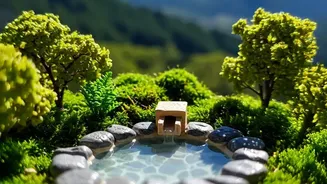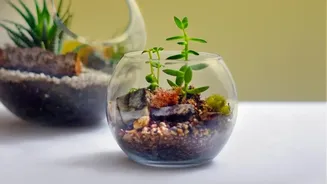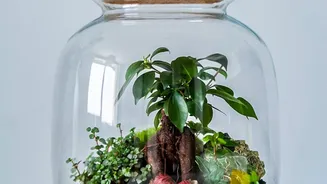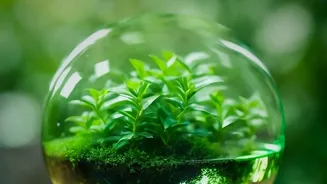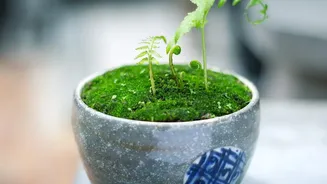



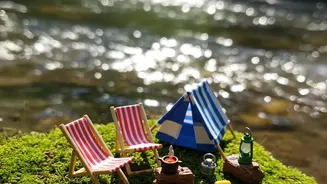
Imagine a patch of lush, green forest floor, captured in miniature on your desk or bookshelf. A small moss garden offers just that—a slice of natural serenity that is surprisingly simple to create and maintain using pebbles and driftwood.
The Allure of a Miniature World
In our busy lives,
finding a moment of calm can be a challenge. A moss garden, or 'mossarium', brings a piece of the serene, quiet forest into your home. Unlike many houseplants, moss thrives without direct sunlight and requires minimal care, making it an ideal green companion for modern living. These tiny landscapes are more than just decoration; they are small-scale ecosystems that offer a daily connection to nature. The process of designing and building your garden—arranging stones, placing a piece of driftwood, and carpeting the scene with soft moss—is a meditative activity in itself, offering a creative outlet that reduces stress and enhances your living space with living art.
Gathering Your Natural Palette
Creating your own moss garden begins with a few simple materials. First, select a container; a clear glass bowl, a wide-mouthed jar, or a shallow ceramic dish works perfectly. Next, you'll need a base layer for drainage, which is crucial as moss loves humidity but not standing water. Small pebbles or gravel are perfect for this. A thin layer of activated charcoal on top of the pebbles is recommended, as it helps keep the environment fresh and prevents mould. Then, add a layer of potting soil, preferably one without added fertilisers. The final, and most exciting, elements are your decorative pieces: a uniquely shaped piece of driftwood to add height and structure, and a collection of smooth pebbles for detail.
Choosing the Right Kind of Moss
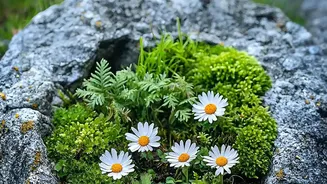
There are over 10,000 species of moss, but they generally fall into two main types suitable for your garden: Acrocarpous and Pleurocarpous. Acrocarpous mosses, like Cushion Moss (Leucobryum) or Haircap Moss, grow in upright clumps and mounds, creating a miniature forest effect. Pleurocarpous mosses, such as Sheet Moss (Hypnum), grow in flat, spreading carpets. For a beginner's garden, a combination can be very effective. Use Sheet Moss to create a lush green base and add a few clumps of Cushion Moss for texture and height. You can often find live moss at garden centres or even in shady, damp parts of your own garden. Just be sure to harvest responsibly.
Crafting Your Tiny Landscape
Assembling your garden is like painting a three-dimensional picture. Start by adding your layer of drainage pebbles to the bottom of the container. Follow this with the optional layer of activated charcoal, and then a layer of moist soil. Before adding the moss, place your main structural elements. Position your piece of driftwood to create an interesting focal point. Perhaps it can act as a fallen log or a miniature cliff. Next, gently press your sheets or clumps of moss onto the soil surface; you don't need to bury them. Break the moss into smaller pieces to fit around your driftwood and any larger stones. Finally, use your smaller pebbles to create tiny pathways, borders, or simply to add texture and contrast to the soft green moss.
Sustaining Your Serene World
Moss is wonderfully low-'maintenance', but it does have a few key needs. The most important are light and water. Place your garden in a spot that receives bright,' indirect light,' like near a north-'facing window.' Direct sunlight will scorch and dry out the moss quickly.' To water,' mist your garden every few days with a spray bottle,' preferably using distilled water or rainwater,' as tap water can contain minerals that harm the moss over time.' The goal is to keep the moss and soil damp,' but not soggy.' If your garden is in a closed container,' you may only need to water it every few weeks.' If you see a lot of condensation,' simply remove the lid for a few hours to let some moisture escape.'