







An Unprecedented Gamble
The James Webb Space Telescope (JWST), humanity's premier deep-space observatory, is an engineering marvel. Stationed 1.5 million kilometers from Earth, it is designed to capture the faint, infrared glow of the universe's first galaxies and analyze the atmospheres
of distant planets for chemical hints of life. Its launch and deployment were executed with near-perfect precision, potentially doubling its expected lifespan to 20 years. However, this success masks a monumental risk. Unlike its predecessor, the Hubble Space Telescope, JWST was designed as a single-lifecycle instrument. It operates far beyond the reach of any crewed mission, meaning if a critical component fails or a new technology emerges, there is no way to perform repairs or upgrades. This represents a fundamental gamble: investing billions in an asset that cannot be maintained.
The Lessons of Hubble
The value of in-space servicing was cemented by the Hubble Space Telescope. Launched in 1990 with a flawed primary mirror, its initial images were blurry and disappointing. A heroic servicing mission by Space Shuttle astronauts in 1993 corrected the error, and subsequent missions repaired components and installed more advanced instruments. These upgrades repeatedly transformed Hubble into a vastly more powerful observatory than the one originally launched, extending its life and scientific output for decades. Hubble's success taught NASA a crucial lesson: a serviceable telescope is a sustainable and adaptable one. This approach allowed it to remain at the forefront of astronomy, making discoveries like the accelerating expansion of the universe—a purpose its original designers never anticipated.
A Strategic Shift for Future Worlds
Recognizing the limitations of JWST's design, NASA is making a profound strategic pivot for its next flagship mission, the Habitable Worlds Observatory (HWO). Slated for the 2040s, this $11 billion telescope is being explicitly designed to hunt for Earth-like planets and signs of life. More importantly, NASA has mandated that HWO must be serviceable from its very inception. This marks a departure from the single-use philosophy. The plan is to build HWO with a modular architecture, where critical electronics and scientific instruments are configured as standardized, line-replaceable units (LRUs). This ensures the observatory can be repaired, refueled, and upgraded over its multi-decade lifespan.
Enter the Robotic Mechanics
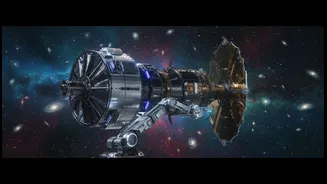
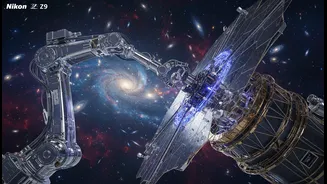
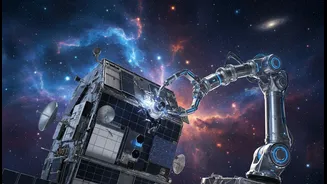
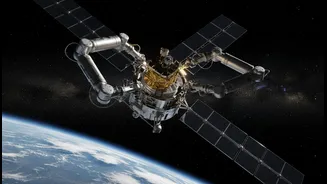
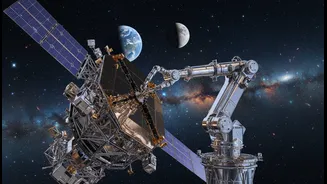
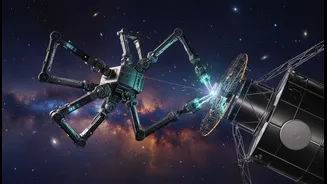
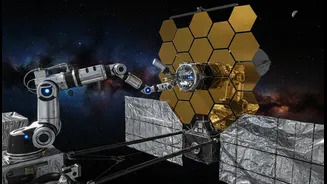
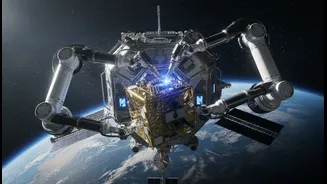
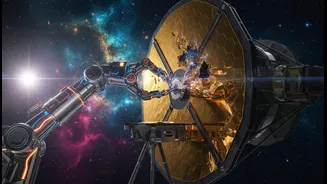
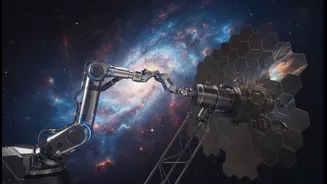
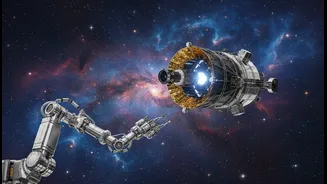
Since HWO will operate at the same distant L2 point as JWST, astronaut repair crews are not a viable option. The future of telescope maintenance lies with robotics. NASA envisions sending autonomous or remote-controlled servicing spacecraft to dock with the observatory. These robotic mechanics would be equipped with specialized arms and tools to swap out old modules for new ones, perform delicate repairs, and potentially even assemble parts of the telescope in space if it's too large to launch fully assembled. This move is intended to drive the growth of a commercial in-space servicing, assembly, and manufacturing (ISAM) industry, creating a new economic ecosystem in orbit. By integrating standardized robotic interfaces, NASA is future-proofing its most valuable scientific assets against both degradation and obsolescence.