







What Are AI Design Tools?
Before we get into the 'how,' let's clarify the 'what.' AI design tools are applications that use artificial intelligence to generate visual content. For students, the most impactful versions are AI presentation makers. Tools like Gamma, Beautiful.ai,
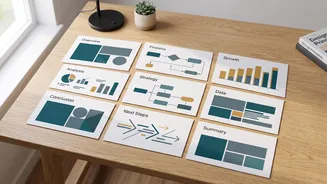
and Canva's Magic Design use AI to turn a simple text prompt or document into a fully designed slide deck. Instead of starting with a blank slide, a student can provide a topic or an outline, and the AI will generate a structured presentation with text, layouts, and even relevant images in under a minute. This fundamentally changes the starting point of making a presentation.
From Prompt to Presentation in a Flash
The core reason these tools are so fast is the 'prompt-to-deck' functionality. A student can type a command like, "Create a 10-slide presentation on the causes of the Indian Rebellion of 1857," and the AI gets to work instantly. It parses the request, structures a logical narrative flow (introduction, key causes, major events, consequences), writes draft text for each slide, and applies a consistent, professional design theme. This initial creation process, which could take hours manually, is often completed in less than 60 seconds. This automates the most time-consuming part of the setup, freeing students from the tyranny of the blank page.
Intelligent Formatting that Stays Consistent
Even after the initial draft, the time-saving continues. One of the biggest manual struggles is maintaining consistency. If you decide to change a heading font or a color scheme halfway through, you previously had to update every single slide. AI tools handle this automatically. Tools like Beautiful.ai are built specifically to enforce design consistency; if you adjust one element, the AI intelligently applies that change across the entire deck, ensuring everything remains polished. This 'smart formatting' means students can experiment with design choices without committing to hours of tedious manual corrections.
More Time for What Matters: The Content
The most significant benefit isn't just about saving time; it's about reallocating it. When students aren't bogged down by graphic design, they can spend more time on the substance of their work. Research shows this allows students to focus more on understanding concepts and thinking clearly about how to explain their ideas. The time that would have been spent formatting can now be dedicated to deeper research, refining arguments, and practicing delivery. This shifts the focus from presentation aesthetics to intellectual quality, which is the ultimate goal of any academic assignment.
A Word of Caution: The Human Element is Still Key
While these tools are powerful, they are assistants, not replacements for critical thinking. Concerns exist in academia about over-reliance on AI, which can lead to a lack of originality or even factual inaccuracies, as AIs can sometimes fabricate information. The information generated can be biased or incorrect, and students must still be responsible for fact-checking every claim. The best approach is to use the AI-generated deck as a first draft. The speed allows for a great start, but it's the student's responsibility to verify the content, inject their own analysis, and ensure the final product reflects their own understanding and voice.