

Ghewar from Rajasthan
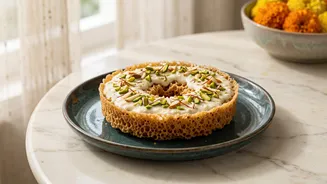
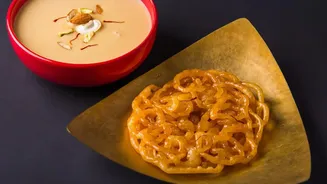
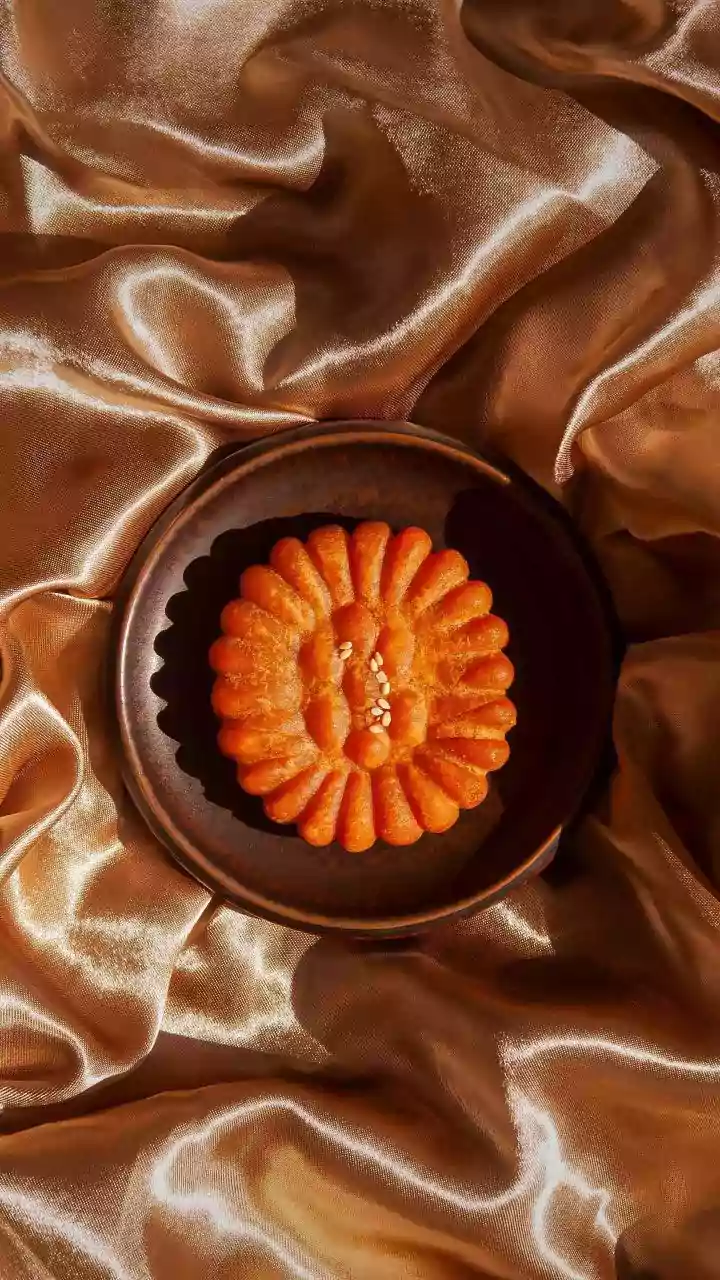
No Raksha Bandhan in North India feels complete without Ghewar, a sweet traditionally associated with the monsoons. This disc-shaped delicacy, resembling a golden honeycomb, is made by frying a batter of refined flour and ghee, which is then soaked in sugar
syrup. Its origins are traced to the royal kitchens of Rajasthan, where it was prepared for festive occasions. While the classic version is sublime, modern varieties topped with rabri (malai ghewar), mawa, or even paneer offer a richer experience. The texture is a delightful mix of crispy and syrupy, making it a true festive indulgence. Gifting Ghewar is a long-standing tradition during the Teej and Rakhi festivals, symbolizing the sweetness of family bonds.
Pootharekulu from Andhra Pradesh
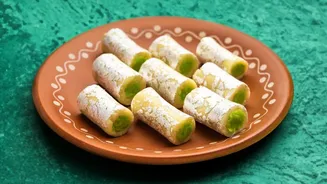
Often called 'paper sweet', Pootharekulu is a testament to culinary artistry from the village of Atreyapuram in Andhra Pradesh. The name literally translates to 'coated sheet' in Telugu. It's made from impossibly thin, translucent sheets of rice starch that are brushed with pure ghee and stuffed with powdered sugar or jaggery, and often garnished with nuts. This GI-tagged sweet has a history that may stretch back centuries, with some linking it to the kitchens of the Vijayanagara Empire. Each layer melts in your mouth, making it an incredibly light yet satisfying sweet. The skill-intensive process has been passed down through generations, with hundreds of families in Atreyapuram continuing the tradition.
Chhena Poda from Odisha
Imagine a dessert that is a cross between a cheesecake and a paneer cake, and you get Chhena Poda. This delicacy from Odisha literally means 'burnt cheese' and is believed to be a favourite of Lord Jagannath. It was reportedly created by accident in the mid-20th century when a confectioner left sweetened chhena (fresh cottage cheese) in a hot oven overnight. The result was a stunning sweet with a caramelized, slightly burnt crust and a soft, moist interior. The chhena is kneaded with sugar, semolina, and cardamom, and traditionally baked in sal leaves, which impart a unique aroma. It’s a rustic, soulful sweet that offers a completely different texture profile from most other Indian mithai.
Mysore Pak from Karnataka
A royal treat born from a happy accident in the kitchens of the Mysore Palace, Mysore Pak is a South Indian icon. Invented in the early 20th century by the royal chef Kakasura Madappa for King Krishna Raja Wadiyar IV, this sweet is a deceptively simple mix of gram flour (besan), generous amounts of ghee, and sugar. When made correctly, it has a soft, porous, and fudge-like texture that simply melts in your mouth. The king loved the confection so much he named it 'Mysore Pak,' meaning 'the sweet from Mysore'. It has since become a staple at weddings and festivals across South India, a true symbol of Kannadiga culinary pride.
Patoleo from Goa
A fragrant and unique sweet from the western coast, Patoleo is a specialty of Goa and the Konkan region. It consists of a paste of rice flour spread onto fresh turmeric leaves, which are then filled with a sweet mixture of freshly grated coconut and palm jaggery. The leaves are folded and the parcels are steamed, infusing the sweet with the delicate, floral aroma of the turmeric leaf. Patoleo is prepared by both Hindu and Catholic communities for various festivals, including Nag Panchami, Ganesh Chaturthi, and the Feast of the Assumption of Mother Mary on August 15th. Eating it is an experience in itself—you peel back the leaf to reveal the soft, aromatic sweet inside.
Singori from Uttarakhand
From the Himalayan state of Uttarakhand, particularly the Kumaon region, comes Singori. This traditional sweet is made from khoya (reduced milk solids) that is sweetened and often flavoured with cardamom or grated coconut. What makes Singori truly special is its presentation: it is wrapped in a maalu leaf, which is shaped into a cone. The leaf imparts a subtle, earthy fragrance to the creamy khoya, creating a flavour profile that is uniquely of the mountains. Historically associated with Tehri Garhwal and later Almora, this leaf-wrapped delight is a rustic and beloved delicacy, representing the simple but profound flavours of Pahadi cuisine.