



Why Venus? Unmasking Earth's Twin
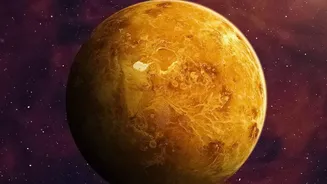
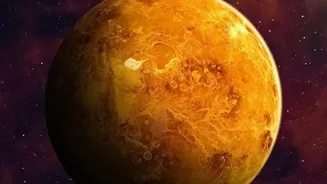
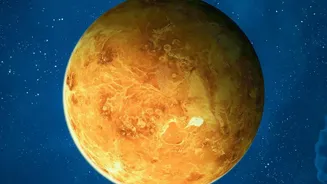
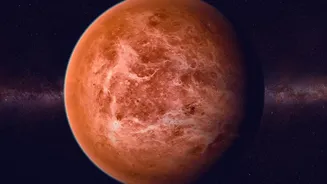
Venus is often called Earth’s twin, and for good reason: the two planets are nearly identical in size and mass. But the similarities end there. Venus is a cautionary tale, a planet that took a drastically different evolutionary path. It suffers from a runaway
greenhouse effect, trapping heat under a thick, toxic atmosphere composed mainly of carbon dioxide. Surface temperatures are hot enough to melt lead, and it’s shrouded in clouds of sulfuric acid. Scientists are fascinated by Venus because understanding how it became this hellish world could provide crucial insights into Earth's own climate and long-term evolution. By studying Venus, we can look into a possible future for our own planet and better understand the delicate balance that makes Earth habitable.
The Mission: What Shukrayaan Will Do
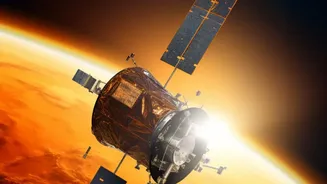
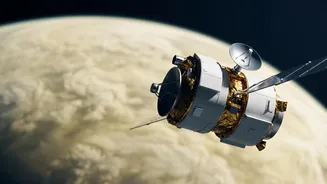
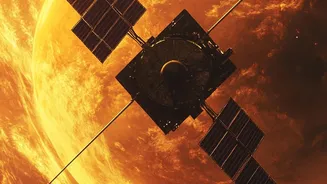
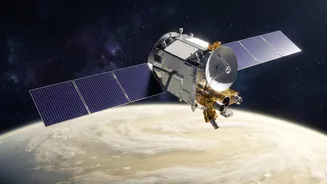
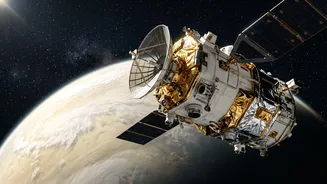
Officially named the Venus Orbiter Mission (VOM), Shukrayaan is ISRO's first dedicated mission to our closest planetary neighbour. Following Cabinet approval in September 2024, the mission is now slated for a March 2028 launch. After a 112-day journey, the spacecraft is expected to enter a large, elliptical orbit around Venus in July 2028. The primary goals are to conduct a comprehensive study of Venus from orbit. This includes mapping its surface and subsurface, analyzing the composition of its dense atmosphere, and investigating the interaction between the planet and the constant stream of charged particles from the Sun, known as the solar wind. The mission is planned to last for four years, gathering data that will help unravel the planet's many mysteries.
A Toolkit for an Inhospitable World
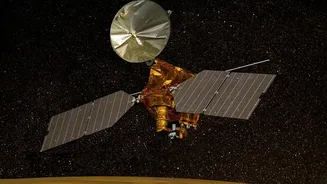
To achieve its ambitious goals, Shukrayaan will be equipped with a suite of approximately 19 scientific instruments, collectively weighing around 100 kilograms. The payload is a mix of Indian-developed technology and international collaborations. One of the key instruments is a high-resolution Synthetic Aperture Radar (SAR). Since the Venusian surface is permanently hidden by thick clouds, the radar will allow scientists to peer through the haze and create detailed maps of its geological features, searching for evidence of active volcanoes and other processes. Other instruments will focus on the atmosphere, including a collaborative Indo-Russian payload called VIRAL (Venus InfraRed Atmospheric Gases Linker) designed to analyze the chemistry of the clouds and atmosphere. This focus on atmospheric composition is central to understanding the planet's extreme climate.
A Legacy of Frugal Exploration
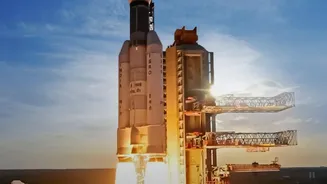
Shukrayaan follows in the footsteps of ISRO's previous celebrated interplanetary successes: Chandrayaan to the Moon and the Mars Orbiter Mission (Mangalyaan). These missions established ISRO's global reputation for executing cost-effective, high-impact science missions. The Venus Orbiter Mission, approved with a budget of approximately ₹1,236 crore, continues this tradition of frugal engineering. By leveraging the experience gained from previous missions and using its powerful LVM-3 rocket for the launch, ISRO is demonstrating once again that world-class space science is not solely the domain of nations with the largest budgets. The mission is a major step in Prime Minister Narendra Modi's space vision, which includes landing an Indian on the Moon by 2040.
India Joins the Global Return to Venus
ISRO is not alone in its renewed focus on Venus. The planet is experiencing a resurgence of interest from space agencies around the world. NASA is developing two missions, VERITAS and DAVINCI, while the European Space Agency (ESA) is working on its EnVision orbiter. This global effort creates a collaborative, rather than competitive, environment. International partnerships are a key part of Shukrayaan, with Sweden, Germany, and Russia contributing to the scientific payload. India's mission is poised to provide crucial data that will complement the findings of other agencies, positioning the nation as a key player in the next era of planetary science and the collective quest to understand our solar system.